This article was automatically translated from the original Turkish version.
Status | Closed | ||||||||
|---|---|---|---|---|---|---|---|---|---|
Duration of Closure | 33 years | ||||||||
Closure Year | 1993 | ||||||||
Line Type | Railway | ||||||||
Border Length | 325 km | ||||||||
Location | Akyaka district Türkiye Kars | ||||||||
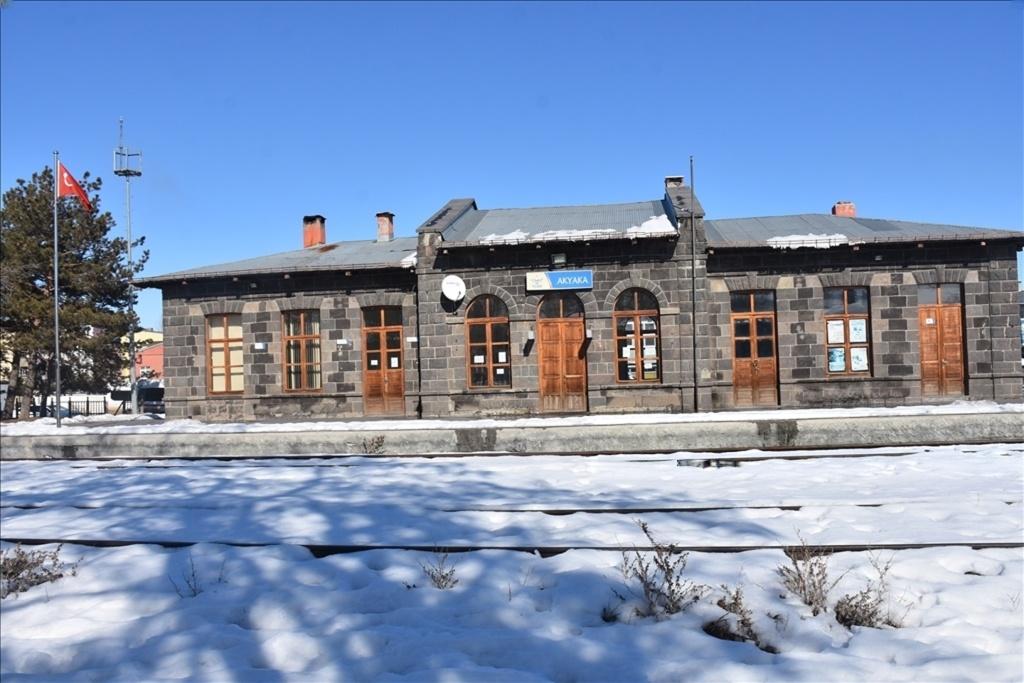
Akyaka Border Gate (officially known as Dogukapı Railway Border Gate), is a crossing point located in the Akyaka district of Kars province, Türkiye, connecting the common land border between Türkiye and Armenia via railway. It is also known as Akhurik on the Armenian side. The border gate, closed since 1993, holds symbolic and strategic importance in the process of normalization of Türkiye-Armenia relations.【1】
The Akyaka Border Gate is situated along the 325-kilometer common border between Türkiye and Armenia. It is the only railway border crossing through which Türkiye’s rail line to Armenia passes and, together with the Alican Road Border Gate in Iğdır province, constitutes one of only two crossing points between the two countries. On the Armenian side, the gate connects to Gyumri, the country’s second-largest city after the capital Yerevan and the site where the Treaty of Gümrü, which ended the 1920 Turkish-Armenian War, was signed. The city lies directly opposite Akyaka district in Kars. The distance between Akyaka and Dogukapı Railway Station is 13 kilometers.【2】
During the Soviet Union era, regular train services operated between Kars and Gyumri in Armenia. At that time, Dogukapı Railway Station was a hub of intense commercial and freight activity. Teams of approximately 100 personnel worked in shifts, with two daily departures in the morning and evening, each transporting around 1,200 tons of cargo. Wagons arriving from Armenia and Russia were transferred to Turkish wagons; coal, flax, sunflower, cotton, and iron were among the main commodities transported. Livestock from Van, Muş, Ağrı, Kars, and Erzurum were also exported to the Soviet Union through this gate. During its operational period, quarantine zones were established in the village of Kalkankale, where animal health inspections were conducted.【3】
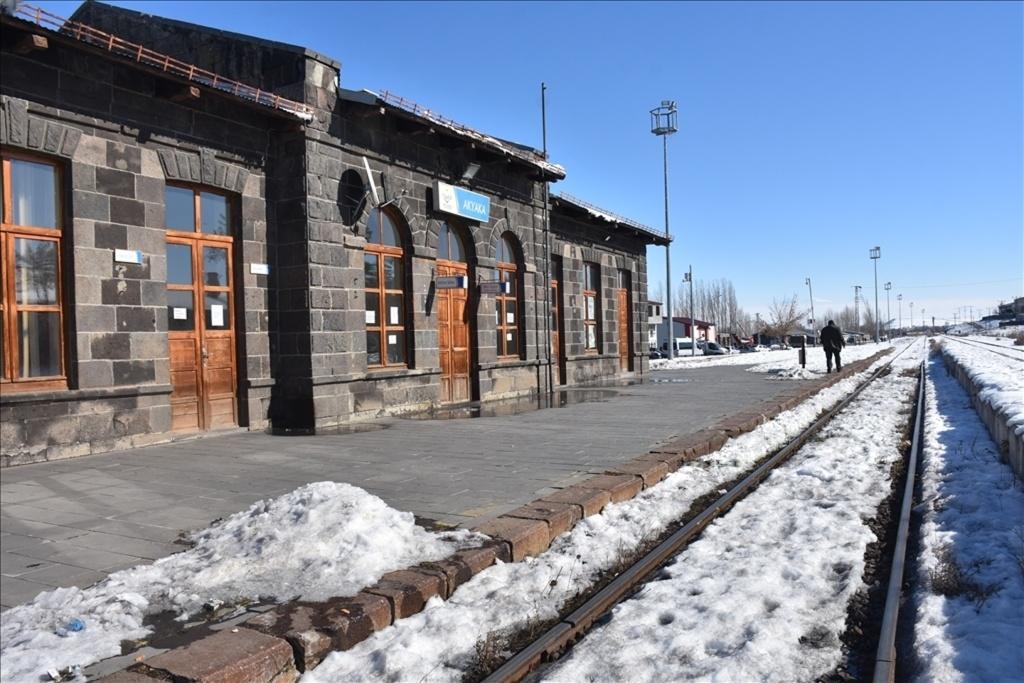
Akyaka Sınır Kapısı (Anadolu Ajansı)
The Akyaka Border Gate was unilaterally closed by Türkiye in 1993 following Armenia’s occupation of Azerbaijani territories in Nagorno-Karabakh. Concurrently, Türkiye severed commercial and diplomatic relations with Armenia.【4】 For the three years following the closure, only the exchange of freight wagons on the railway line crossing the border was permitted.
The first sign of thaw in Türkiye-Armenia relations occurred on 6 September 2008, when then-Türkiye President Abdullah Gül visited Yerevan at the invitation of Armenian President Serj Sargsyan. However, relations regressed after the Zurich Protocols, signed with the aim of resolving the Nagorno-Karabakh issue, failed to yield results.【5】
In 2009, the reopening of the border gate became a topic of renewed discussion; Türkiye undertook the renewal of railway and road infrastructure at Alican and Akyaka. However, with the suspension of the normalization process during that period, the issue of reopening the border gate was put on hold.
Following the earthquakes of 6 February 2023, the Alican Road Border Gate was opened briefly for the first time in 35 years to allow humanitarian aid convoys to pass. A five-truck Armenian humanitarian convoy entered Türkiye carrying 100 tons of food, medicine, and drinking water.
The Akyaka Border Gate and the Kars-Gyumri railway line are regarded as a strategic link, particularly for Armenia’s access to the West and the integration of routes coming from Georgia and Central Asia. If operational, the line is expected to revitalize rail connectivity between Kars, Gyumri, and Tbilisi, bringing significant economic benefits to the region.【6】 Businessman Alican Alibeyoğlu has described this route not merely as a connection to Armenia but as part of the ancient Silk Road extending to China and Siberia.
One of the key pillars of Türkiye-Armenia rapprochement is the “TRIPP” (Trump International Peace and Prosperity Route), which aims to connect Azerbaijan with its Nakhchivan Autonomous Republic via Armenia’s southern Zangezur region. This 43-kilometer corridor, whose operating rights have been granted to a consortium led by the United States, forms part of the transport route extending from the Caspian Sea to Türkiye. With the successful implementation of this project, Kars is projected to emerge as a major commercial and tourism hub in South Caucasus; in this context, the importance of the Baku-Tbilisi-Kars rail line is also emphasized.
During periods when direct trade between Türkiye and Armenia was suspended, trade was conducted transitively through Georgia, with taxes paid in Georgia. Kaan Soyak, President of the Turkish-Armenian Business Development Council, stated that indirect trade via Georgia amounts to approximately $300–350 million, with nearly 99 percent consisting of goods shipped from Türkiye to Georgia and then to Armenia. Key sectors include ready-made clothing, chemical products, food, and unprocessed precious minerals. Soyak forecasts that if the borders open, bilateral trade could rapidly reach $1 billion.【7】
Following the conclusion of the Second Karabakh War in September 2020 with Azerbaijan’s victory, Türkiye-Armenia relations re-entered a normalization process. Special envoys were appointed by both sides; the first meeting took place in Moscow in January 2022. The resumption of direct flights between the two countries and normalization talks have kept expectations alive in the border town of Kars and Armenia’s border town of Gyumri.【8】
On 30 July 2024, Türkiye’s Special Envoy to the Armenia Normalization Process, Ambassador Serdar Kılıç, and Armenia’s Special Envoy to the Normalization Process and Deputy Speaker of the National Assembly Ruben Rubinyan held their fifth meeting directly at the Alican-Margara Border Gate on the Türkiye-Armenia border. According to diplomatic sources, the meeting confirmed agreements reached in previous talks. Both parties agreed to assess the technical requirements necessary for the operationalization of the Akyaka/Akhurik railway border gate in light of regional developments, as well as to mutually simplify visa procedures for diplomatic and official passport holders. The special envoys also reaffirmed their commitment to continue the process without preconditions toward achieving full normalization.【9】
The Türkiye-Armenia Joint Working Group met in Kars on 28 April 2026. With this meeting, the process entered a new phase; both countries took concrete steps toward rehabilitating and immediately reactivating the Kars-Gyumri railway line, which has been inactive since 1993.
On 13 May 2026, Türkiye’s Ministry of Foreign Affairs Spokesperson Öncü Keçeli announced that bureaucratic preparations for the launch of direct trade between Türkiye and Armenia had been completed. Under the new regulation, goods shipped from Türkiye to Armenia via a third country may now officially designate their final destination or origin as “Armenia/Türkiye.” Keçeli also noted that technical and bureaucratic efforts toward opening the common border are ongoing. Armenia’s Ministry of Foreign Affairs characterized this development as “an important step.”
The peace agreement between Azerbaijan and Armenia was adopted on 8 August 2025 at a trilateral summit hosted by U.S. President Donald Trump in Washington, D.C., by the foreign ministers of both countries. The 17-article agreement envisions peaceful relations based on mutual recognition of sovereignty, territorial integrity, and borders; the parties commit to renouncing territorial claims, refraining from the use of force, non-interference in internal affairs, and cooperating on border security. The agreement is scheduled to be formally signed after amendments are made to Armenia’s constitution to remove provisions asserting territorial claims against Azerbaijan. Azerbaijani Ambassador to Ankara Reşad Memmedov stated that the normalization processes between Türkiye-Armenia and Armenia-Azerbaijan are being pursued in parallel and that the borders between Armenia and Türkiye will open after the completion of this process.【10】 Türkiye’s Minister of Foreign Affairs Hakan Fidan also emphasized in November 2025 that Türkiye is ready to normalize relations with Armenia upon the signing of the final peace agreement between Azerbaijan and Armenia.
The regional conflict that began on 28 February 2026 with the U.S. and Israel’s attack on Iran temporarily suspended plans to open the Türkiye-Armenia land border. Due to Iran’s shared land borders with both Türkiye and Armenia, border controls were intensified to manage potential mass migration flows. Kaan Soyak, President of the Turkish-Armenian Business Development Council, noted that the rapid expansion of the Iran war to include Gulf countries, Iraq, and Lebanon has raised concerns about new waves of migration, leading both countries to slow down efforts to open their common land borders. However, regional business representatives argue that once the conflict ends, no obstacles will remain to opening the borders.【11】
In his statement on 13 May 2026, Keçeli confirmed that technical and bureaucratic efforts toward opening the common border are ongoing. He noted that the new regulation now permits direct exports from Türkiye to Armenia and allows the final destination or origin of goods to be officially designated as “Armenia/Türkiye.”
Badalyan assessed Türkiye’s direct trade regulation as a positive step toward expanding bilateral trade relations and expressed expectations for the eventual opening of the border and establishment of diplomatic relations.
Rubinyan stated that work continues toward opening the border, including the Gyumri-Kars railway line.
Hunanyan emphasized that Armenia has always advocated normalization without preconditions, a stance reflected in the government’s 2021–2026 program. He expressed hope that the process would lead to the opening of the closed border and the establishment of diplomatic relations between the two countries. Hunanyan called for accelerating the normalization process and proposed opening the land border first for holders of diplomatic passports, followed by opening it for residents living in the border regions.
Fidan stated in November 2025 that Türkiye is ready to normalize relations with Armenia upon the signing of the final peace agreement between Azerbaijan and Armenia.
Memmedov stated that Türkiye maintains continuous contact with Azerbaijan and that both countries are pursuing their normalization processes in parallel. He indicated that after constitutional amendments scheduled for the 7 June 2026 parliamentary elections remove Armenia’s territorial claims against Azerbaijan from its constitution, the Azerbaijan-Armenia peace agreement will be signed, and subsequently, the borders between Armenia and Türkiye will open.
Alibeyoğlu stated that trade with Armenia’s Gyumri and other cities via Dogukapı, along with associated industrial activity, will provide a significant boost to the region. He emphasized that with the resolution of diplomatic issues and the establishment of road and rail connections, a significant influx of tourists from Armenia to Kars’s historical sites and religious sites is expected, benefiting both countries.
Bozan highlighted the great importance for Kars traders of the new logistics route known as the Zangezur-Trump Corridor. He emphasized that with the opening of the Armenian border, the railway line connecting to the former Soviet Russian territories will pass through Kars, enhancing the city’s geopolitical significance as a transit hub.
Ertaş recalled that Dogukapı was once one of Türkiye’s most important gates, historically connecting Türkiye with Russia through livestock, agricultural products, and grain trade. He stated that if the gate opens, Kars will be able to export on a large scale, particularly fresh vegetables, fruits, dried legumes, and agricultural equipment to the Armenian market.
Burulday stated that the opening of the gate will significantly benefit the merchants of Akyaka and Kars, noting that in the past, a substantial number of tourists came from Armenia to Kars and that this trend is expected to revive.
Durmuş stated that the opening of the gate will bring vitality and trade to the region, enabling Kars to export livestock via Dogukapı, leveraging its strong animal resources. He noted that livestock exports previously directed to Russia, Iran, Iraq, and Syria are expected to resume.
Takva emphasized that it is highly likely Armenia will become Van’s most important trading partner in the near future. He stated that with the opening of the borders, the diaspora Armenian population, numbering over five million, will be able to visit the region. Combined with Armenia’s population of approximately three million, this creates a potential market of 7–8 million people, offering cooperation opportunities in all sectors—not just tourism—for Van.
Demirci noted that Ardahan is a city with high levels of emigration and that with the end of tensions between Azerbaijan, Armenia, and Türkiye, the city could once again become an attractive destination. He expressed expectations for future industrial investment, increased trade, and job creation in the new era.
Arslan recalled that during the Soviet Union era, when the border gates were open, livestock and cotton trade formed the region’s primary livelihood. He emphasized that the problems of the past 35 years must now be left behind. He expects significant developments in the new era, particularly in construction materials, food, and logistics.
Soyak stated that indirect trade via Georgia amounts to approximately $300–350 million and forecasts that this figure could reach $1 billion if the borders open. He highlighted that logistics corridors along the Türkiye-Armenia border will connect the entire Caucasus region with energy and telecommunications infrastructure. He acknowledged that the Iran war has temporarily delayed plans to open the border but affirmed that dialogue and goodwill between the parties continue.
Access to Akyaka district has become a key stop for domestic and international tourists traveling on the Eastern Express and Touristic Eastern Express routes. Regional train services with two cars terminate at Akyaka Railway Station. The region’s cultural and tourist attractions, such as the Ani Ruins near Kars, combined with its strategic location along trade routes, strengthen its tourism potential.
Anadolu Ajansı. "Ermenistan'ın Sınır Kenti Gümrü'de Esnaf Türkiye Sınırının Açılmasını Bekliyor." Anadolu Ajansı, February 7, 2022. Accessed June 8, 2026. https://www.aa.com.tr/tr/gundem/ermenistanin-sinir-kenti-gumrude-esnaf-turkiye-sinirinin-acilmasini-bekliyor/2495861
Anadolu Ajansı. "Kars'ta İş Dünyası Temsilcileri Ermenistan Sınırındaki Doğukapı'nın Açılmasını Bekliyor." Anadolu Ajansı, February 11, 2022. Accessed June 8, 2026. https://www.aa.com.tr/tr/gundem/karsta-is-dunyasi-temsilcileri-ermenistan-sinirindaki-dogukapinin-acilmasini-bekliyor/2499929
Anadolu Ajansı. "Türkiye-Ermenistan Tren Hattının Eski Çalışanları Hattın Yeniden Canlanmasını İstiyor." Anadolu Ajansı, February 15, 2022. Accessed June 8, 2026. https://www.aa.com.tr/tr/gundem/turkiye-ermenistan-tren-hattinin-eski-calisanlari-hattin-yeniden-canlanmasini-istiyor/2503102
Anadolu Ajansı. "Türkiye-Ermenistan Özel Temsilcileri Kılıç ve Rubinyan Sınırda Bir Araya Geldi." Anadolu Ajansı, July 30, 2024. Accessed June 8, 2026. https://www.aa.com.tr/tr/dunya/turkiye-ermenistan-ozel-temsilcileri-kilic-ve-rubinyan-sinirda-bir-araya-geldi/3289439
BBC News Türkçe. "'Türkiye-Ermenistan Sınırı 7 Haziran'daki Seçimlerden Sonra Açılacak'." BBC News Türkçe, May 19, 2026. Accessed June 8, 2026. https://www.bbc.com/turkce/articles/c5ye921mvm8o.
BBC News Türkçe. "Dışişleri Bakanlığı: Türkiye ve Ermenistan Arasında Doğrudan Ticaret İçin Hazırlıklar Tamamlandı." BBC News Türkçe, May 13, 2026. Accessed June 8, 2026. https://www.bbc.com/turkce/articles/cvgznllzr11o.
BBC Türkçe. "Ermenistan'dan Türkiye Nasıl Görünüyor?" BBC Türkçe, May 24, 2022. Accessed June 8, 2026. https://www.bbc.com/turkce/haberler-turkiye-61496248
Deutsche Welle Türkçe. "Türkiye-Ermenistan Sınırı: 33 Yıl Sonra Yeni Umut." Deutsche Welle Türkçe, March 29, 2026. Accessed June 8, 2026. https://www.dw.com/tr/türkiye-ermenistan-sınırı-33-yıl-sonra-yeni-umut/a-76582941
[1]
BBC News Türkçe, "'Türkiye-Ermenistan Sınırı 7 Haziran'daki Seçimlerden Sonra Açılacak'," 19 Mayıs 2026, https://www.bbc.com/turkce/articles/c5ye921mvm8o.
[2]
Anadolu Ajansı, "Türkiye-Ermenistan Tren Hattının Eski Çalışanları Hattın Yeniden Canlanmasını İstiyor," 15 Şubat 2022, https://www.aa.com.tr/tr/gundem/turkiye-ermenistan-tren-hattinin-eski-calisanlari-hattin-yeniden-canlanmasini-istiyor/2503102
[3]
Anadolu Ajansı, "Türkiye-Ermenistan Tren Hattının Eski Çalışanları Hattın Yeniden Canlanmasını İstiyor," 15 Şubat 2022, https://www.aa.com.tr/tr/gundem/turkiye-ermenistan-tren-hattinin-eski-calisanlari-hattin-yeniden-canlanmasini-istiyor/2503102
[4]
Anadolu Ajansı, "Kars'ta İş Dünyası Temsilcileri Ermenistan Sınırındaki Doğukapı'nın Açılmasını Bekliyor," 11 Şubat 2022, https://www.aa.com.tr/tr/gundem/karsta-is-dunyasi-temsilcileri-ermenistan-sinirindaki-dogukapinin-acilmasini-bekliyor/2499929
[5]
Deutsche Welle Türkçe, "Türkiye-Ermenistan Sınırı: 33 Yıl Sonra Yeni Umut," 29 Mart 2026, https://www.dw.com/tr/türkiye-ermenistan-sınırı-33-yıl-sonra-yeni-umut/a-76582941
[6]
BBC News Türkçe, "Dışişleri Bakanlığı: Türkiye ve Ermenistan Arasında Doğrudan Ticaret İçin Hazırlıklar Tamamlandı," 13 Mayıs 2026, https://www.bbc.com/turkce/articles/cvgznllzr11o
[7]
Deutsche Welle Türkçe, "Türkiye-Ermenistan Sınırı: 33 Yıl Sonra Yeni Umut," 29 Mart 2026, https://www.dw.com/tr/türkiye-ermenistan-sınırı-33-yıl-sonra-yeni-umut/a-76582941
[8]
BBC Türkçe, "Ermenistan'dan Türkiye Nasıl Görünüyor?," 24 Mayıs 2022, https://www.bbc.com/turkce/haberler-turkiye-61496248
[9]
Anadolu Ajansı, "Türkiye-Ermenistan Özel Temsilcileri Kılıç ve Rubinyan Sınırda Bir Araya Geldi," 30 Temmuz 2024, https://www.aa.com.tr/tr/dunya/turkiye-ermenistan-ozel-temsilcileri-kilic-ve-rubinyan-sinirda-bir-araya-geldi/3289439
[10]
BBC News Türkçe, "'Türkiye-Ermenistan Sınırı 7 Haziran'daki Seçimlerden Sonra Açılacak'," 19 Mayıs 2026, https://www.bbc.com/turkce/haberler-turkiye-61496248
[11]
Deutsche Welle Türkçe, "Türkiye-Ermenistan Sınırı: 33 Yıl Sonra Yeni Umut," 29 Mart 2026, https://www.dw.com/tr/türkiye-ermenistan-sınırı-33-yıl-sonra-yeni-umut/a-76582941


Status | Closed | ||||||||
|---|---|---|---|---|---|---|---|---|---|
Duration of Closure | 33 years | ||||||||
Closure Year | 1993 | ||||||||
Line Type | Railway | ||||||||
Border Length | 325 km | ||||||||
Location | Akyaka district Türkiye Kars | ||||||||
Geographical Location
History
Soviet Union Era
Closure (1993)
2008 Diplomatic Thaw
2009 Infrastructure Renewal Initiative
February 2023
Strategic Importance
Kars-Gyumri Railway
Baku-Tbilisi-Kars Line and Zangezur Corridor
Indirect Trade
Türkiye-Armenia Normalization Process
Post-2022 Process
Meeting at Alican-Margara Border Gate (July 2024)
Kars Meeting (28 April 2026)
May 2026
Connection with the Azerbaijan-Armenia Peace Process
Impact of the Iran War
Official Statements
Türkiye Ministry of Foreign Affairs Spokesperson Öncü Keçeli
Armenia Ministry of Foreign Affairs Spokesperson Ani Badalyan
Armenia’s Special Envoy to Normalization with Türkiye, Ruben Rubinyan
Armenia Ministry of Foreign Affairs Spokesperson Vahan Hunanyan (May 2022)
Türkiye Minister of Foreign Affairs Hakan Fidan
Azerbaijan Ambassador to Ankara Reşad Memmedov
President of the Kars Chamber of Commerce and Industry, Ertuğrul Alibeyoğlu
President of the Kars Chamber of Commerce and Industry, Kadir Bozan
President of the Kars Agricultural Chamber, Adem Ertaş
President of the Kars Union of Craftsmen and Tradespeople, Adem Burulday
President of the Kars Chamber of Commerce, Metin Durmuş
President of the Van Chamber of Commerce and Industry, Necdet Takva
President of the Ardahan Chamber of Commerce and Industry, Çetin Demirci
President of the Iğdır Chamber of Commerce and Industry, Kamil Arslan
President of the Turkish-Armenian Business Development Council, Kaan Soyak
Tourism and Current Transportation Status