


This article was automatically translated from the original Turkish version.
Aizanoi Ancient City is an ancient settlement located in the Çavdarhisar district of Kütahya province in Türkiye. The city is believed to have derived its name from the mythological figure Azan. Founded during the Hellenistic period, it experienced significant growth under the Roman Empire and became an important center of trade, culture and religion. As one of the most prominent cities in the Phrygia region, Aizanoi became one of the most prosperous cities of its time through its grain production, wine trade and religious structures.
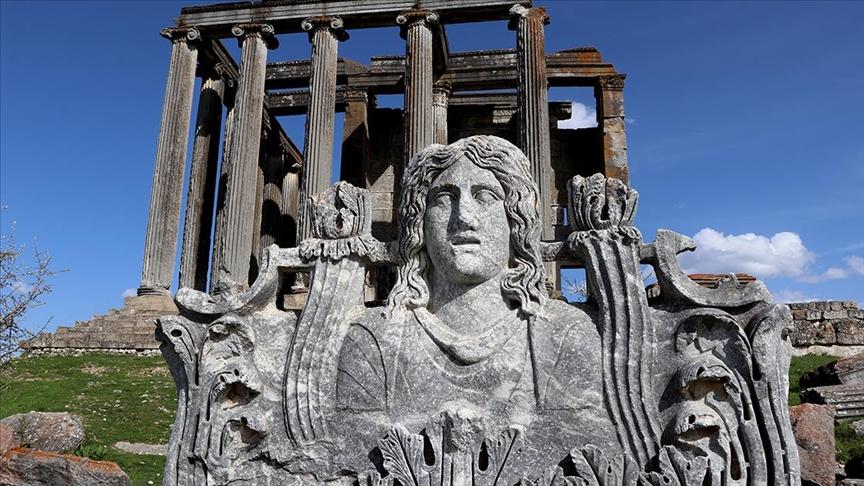
The city’s most renowned structure is the Temple of Zeus, one of the best-preserved Zeus temples in Anatolia. Built in the Corinthian order, this temple stands prominently in the city center with great grandeur. The vaulted spaces beneath the temple were used to serve underground cult practices. The city also features a complex where the theater and stadium were constructed side by side. Recognized as a masterpiece of Roman architecture, this structure served as a venue for both entertainment and sport events.
Another important structure in Aizanoi is the macellum, a covered market area. The inscription found here is regarded as one of the earliest known examples of price regulation in history and contains the price standards established during the reign of Roman Emperor Diocletian. This inscription demonstrates how advanced economic regulation and commercial life were in antiquity. Additionally, the aqueducts that supplied water to the city provide insight into the advanced engineering knowledge of the period.
class=\
Aizanoi’s economic prosperity was based on agriculture and trade, particularly known for its production of olive oil, wine and grain. These products formed the foundation of the city’s wealth and were exported throughout the Roman world. In addition, religious festivals and ceremonies held around the Temple of Zeus became an integral part of urban life. These events, reflecting the religious beliefs and social life of the people, enriched the city culturally as well.
Aizanoi was added to the UNESCO World Heritage Tentative List in 2012 and today stands out as a major archaeological site attracting both local and international tourists. Excavations began in 1926 and continue to the present day. Structures such as the Temple of Zeus, the theater, stadium and macellum reveal the grandeur of Aizanoi’s past and offer a unique experience to history enthusiasts. Artifacts unearthed during excavations are displayed at the Kütahya Archaeology Museum, providing visitors with further information about this ancient city.
Aizanoi Ancient City is a symbol of cultural and historical heritage. With numerous structures ranging from the Temple of Zeus to the theater-stadium complex, this ancient city showcases the aesthetic and engineering achievements of the Roman era and sheds light on the rich history of Anatolia.
3. Arkeofili. (n.d.). *Türkiye’de Görülmesi Gereken 50 Antik Kent*. Accessed January 6, 2025.https://www.arkeofili.com
4. Rehbername. (n.d.). *Türkiye’deki Antik Kentler*. Accessed January 6, 2025.https://www.rehbername.com
Jolly Tur Blog. (n.d.). *Kültür Turu ile Antik Kentler Keşfi*. Accessed January 6, 2025.https://blog.jollytur.com
Ministry of Culture and Tourism of the Republic of Turkey. (n.d.). *Aizanoi Antik City*.Kütahya İl Directorate of Culture and Tourism. Accessed January 6, 2025.https://www.kutahyakultur.gov.tr
UNESCO World Heritage Centre. (2012). *Aizanoi Ancient City*. Accessed January 6, 2025.https://whc.unesco.org/en/tentativelists/5673/

No Discussion Added Yet
Start discussion for "Aizanoi Ancient City" article