


This article was automatically translated from the original Turkish version.
Air hijacking is a criminal act involving the deviation of an aircraft from its planned route, unauthorized entry into another country’s airspace, or a change of direction. In other words, air hijacking can result in endangering the lives and property of passengers and crew, and may lead to international issues affecting many countries. Air hijacking can be defined as actions that alter an aircraft’s current route or enter another country’s airspace without authorization, thereby threatening the safety of those on board. Additionally, in cases of air hijacking, the takeover of crew control and the alteration of flight direction are carried out specifically to compromise the aircraft’s security.
Air hijacking can be considered a form of aerial piracy, but unlike piracy, it also encompasses situations such as the complete removal of the crew’s authority and the seizure of control over passengers or the aircraft itself. Air hijacking is not merely a crime related to the aircraft; it is an act with consequences that can affect international airspace and global relations. Therefore, air hijacking constitutes a violation of international law and legal frameworks designed to ensure flight safety. An air hijacking not only threatens the lives of those on board but also generates widespread global concern because such incidents can undermine international security systems. Air hijacking acts can lead to major diplomatic disputes between involved countries and endanger international air traffic. For this reason, air hijacking is regarded not only as a crime but also as a threat that challenges international cooperation, security measures, and the regulatory order of the aviation sector.
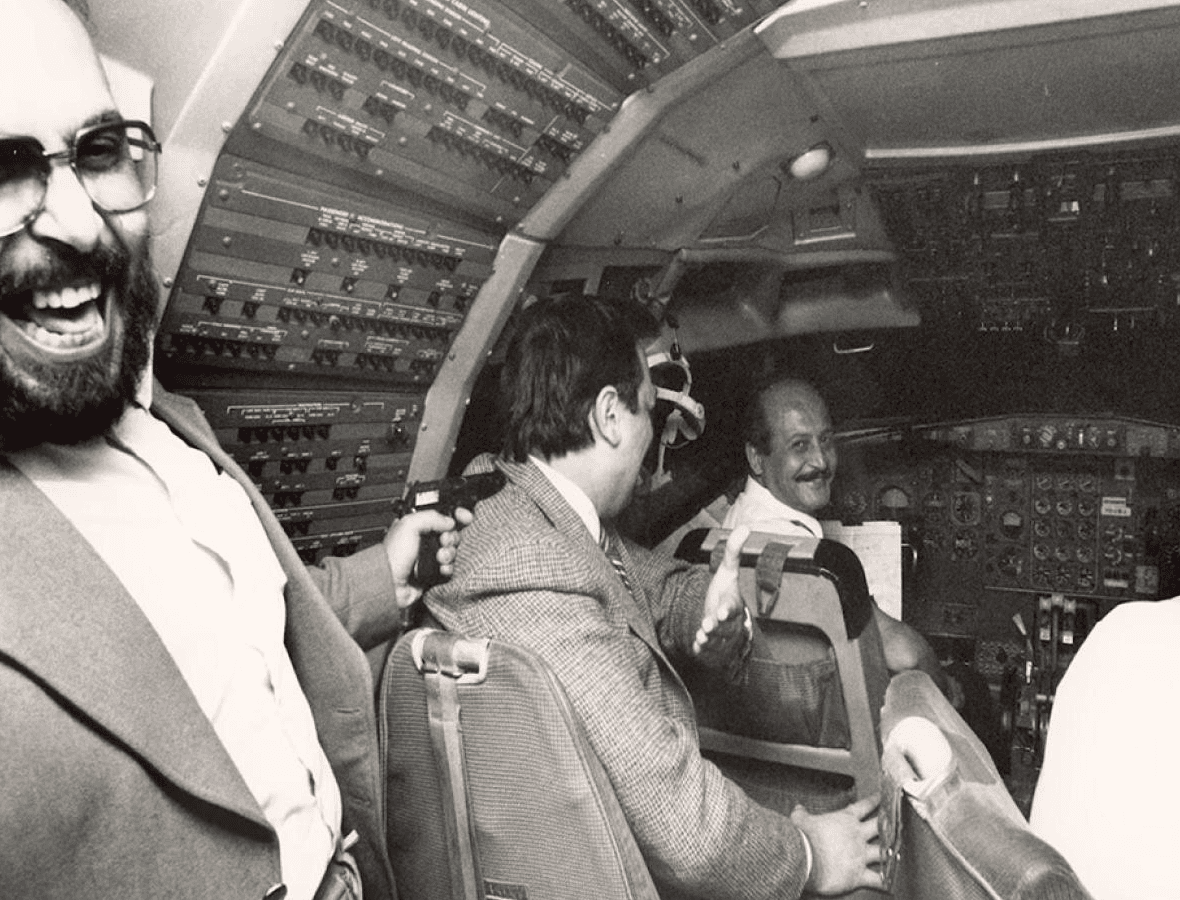
Coşkun Aral - 14 October 1980 Istanbul-Ankara Flight, Air Hijacking Incident
Air hijacking incidents typically arise from the convergence of various socio-political, economic, and psychological factors. These acts can stem from a range of different motivations, each with its own unique background and impact. The causes of air hijacking movements can be grouped as follows:
The causes of air hijacking incidents reveal the complexity and multifaceted nature of these acts. A wide range of causes, from socio-political pressures to psychological issues, can underlie such events.
Air hijacking not only endangers the safety of passengers and crew on board but can also negatively impact international air traffic, the aviation industry, and global security. The dangers and consequences of air hijacking can lead to a series of serious outcomes.
Air hijacking incidents fundamentally threaten the lives of all individuals on board the aircraft. The safety of the hijacked plane is compromised, tensions arise among passengers and crew, and both psychological and physical violence may occur. For example, hijackers often threaten to crash the aircraft or alter its course. This directly endangers the lives of passengers and crew. Moreover, as fuel levels decrease, pilots and crew may be forced to land in unfamiliar areas, potentially leading to accidents.
During air hijackings, crashes may occur due to pilots’ lack of information about suitable landing areas or their unfamiliarity with navigation systems during emergencies. Such crashes can endanger the lives of both passengers and crew. For instance, if an aircraft lands in an incorrect location, a potential accident in that area could result in the death of everyone on board.
Hijackers may engage in confrontations with passengers on board, creating a significant threat. The use of weapons can make air hijackings even more lethal. Passengers, crew, and even pilots may become victims of such violent acts. Many air hijackings end with individuals being threatened or killed with firearms. This not only endangers individual lives but also severely undermines social and aviation security.
Air hijacking incidents have significant economic effects on the aviation industry. Such events can heighten concerns about aircraft safety and erode public confidence in air travel. Passengers may avoid traveling with certain airlines due to security concerns. This situation can lead to revenue losses for airlines and may push some companies into financial difficulty. Additionally, air hijackings place additional pressure on air traffic regulators and aircraft security systems, requiring greater financial and resource investment.
Air hijacking is a threat to international security. When an aircraft deviates from its route and enters another country’s airspace without authorization, it can trigger international diplomatic crises. Particularly when air hijackings are carried out for terrorist purposes, such acts constitute a serious threat to global security and peace. Moreover, when a hijacked aircraft and its passengers enter another country’s airspace without permission, they may create security threats for that country. This situation requires international cooperation.
Air hijacking incidents not only threaten physical safety but also produce significant legal and diplomatic consequences under international law. Air hijacking has a complex legal dimension that affects the sovereignty of multiple countries. This dimension brings to the forefront the necessity of applying both national and international legal norms regarding violations of airspace sovereignty, hostage-taking, and violent acts. Specific international treaties and regulations exist for air hijacking, and such acts are generally assessed based on these instruments.
Article 15 of the Geneva Convention on the High Seas classifies air hijacking as a form of “sea piracy.” The purpose of this Convention is to ensure the safety of aircraft or vessels on international waters and to punish unjustified interference. In areas beyond national jurisdiction, air hijacking incidents may be evaluated under this framework.
On the high seas, the hijacking of an aircraft is regarded as violent and unjustified acts against its passengers or crew. However, such regulations apply only if the hijacking occurs outside a state’s sovereign territory. For aircraft entering a state’s national airspace, these provisions are valid only in areas beyond national jurisdiction, such as the high seas. When air hijacking is carried out for personal gain rather than political motives, such an act may be classified as “piracy” and subject to criminal penalties. However, when air hijacking is conducted for political or terrorist purposes, a more complex evaluation under international law is required.
One of the key international instruments regulating air hijacking is the 1963 Tokyo Convention. This Convention establishes regulations concerning crimes and acts committed on board aircraft. It aims to punish offenses occurring on aircraft and provides applicable provisions for air hijacking cases. The Tokyo Convention recognizes air hijacking as a “crime committed on board an aircraft.” According to this Convention, prosecution and punishment of crimes committed on board an aircraft fall under the jurisdiction of the state in which the aircraft is registered. Thus, when an air hijacking occurs, the authorities of the country where the aircraft is registered have the right to prosecute the perpetrators. Additionally, the aircraft captain has the authority to remove unlawful passengers from the aircraft. However, in some cases, if a state refuses to accept the suspect, the individual must be returned to the country where the crime was committed.
The Tokyo Convention assigns the captain responsibility for neutralizing offenders on board, ensuring flight safety, and securing passenger safety. The captain has the authority to take necessary measures to maintain security in the event of any violent act or hijacking on board.
Air hijacking not only threatens the safety of passengers and crew but can also violate states’ airspace sovereignty. A hijacked aircraft may enter another country’s airspace without authorization. This constitutes both an airspace violation and a breach of the state’s sovereign rights. When a hijacked aircraft enters another country’s airspace, that country may invoke its right to self-defense. Such a situation can generate diplomatic tensions between states due to airspace violations and the diplomatic or military responses they trigger.
Air hijacking incidents can lead to major diplomatic disputes between states. An hijacking occurring within one state’s airspace may be perceived as a threat by another state, and violations of other countries’ airspace can further endanger international aviation security.
Air hijacking incidents have a significant international impact. Particularly when carried out for terrorist purposes, such acts directly threaten global security. These incidents can be discussed in the United Nations Security Council to trigger international action.
In 1977, the United Nations Security Council adopted a series of resolutions aimed at preventing terrorist activities such as air hijacking. These resolutions encouraged countries to develop a common strategy against air hijacking and to establish policies aimed at preventing such crimes. Since air hijacking constitutes not only a regional but a global threat, international cooperation and coordination are essential.
Air hijacking incidents threaten not only the legal framework but also the security of the aviation industry. Damage to public confidence in air transport can lead to economic losses within the sector. Airlines are forced to enhance security measures following hijacking incidents, which can negatively affect ticket sales and travel rates. Moreover, security gaps in the aviation industry reflect on national security policies of states.
Coşkun Aral. *Kaçırılan Uçakta Korsanlarla Röportaj! - Coşkun Aral Anlatıyor.* YouTube video, 35Q-DUyVcPg. Accessed March 3, 2025.https://www.youtube.com/watch?v=35Q-DUyVcPg
Erem, Prof. Dr. Faruk, and Doç. Dr. Selâhattin Keyman. Uçak Kaçırma Suçları. Kamu Hukuku, Selçuk Üniversitesi, Sosyal Bilimler Enstitüsü, Kamu Hukuku Anabilim Dalı, 2021.
Karatosun, Hasan. Uluslararası Hava Hukuku Açısından Uçak Kaçırma Eylemleri. Master's thesis, Selçuk Üniversitesi, Sosyal Bilimler Enstitüsü, Kamu Hukuku Bilim Dalı, Advisor: Doç. Dr. Selcen Erdal, Konya, 2019.

Causes of Air Hijackings
Dangers and Effects of Air Hijacking
Endangerment of Human Life
Air Crashes and Injuries
Use of Weapons and Physical Violence
Economic Impacts and Pressure on the Aviation Industry
Effects on International Security and Diplomatic Relations
Legal Consequences of Air Hijacking
Geneva Convention on the High Seas
Tokyo Convention (1963)
Airspace Violations and Sovereignty Breaches
United Nations Security Council Resolutions and International Forward-Looking Actions
Effects on International Air Transport