


This article was automatically translated from the original Turkish version.
Age of Empires
Description | The Age of Empires series, published by Microsoft Games and developed by Ensemble Studios, is a strategy game based on historical events, offering players various scenarios through different game modes. | ||||||||
|---|---|---|---|---|---|---|---|---|---|
Release Date | 1997-10-15 | ||||||||
Developer | Ensemble Studios | ||||||||
Publisher | Microsoft Games | ||||||||
Core Mechanics | Resource management, Age advancement, Military strategy | ||||||||
Game Modes | Scenario Mode: Designing your own maps and missions Story Mode: Scenarios based on historical events Match Mode: Fighting against AI or other players | ||||||||
Resource Types | Meat, Wood, Gold, Stone | ||||||||
Real-time historical strategy video game series Age of Empires was first released on October 15, 1997. Published by Microsoft Games, Age of Empires was originally developed by Ensemble Studios. While its core mechanics and narrative are grounded in history, the game offers players alternative scenarios through various game modes.
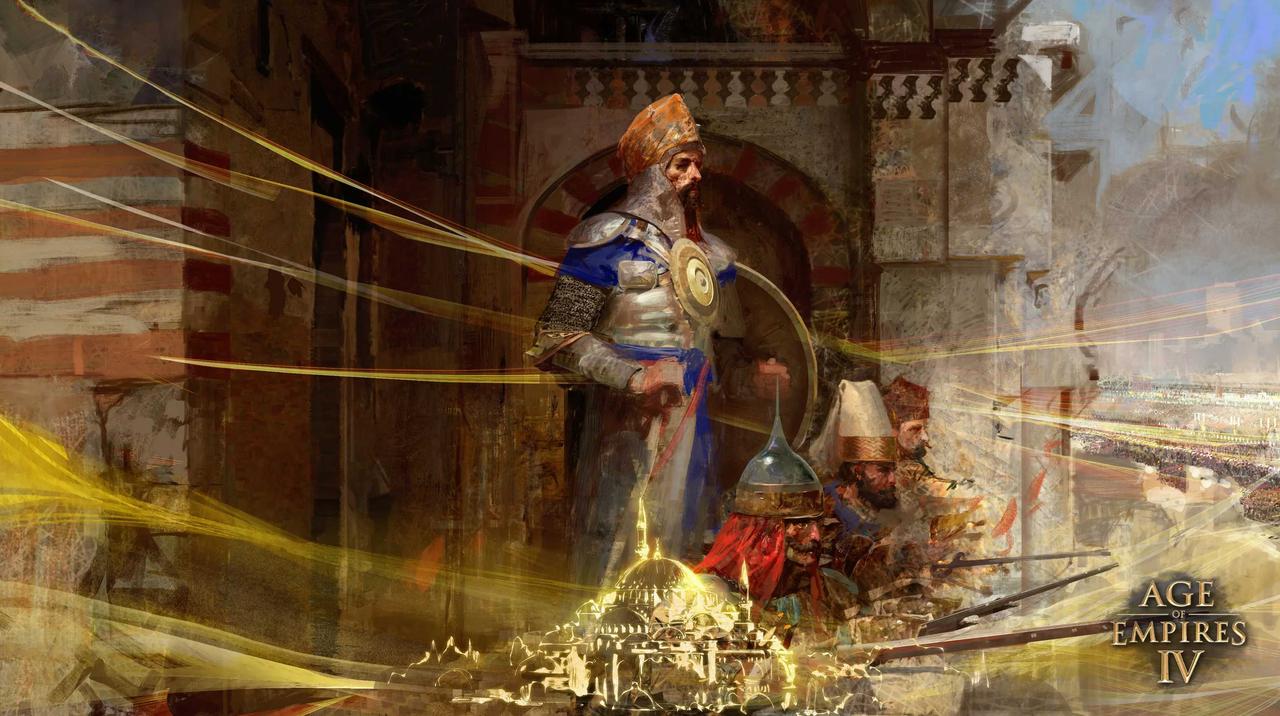
Age of Empires IV Ottoman Promotion Image (Photo: https://www.ageofempires.com)
Although different game series may feature varying modes, Age of Empires fundamentally offers three distinct modes.
In this scenario, which reenacts historical events, players assume control as the leader of a historical civilization, directing all aspects of its development and warfare.
Through this, the series presents players with historical narratives of different civilizations, offering a rich historical experience through battles and political decisions.
In this mode, structured like a match, players can choose to compete against AI-controlled civilizations or other human players in real time, striving for victory.
This mode allows players to design their own maps, armies, and settlements according to custom objectives, enabling them to create unique scenarios and offering a distinct gameplay experience.
Although the series has evolved through numerous DLCs and updates, its core titles remain Age of Empires I, II, III, IV, and Mythology.
The first game in the series, it focuses on ancient Civilizations.
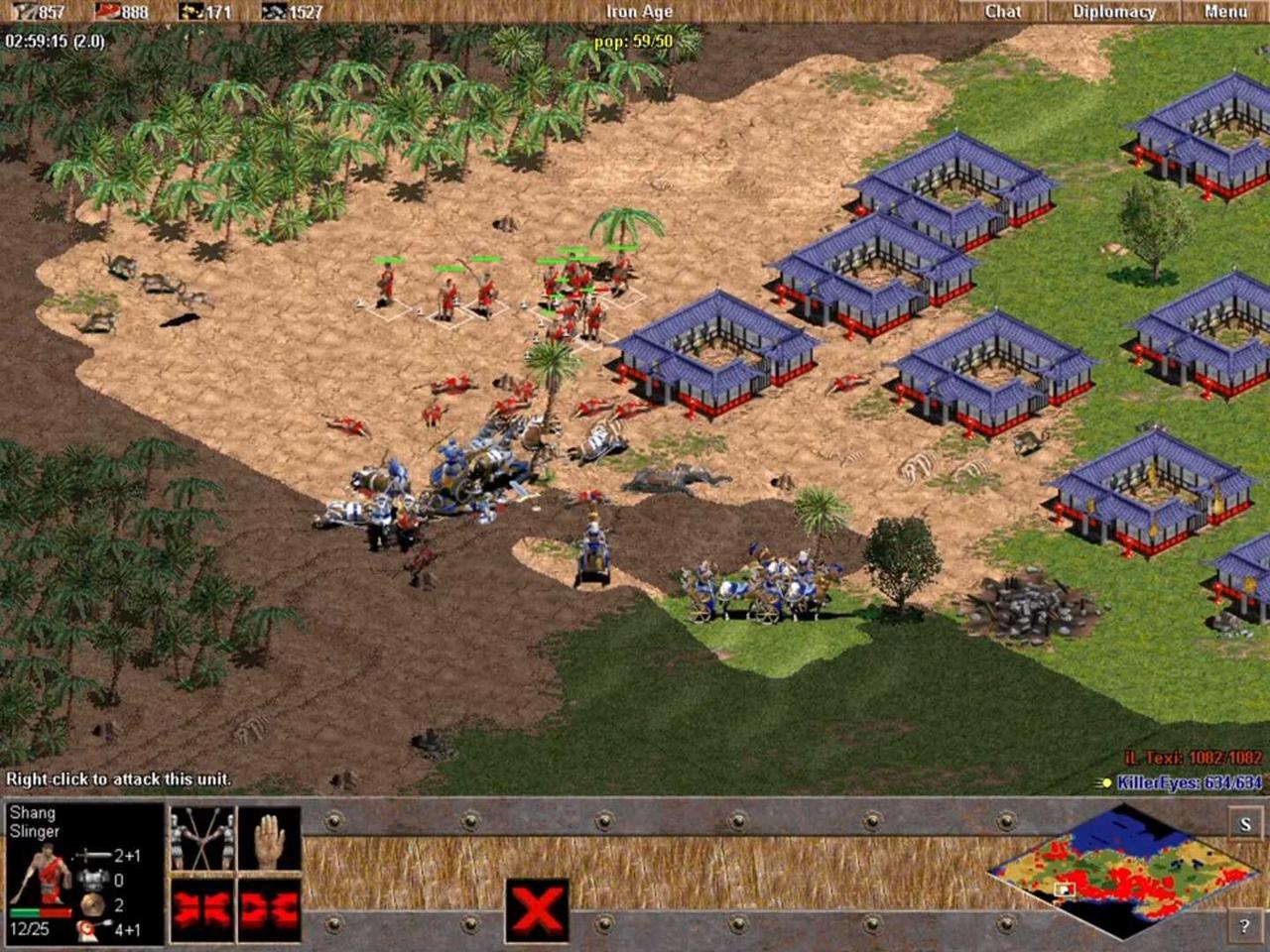
Age of Empires I (Photo: imdb.com/title/tt0412305/)
It centers on the Middle Ages and is one of the most popular entries in the series.
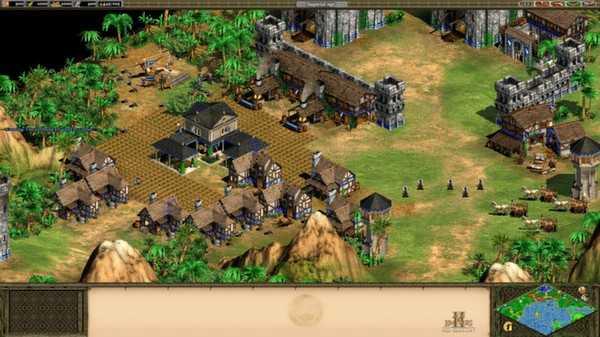
Age of Empires II (Photo: store.steampowered.com/app/221380/Age_of_Empires_II_Retired)
A spin-off series based on mythological elements.
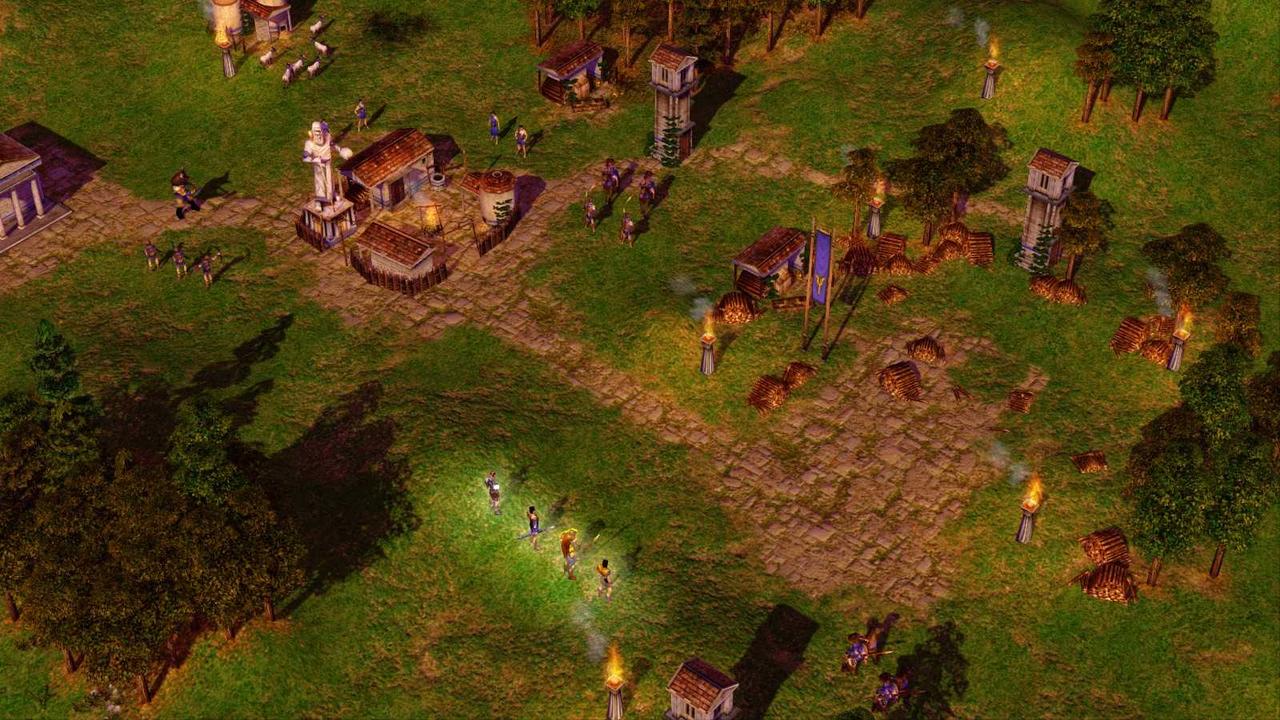
Age of Empires Mythology (Photo: store.steampowered.com/app/1934680/Age_of_Mythology_Retold)
It transitions into the early modern era, covering the discovery of the Americas and the colonial period.
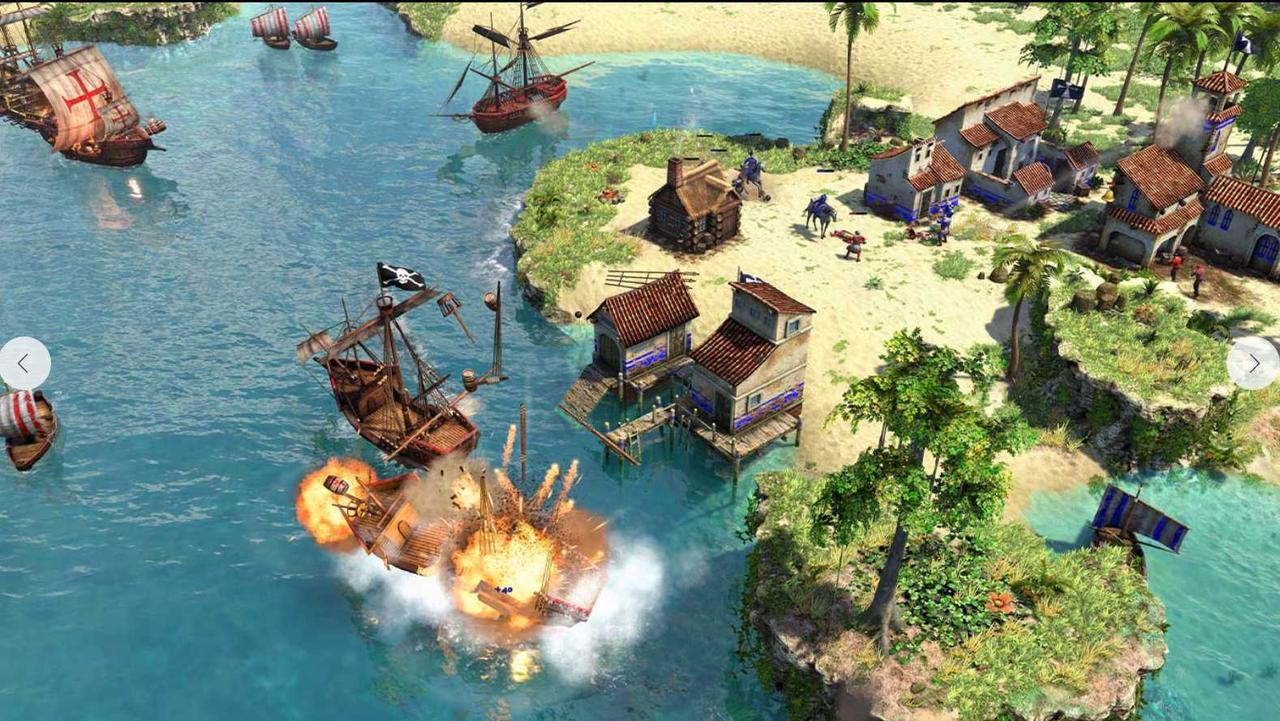
Age of Empires III (Photo: ageofempires.com)
Released with updated graphics and enhanced content.
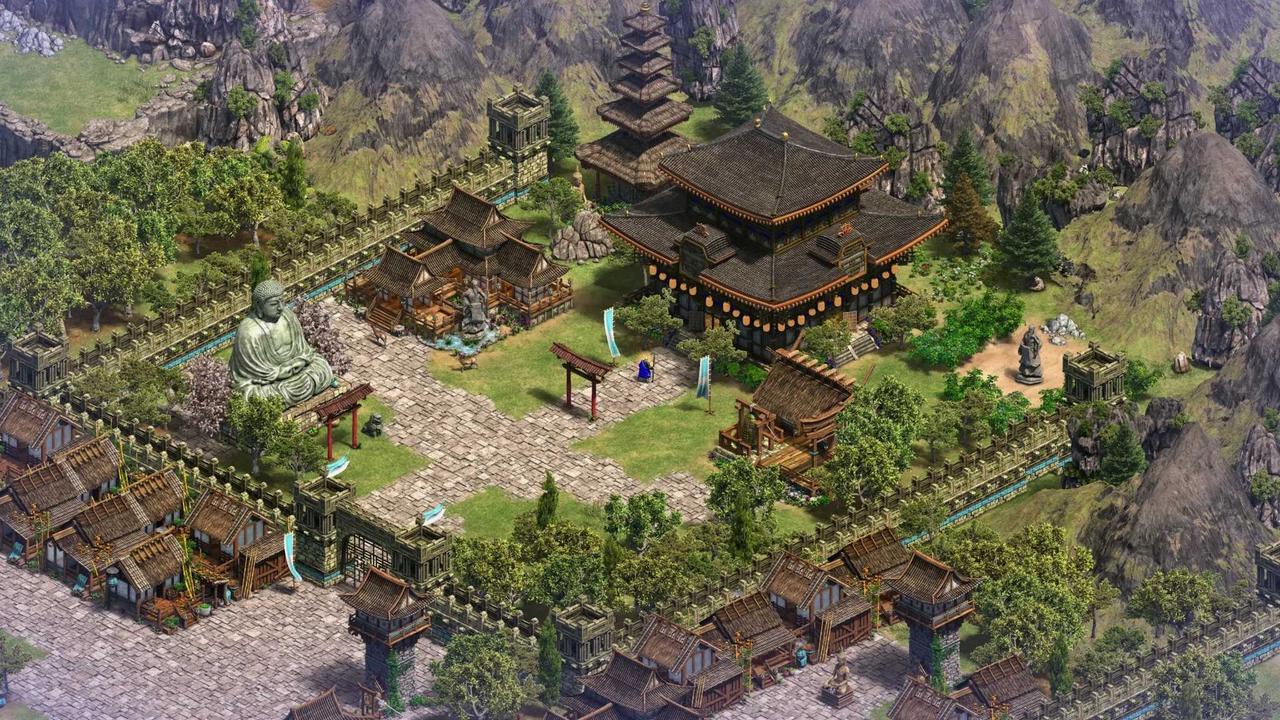
Age of Empires II DE (Photo: arstechnica.com)
Returning to the Middle Ages, it introduces new graphics and gameplay mechanics.
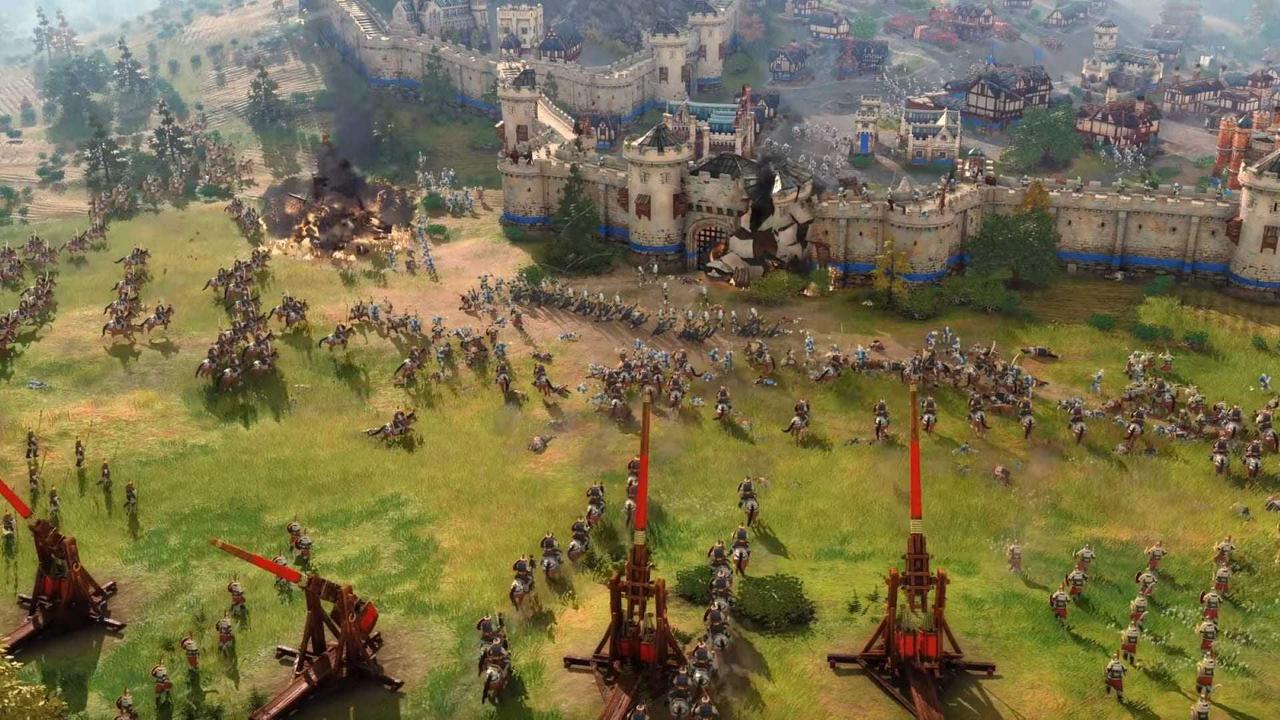
Age of Empires IV (Photo: xbox.com)
Players begin the game by selecting a civilization and exert full control over resource gathering by workers, technological research priorities, troop deployment, and battlefield tactics.
Development in the game is divided into distinct ages. A player who accumulates sufficient resources can advance to the next age. Each age unlocks new units, military, structural, and economic technologies. There are four ages: Dark Age, Feudal Age, Castle Age, and Imperial Age.
Resources required for workers, troops, technological research, and age advancement are gathered by workers from specific locations on the map. There are four primary resources: food, stone, gold, and wood (some civilizations have unique resources; see Byzantium = Olive Oil in AOE IV). Victory can be achieved through various objectives: eliminating all opponents through warfare, capturing and holding sacred sites on the map for a set duration, or constructing a World Wonder using workers and preventing enemies from destroying it for a specified time.
Although victory conditions are defined, achieving them against active human opponents or challenging AI levels is difficult, often leading to indirect forms of competition.
Similar to chess, in a match where both sides start with equal conditions, players strive to gain an advantage over their opponent through superior use of specific strengths, then leverage that advantage to control the course of the battle. Because achieving victory requires concentrating high levels of resources and power, players typically take decisive military actions once an advantage has been secured.
While the core elements—resources, ages, and military units—remain consistent across the series, minor variations exist between titles and civilizations.
Food: Required for troops, workers, age advancement, and certain technological upgrades. Gathered from hunting animals (deer, boar, fish), sheep, berries, and farms.
Wood: Required for certain military units, siege weapons, buildings, ships, and some technological upgrades. Gathered from trees.
Gold: Required for elite military units, siege weapons, age advancement, and technological research. Gathered from mines and trade.
Stone: Required to construct castles, towers, walls, and cisterns. Gathered from mines.
Dark Age: The earliest age, featuring primitive units with no or very limited technology. Ships are used only for fishing; many civilizations cannot field cavalry units, and siege weapons are unavailable.
Feudal Age: Units gain improved armor, light cavalry units emerge, and basic technologies for resource gathering and combat become available. Ships begin to be armed, and primitive siege devices like the ram are introduced.
Castle Age: Cavalry units, heavily armored infantry, and elite troops such as crossbowmen can be produced. Resource gathering becomes more efficient. Castles and stone walls are constructed, and siege weapons like the mangonel and trebuchet are developed.
Imperial Age: Advanced research enhances existing elite units, and gunpowder-based weapons such as cannons become available.
Spearman: Strong against cavalry due to their long spears, but weak against archers. Produced with minimal wood and food.
Heavy Infantry: Equipped with armor and swords. Strong against archers, primitive cavalry, siege weapons, and spearmen, but weak against cavalry, crossbowmen, and musketeers. Produced with food and gold.
Primitive Cavalry: Unarmored horsemen armed with spears. Strong against archers, crossbowmen, musketeers, and siege weapons, but weak against cavalry and spearmen. Produced with food and wood.
Heavy Cavalry(Cavalry): Heavily armored horsemen. While they do not lose to any single unit type in direct combat, they are vulnerable to spearmen, crossbowmen, and musketeers in mixed or hybrid armies. Produced with large amounts of food and gold.
Archer: A standard archer unit armed with a bow. Gains advantage through range but has low health and is vulnerable to unarmored units. Produced with minimal wood and food.
Crossbowman: A highly fragile unit armed with a crossbow. Used to neutralize armored units from the rear lines due to its high armor-piercing capability. Produced with minimal food and gold.
Musketeer: Less accurate than archers but still has low health. Functions similarly to crossbowmen by operating from the rear lines and excelling against siege weapons. Produced with food and gold.
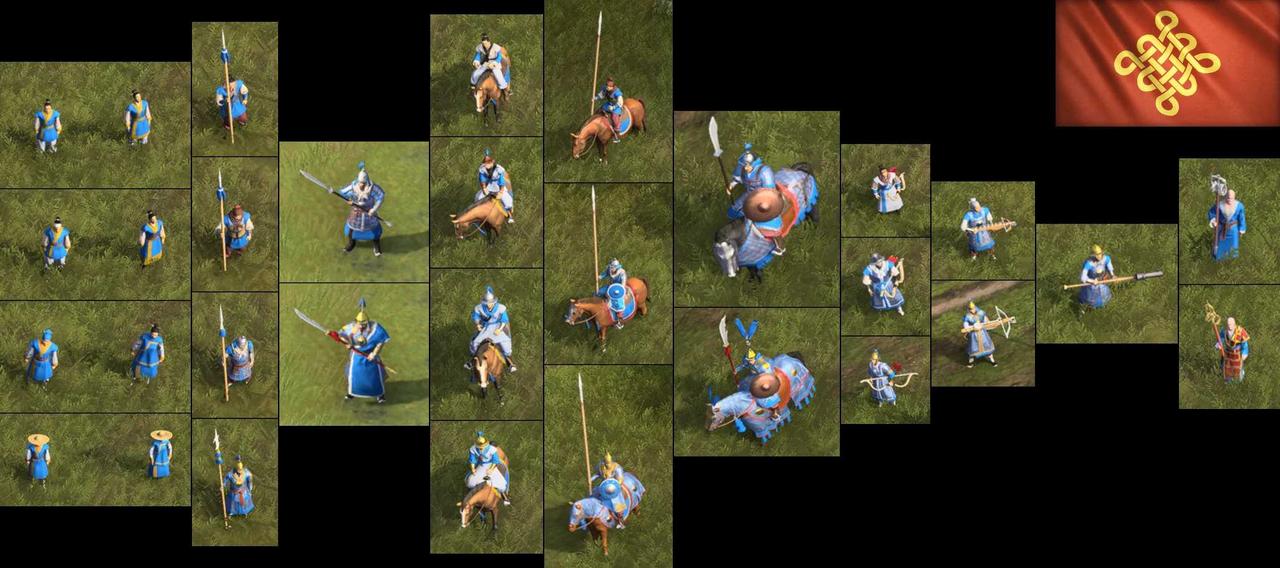
Age of Empires IV Chinese Units Right to Left: Worker, Spearman, Heavy Infantry, Scout, Primitive Cavalry, Heavy Cavalry, Archer, Crossbowman, Musketeer, Monk; Top to Bottom: Technological Upgrades (Photo: ageofempires.com)
Ram: A primitive siege weapon that cannot attack units. Used to destroy buildings, fences, walls, and castles. Its production by infantry units provides flexibility on the battlefield. All siege weapons are weak against enemy units. Produced with wood.
Mangonel: A siege weapon that fires stones in large quantities, effective against grouped units. While less effective against buildings, it can still inflict damage. Produced with wood and gold.
Springald: A large arrow-firing device, favored for its range. It can strike multiple targets at once and can be positioned on defensive structures like castles and towers. Often used to disable enemy siege weapons from a distance. Produced with wood.
Trebuchet: A high-range siege weapon that launches large rocks. Primarily used to destroy castles, towers, and walls. Produced with wood and gold.
Gunpowder Cannons: Available in many variants, they deal high damage against all targets. Primarily used for rapid destruction of walls and castles. Specialized variants can be used to dismantle siege weapons by extending their range. Produced with large amounts of gold and wood.
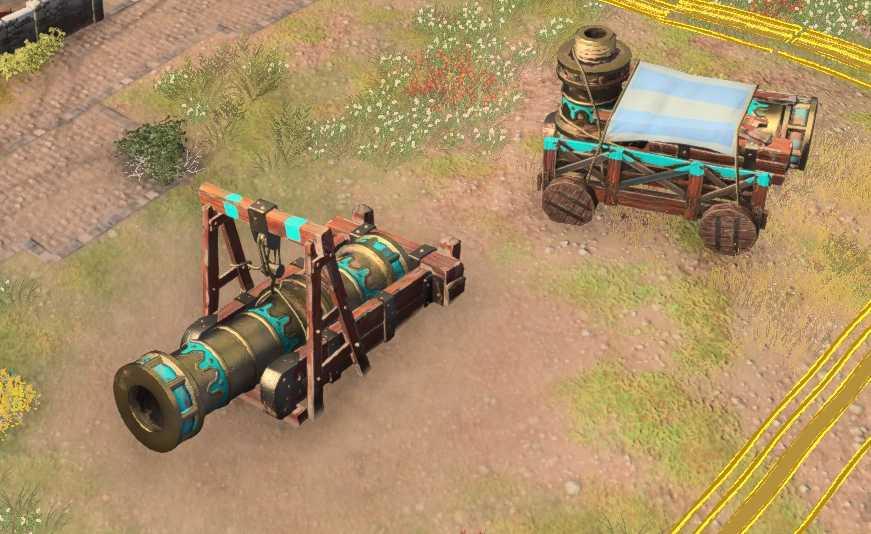
Age of Empires IV Ottoman Falcon Cannon Left: Ready to Fire Right: In Transit (Photo: ageofempires.com)
House(I): Required to increase population capacity.
Mill(I): Where workers deposit food and where technologies to improve food gathering efficiency are researched.
Lumber Camp(I): Where workers deposit wood and where technologies to improve wood gathering efficiency are researched.
Mine(I): Where workers deposit gold and stone, and where technologies to improve gold and stone gathering efficiency are researched.
Farm(I): A fixed structure used for food production.
Barracks(I): Where infantry units are trained and infantry-specific technologies are researched.
Dock(I): A structure built along water edges for fishing boats and workers to deposit fish, and for constructing all naval units.
Tower(I): A standard wooden tower offering high vision. It can be upgraded to stone and armed with weapons. A small number of units can be stationed inside, allowing them to shoot arrows at nearby enemies.
Wooden Fence(I): A weak defensive wall made of wood.
Blacksmith(II): A research facility that provides general military unit upgrades.
Market(II): A building used to produce traders who conduct trade with other markets. Unit exchanges can also be performed here.
Town Center(II): A building that enables the production of workers.
Archery Range(II): Where ranged units (archers, crossbowmen, musketeers) are trained and ranged-specific technologies are researched.
Stable(II): Where cavalry units are trained and cavalry-specific technologies are researched.
Stone Wall(II): Defensive structures made of stone that cannot be destroyed without siege weapons.
Wall Tower(II): Towers built along stone walls that can attack enemies.
Castle(III): A powerful structure with high health, long range, and multiple weapons that attacks nearby enemies. Many units can be stationed inside.
Religious Building(III): Produces religious units and can store special ancient relics on the map to provide additional resources.
Siege Workshop(III): Where siege weapons are produced and siege-specific technologies are researched.
University(IV): Buildings where advanced technological research is conducted.
World Wonder(IV): A structure requiring massive resources. Upon completion, a notification is sent to all opponents, inviting them to destroy it. If it remains intact for a set duration, it results in victory.
Age Building: Symbolic structures built to advance to the next age. They vary by civilization and offer players strategic choices with unique features.
Stone walls, towers, and castles are built with stone. The Town Center is built with stone and wood. The World Wonder requires large amounts of all resources. Age buildings are built with food and gold. All other structures are built with wood. The number in parentheses indicates the age in which each structure becomes available.
Age of Empires. "Ages of Empires." Accessed February 15, 2025.https://www.ageofempires.com/
Ages of Empires Wiki. "Age of Empires Series Wiki." Accessed February 15, 2025.https://ageofempires.fandom.com/wiki/Age_of_Empires_Series_Wiki
The Editors of Encyclopedia Britannica. "Ages of Empires computer game franchise." Accessed February 15, 2025.

Age of Empires
Description | The Age of Empires series, published by Microsoft Games and developed by Ensemble Studios, is a strategy game based on historical events, offering players various scenarios through different game modes. | ||||||||
|---|---|---|---|---|---|---|---|---|---|
Release Date | 1997-10-15 | ||||||||
Developer | Ensemble Studios | ||||||||
Publisher | Microsoft Games | ||||||||
Core Mechanics | Resource management, Age advancement, Military strategy | ||||||||
Game Modes | Scenario Mode: Designing your own maps and missions Story Mode: Scenarios based on historical events Match Mode: Fighting against AI or other players | ||||||||
Resource Types | Meat, Wood, Gold, Stone | ||||||||
No Discussion Added Yet
Start discussion for "Age of Empires (Video Game Series)" article
Modes
Campaign Mode
Multiplayer Mode
Scenario Mode
Game Series
Age of Empires (1997)
Age of Empires II (1999)
Age of Mythology (2002)
Age of Empires III (2005)
Age of Empires II: Definitive Edition (2019)
Age of Empires IV (2021)
Core Game Structure and Mechanics
Resources
Ages
Military Units
Buildable Structures