


This article was automatically translated from the original Turkish version.
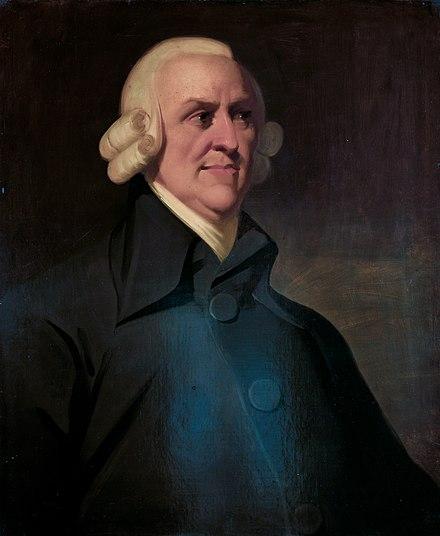
Modern economics considers the Scottish economist and philosopher Adam Smith (1723–1790) one of its foundational figures. He is renowned for his theories that explain how a market economy functions and establish the core principles of capitalism. His work, The Wealth of Nations, is one of the foundational texts of economic thought and lays out the fundamental principles of a free market economy.
class=\
One of Adam Smith’s most famous concepts, the “invisible hand,” refers to a natural market mechanism through which individuals pursuing their own self-interest inadvertently contribute to the general welfare of society. According to this theory, when people act to increase their personal gains, they produce outcomes that benefit society without intending to do so. In a market economy, this freedom of action by individuals allows supply and demand to reach equilibrium spontaneously.
The Invisible Hand suggests that individuals acting in their own interest create a natural order that maintains market balance without the need for government or other authority intervention. It is argued that competition and entrepreneurship enhance societal welfare. For example, a farmer striving for higher income produces higher quality goods. This initiative increases the farmer’s profit while also providing society with better products.
Adam Smith identified the division of labor as one of the most important factors in increasing productivity within production processes. Division of labor can be summarized as breaking down the production process into distinct stages, with each worker specializing in one stage. This specialization saves time and enables individuals to become more skilled at performing specific tasks.
One of the most significant outcomes of the division of labor is increased production. Consider a production line: if each worker performs only one stage of the process rather than the entire process from start to finish, the work is completed more rapidly and more efficiently. This process reduces overall costs and enables the market to offer products at more affordable prices. It also encourages technological advancement, as specialization fosters innovative thinking in specific areas.
Although Adam Smith argued that the free market economy should generally operate without interference, he identified three essential duties of the state to meet certain societal needs.
Adam Smith’s theories form the foundation of modern economic systems. The invisible hand theory argues that markets can function autonomously and allocate resources efficiently without state intervention. The division of labor highlights the importance of specialization and technological progress. However, Smith’s views are not limited to advocating for free markets; his recognition of the state’s role in strategic areas demonstrates the balanced and comprehensive nature of his theories. Today, many economic systems are shaped by reference to these fundamental principles of Adam Smith.
Adam Smith’s ideas form the cornerstone of modern economic systems and offer a profound balance between individual freedom and social welfare. Concepts such as the invisible hand and division of labor not only enhance the efficiency of economic systems but also serve as a guide to understanding how human behavior influences economic processes. Smith’s theories continue to remain relevant in discussions on economic growth, free markets, and social development, and they continue to inspire economists today.
Britannica. "Adam Smith." Encyclopaedia Britannica. Accessed January 3, 2025.https://www.britannica.com
CFA Institute. "Adam Smith and the Foundations of Economics". Accessed January 3, 2025.https://www.cfainstitute.org
Smith, Adam. *Ulusların Zenginliği (Wealth of Nations).*

No Discussion Added Yet
Start discussion for "Adam Smith's Economic Theories" article
The Invisible Hand: The Natural Mechanism of the Economy
Division of Labor: The Key to Productivity
The Role of the State in Adam Smith’s Economic Thought
The Place of Adam Smith’s Theories in Economics