


This article was automatically translated from the original Turkish version.
Acıbadem kurabiyesi is a traditional Turkish dessert made with almonds, egg whites, and sugar. It has a slightly firm exterior and a soft, chewy interior. Its name derives from the bitter almonds used in its ingredients. Acıbadem kurabiyesi held an important place in the Ottoman saray kitchen and gradually became popular among the general public, evolving into a key part of traditional mutfak culture. This cookie is produced in various regions of Türkiye, particularly in areas known for almond cultivation such as Edirne and Datça, where it offers unique flavors. It is recognized both in local cuisine and on international gastronomy lists, enhancing its global profile.
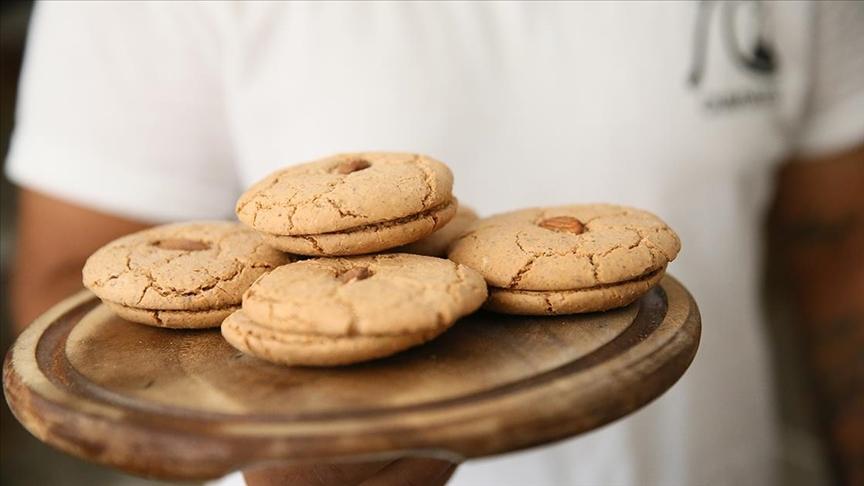
Acıbadem Kurabiyesi (Photo: Ali Ballı, Anadolu Ajansı)
The origin of acıbadem kurabiyesi traces back to the Ottoman Empire. Ottoman cuisine featured a rich culinary tradition that frequently used nuts such as almonds in dessert preparation. Acıbadem kurabiyesi emerged as part of this tradition and gradually gained widespread popularity. This cookie, which held an important position in the imperial kitchen, was adopted by the public and has been preserved to the present day.
The presence of this dessert during the Ottoman period is documented in the cookbook Melceü’t-Tabbâhîn, written by Mehmed Kâmil. In this key source of Ottoman culinary history, the preparation of acıbadem kurabiyesi is described under the heading Târîk-i tabhı. This recipe highlights the common use of almonds and sugar in Ottoman desserts. Prepared using traditional methods, the cookie derives its distinctive flavor from a blend of sweet and bitter almonds. Over time, consumption increased significantly in regions with high almond production such as Edirne and the Aegean Region. It remains a legacy of Ottoman culinary culture.
Acıbadem kurabiyesi has become an internationally recognized dessert. Known as a traditional Turkish cookie, this lezzet has found its place among culinary cultures renowned for almond-based sweets. Considered the ancestor of the French macaron, acıbadem kurabiyesi also shares similarities with the Italian amaretti biscuit.
The gastronomy authority TasteAtlas based in Croatia has included acıbadem kurabiyesi in its list of the “World’s 100 Best Cookies.” Ranked 47th on this list, acıbadem kurabiyesi stands out as a dessert globally admired for its flavor.
To prepare acıbadem kurabiyesi, sweet and bitter almonds are first blanched in boiling water for a short time, then peeled and ground into a fine powder using a food processor. The resulting almond flour is transferred to a small saucepan, and powdered sugar and egg whites are added. The mixture is continuously stirred with a wooden spatula until cooked. The heat is maintained at a level that allows the mixture to thicken, and once it reaches a temperature that feels hot to the touch, it is removed from the heat and spread onto a flat surface to cool.
Once cooled, the dough is placed in a piping bag with a wide tip and piped onto a baking tray lined with parchment paper in round shapes approximately 3 cm in diameter. Sufficient space is left between each cookie, and a single sweet almond is placed on top of each. The cookies are then baked in a preheated oven at medium temperature. After a while, the oven temperature is lowered to ensure slow and even baking. After approximately 40 minutes, the cookies are removed from the oven and left to cool at room temperature. Once completely cooled, the acıbadem kurabiyeleri, with their slightly firm exterior and soft, chewy interior, are ready to serve.

Origin
International Recognition
Acıbadem Kurabiyesi Recipe
Ingredients
Preparation