This article was automatically translated from the original Turkish version.
+1 More
Author(s) | Mustafa Kutlu | ||||||||
|---|---|---|---|---|---|---|---|---|---|
Publisher(s) | Dergah Yayınları | ||||||||
Publication Year | July 2022 (15th Edition) | ||||||||
Number of Pages | 194 | ||||||||
Type(s) | Essay / City Writings / Cultural Study | ||||||||
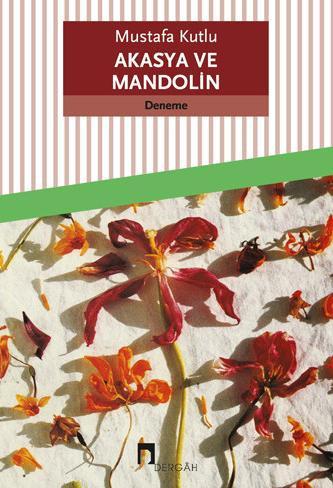
"Ash Tree and Mandolin" is a work by Mustafa Kutlu (b. 1947), one of the leading figures in Turkish short story writing, published as part of Dergâh Publications' "Turkish Literature" series. The book examines the changing face of our social and cultural life through Istanbul-centered essays. It serves as a continuation of the essays Kutlu wrote under the title "City Letters." First published in July 1999, the book consists of 194 pages and has reached its fifteenth printing as of July 2022, maintaining its appeal to readers.
"Ash Tree and Mandolin" continues the essays Mustafa Kutlu previously wrote under the title "City Letters," some of which were compiled into a book with the same name in 1995. This work explores the transformations in our social and cultural life through Kutlu’s distinctive sensitivity and observational power. Focusing particularly on Istanbul, the book addresses themes such as modernization, the erosion of traditional values, the psychological impact of urbanization, and the individual manifestations of societal change.
In his essays, Mustafa Kutlu employs symbolic elements such as the "ash tree" and the "mandolin" to draw attention to the cultural and spiritual differences between the past and the present. The ash tree may symbolize traditional Turkish gardens, the culture of old neighborhoods, and a quiet way of life, while the mandolin can be interpreted as an expression of a more modern, urban, and perhaps melancholic sense of loss. Through these two symbols, the author questions the values lost from our lives, the changing nature of human relationships, architectural texture, and the overall atmosphere.
The essays in the book reflect Kutlu’s deep observations of his surroundings, people, places, and events. Mustafa Kutlu does not merely describe situations; he also shares his reflections on the causes and consequences of these changes. Topics such as the defeat of traditional lifestyles by the pace of the modern world and consumer culture, the weakening of neighborhood ties, and the disappearance of street games are addressed with the author’s sincere and critical perspective. While the work expresses nostalgia for the past, it also draws attention to contemporary social and cultural issues, prompting readers to reflect on their own lives and environments.
The language and style in Mustafa Kutlu’s "Ash Tree and Mandolin" demonstrate his successful continuation of his well-known literary and storytelling identity within the essay genre. The text carries a fluid, lyrical, and thought-provoking tone. Kutlu uses a simple, accessible language understandable to the general public, while enriching his text with symbolic expressions laden with deeper meanings. His style blends objective observation with personal sensitivity, offering readers an intimate and authentic narrative. The book contains no promotional or laudatory language; instead, it adopts a descriptive and objective academic tone.
Mustafa Kutlu is one of the foremost and most distinctive voices in contemporary Turkish short story writing. In his works, he commonly explores the position of traditional values in the face of modernization, the tension between rural and urban life, and the depths of the human psyche. He has reached a wide readership through his stories and essays.
"Ash Tree and Mandolin" holds great significance as an important collection of essays in which Mustafa Kutlu presents his observations and analyses of the city and culture. The book is valuable for its presentation of Istanbul’s socio-cultural transformations through the author’s subjective yet universal perspective. It serves as a valuable resource for students, academics, and general readers interested in urban sociology, cultural studies, the sociology of literature, the history of modernization, and the essay genre. The work also draws attention to the idea that a city is not merely a physical space but a living cultural memory.
Kutlu, Mustafa. *Akasya ve Mandolin*. İstanbul: Dergah Yayınları, 1999. Accessed July 16, 2025. https://www.dergah.com.tr/kitaplar/akasya-ve-mandolin.

Author(s) | Mustafa Kutlu | ||||||||
|---|---|---|---|---|---|---|---|---|---|
Publisher(s) | Dergah Yayınları | ||||||||
Publication Year | July 2022 (15th Edition) | ||||||||
Number of Pages | 194 | ||||||||
Type(s) | Essay / City Writings / Cultural Study | ||||||||
No Discussion Added Yet
Start discussion for "Acacia and Mandolin (Book)" article
Content and Thematic Structure
Language and Style
The Author’s Position and the Work’s Significance