


This article was automatically translated from the original Turkish version.

The 2002 FIFA World Cup has become etched in memory as one of the most special and innovative tournaments in football history. This competition made history not only through its on-field rivalry but also through its organizational structure and geographical location. Held between 31 May and 30 June 2002, it brought together the elite of world football for the first time on the Asian continent.
The 2002 tournament was the first World Cup in FIFA history to be jointly hosted by two countries, South Korea and Japan. It also became the first World Cup held outside Europe and the Americas. The official match ball, the Adidas Fevernova, is regarded as one of the iconic designs of that era.
A total of 64 matches were played during the tournament, resulting in 161 goals, averaging 2.51 goals per match. The most prolific teams were champions Brazil with 18 goals and runners-up Germany with 14 goals.【1】
Before the tournament began, bookmakers and football authorities identified Argentina (7/2) and defending champions France (4/1) as the top favorites. European powerhouses such as Italy, England and Spain were also considered strong contenders for the title.
Brazil, despite being ranked fourth in the favorites list due to difficulties in qualifying, sparked major controversy when head coach Luiz Felipe Scolari included Ronaldo, who had struggled with injuries for over two years. Scolari opted to exclude the legendary Romario and place his faith in Ronaldo to solve the team’s goal-scoring problems, a decision he made despite concerns that people would think he was mad.【2】
The 2002 World Cup witnessed some of the greatest upsets in football history. In the opening match, the defending champions and overwhelming favorites France were stunned by a 1-0 defeat to Senegal. France later drew with Uruguay and lost to Denmark, failing to score a single goal and exiting in the group stage. This marked the worst performance by a reigning champion in the subsequent World Cup. Similarly, Argentina, with its strong squad, was eliminated early after failing to advance from the so-called “group of death.”【3】
One of the most remarkable aspects of the tournament was the success of teams traditionally considered “lower-tier,” alongside the established football giants. Hosts South Korea reached the semifinals by eliminating powerhouses Portugal, Italy and Spain. Senegal, in their first-ever World Cup appearance, advanced to the quarterfinals, proving the strength of African football to the world.【4】
In the final match held in Yokohama, Brazil faced Germany. Ronaldo, widely believed to be nearing the end of his career, scored two goals to lead Brazil to a 2-0 victory. Brazil won all seven of their matches in the tournament, matching Italy’s records from 1934 and 1938, and became world champions for the fifth time. Ronaldo finished the tournament as top scorer with eight goals, followed by Rivaldo and Miroslav Klose, each with five.【5】
Türkiye’s journey in the 2002 World Cup was not merely a sporting achievement but a historic moment when an entire nation came together in shared joy.Şenol Güneş’s A Milli Takım, after a 48-year absence, achieved the greatest success in Turkish football history by finishing third in the tournament.
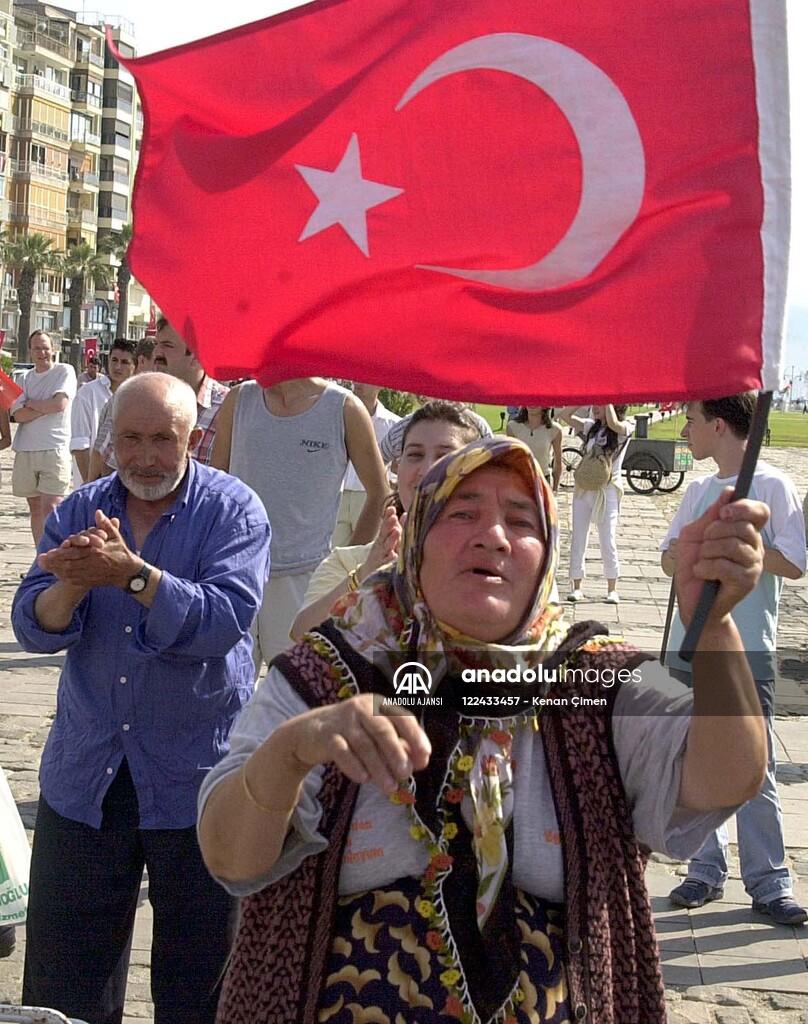
Celebration in İzmir after the match against South Korea (Anadolu Ajansı)
Türkiye’s journey to East Asia began in the UEFA qualifying Group 4, where they competed against Sweden, Slovakia, Macedonia, Moldova and Azerbaijan. The national team finished second in the group behind Sweden. To secure a World Cup ticket, they faced Austria in a playoff: a 1-0 away win in Vienna was followed by a historic 5-0 home victory at Ali Sami Yen Stadium in Istanbul, sending Türkiye to the finals for the first time in 48 years.
Şenol Güneş’s tactical and managerial approach throughout the tournament greatly motivated the team and played a crucial role in propelling them to third place.
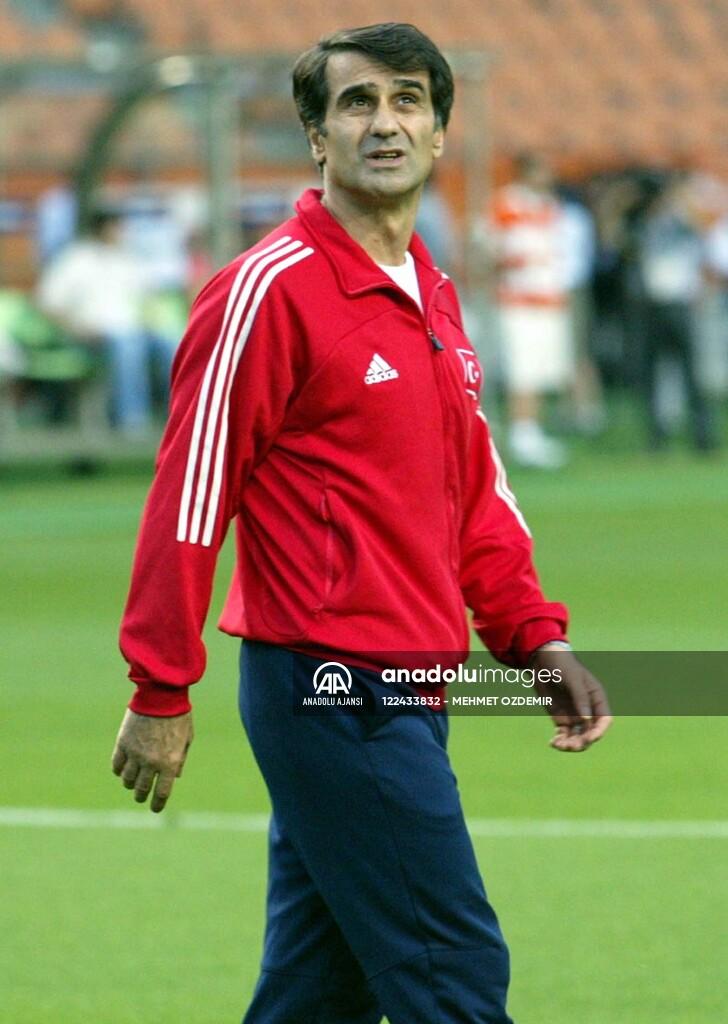
Head Coach Şenol Güneş (Anadolu Ajansı)
The most distinctive feature of Güneş’s squad was its exceptional physical and mental resilience. Goalkeeper Rüştü Reçber emphasized that the team competed with a “warrior” identity, fighting until the last drop of sweat in every match. This physical preparation enabled them to stand toe-to-toe against global giants like Brazil without yielding.
Güneş’s tactical philosophy was rooted in unity and collective effort rather than individual brilliance. İlhan Mansız stressed that success in major tournaments comes not only from talent but from the “team phenomenon,” and that in 2002 they stepped onto the pitch with this belief. This mindset strengthened mutual trust among players, uniting defense, goalkeeper and attack as one cohesive unit with the shared conviction: “Today we will not concede a goal, but we will score.”【6】
Güneş altered the course of matches through decisive substitutions:
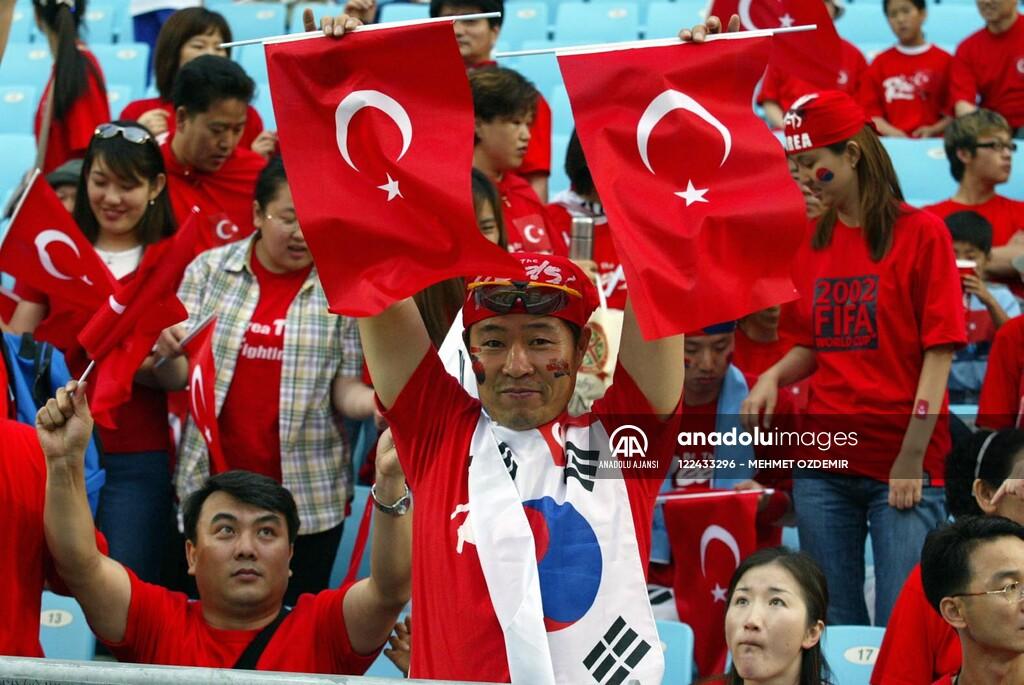
Support from South Korean Fans for the Türkiye National Team (Anadolu Ajansı)
Türkiye was drawn in Group C alongside Brazil, Costa Rica and China.
In the Round of 16, Türkiye faced hosts Japan in Miyagi. The match, officiated by the renowned referee Pierluigi Collina, ended 1-0 in Türkiye’s favor after Ümit Davala scored with a header in the 12th minute. This victory marked Türkiye’s first-ever advancement to the quarterfinals in World Cup history.【9】
In the quarterfinal, Türkiye faced Senegal, who had eliminated France. The match in Osaka ended 0-0 after regulation time. The “golden goal” rule, then in effect, determined the winner in extra time. In the 94th minute, İlhan Mansız delivered a brilliant strike on a cross from Ümit Davala, scoring the golden goal and sending Türkiye into the top four of world football.【10】
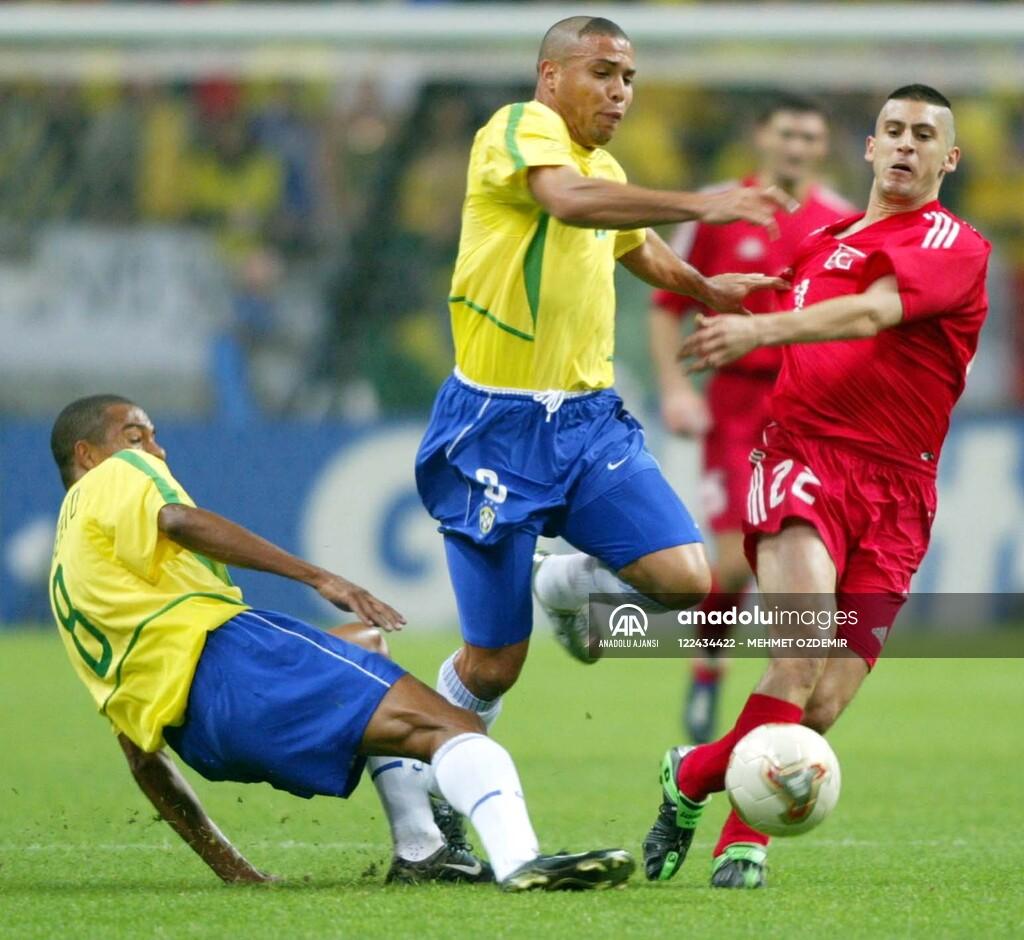
Türkiye vs Brazil Match (Anadolu Ajansı)
In the semifinal, Türkiye faced Brazil, whom they had lost to in the group stage. In Saitama, Türkiye put up a fierce fight against the global powerhouse, with goalkeeper Rüştü Reçber making a series of crucial saves. However, they could not prevent Ronaldo’s lone goal in the 49th minute and were eliminated from the tournament.【11】
In their final match of the tournament, Türkiye faced fellow host nation South Korea for third place. The match in Daegu was historic in many ways:
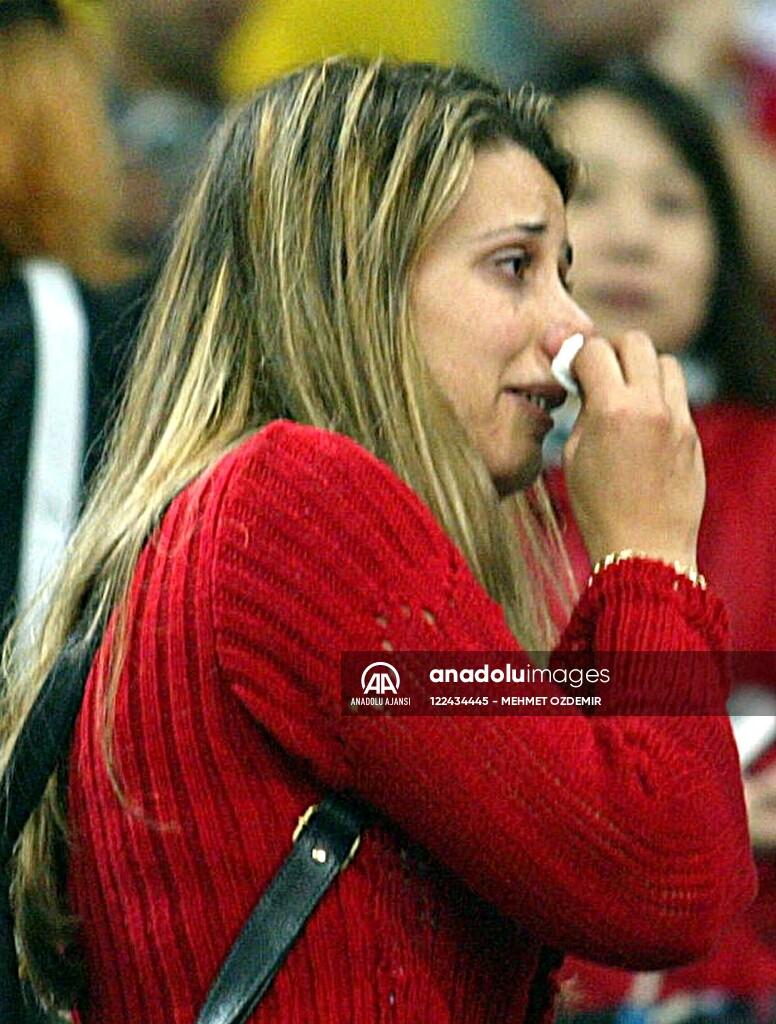
National Sadness After the Brazil Match (Anadolu Ajansı)
The 2002 World Cup remains the brightest chapter in Turkish football’s international history. The squad, described by Şenol Güneş as his “soldiers,” achieved a legendary success through their warrior spirit and resilience, one that will be remembered for generations. Players such as Rüştü Reçber, Ümit Davala and İlhan Mansız earned their names among the elite of world football through their performances.
In the seven matches played, Türkiye recorded four wins, one draw and two losses, scoring 10 goals and conceding six.【13】
This achievement is more than a podium finish—it remains a “fairy tale” that rekindled Turkish football’s self-confidence and continues to inspire future generations.
Anadolu Ajansı. "Dünya Kupası tarihi: 2002." Accessed June 24, 2026. https://www.aa.com.tr/tr/spor/dunya-kupasi-tarihi-2002/3957265
Anadolu Images. "2002 Dünya Kupası." Accessed June 24, 2026. https://www.anadoluimages.com/Search?page=6&
FIFA. "Hikaye, 2002 Kore/Japonya'ya doğru ilerliyor." Accessed June 24, 2026. https://www.fifa.com/en/tournaments/mens/worldcup/articles/the-story-heading-into-korea-japan-2002
FLASHSCORE. "Dünya Kupası 2002." Accessed June 24, 2026. https://www.flashscore.com/football/world/world-championship-2002/#/bL7AeflU/standings/
Maç Hikayeleri. "2002 TÜRKİYE'NİN DÜNYA KUPASI HİKAYESİ ✪ BÖLÜM 1." YouTube. Accessed June 24, 2026. https://www.youtube.com/watch?v=YIJg5k9k69g
Maç Hikayeleri. "2002 TÜRKİYE'NİN DÜNYA KUPASI HİKAYESİ ✪ BÖLÜM 2." YouTube. Accessed June 24, 2026. https://youtu.be/DorIXNfSjuA?si=OLy0C2_uQHNi0jP-
TRT SPOR. "Dünya Kupası tarihi: 2002." Accessed June 24, 2026. https://www.trtspor.com.tr/haber/2022-dunya-kupasi/dunya-kupasi-tarihi-2002-18428482
Türkiye Futbol Federasyonu. "2002 DÜNYA KUPASI: ALTIN SAYFA." Accessed June 24, 2026. https://www.tff.org/default.aspx?pageID=299
[1]
Anadolu Ajansı. "Dünya Kupası tarihi: 2002." Erişim Tarihi 24 Haziran 2026. https://www.aa.com.tr/tr/spor/dunya-kupasi-tarihi-2002/3957265
[2]
FIFA. "Hikaye, 2002 Kore/Japonya'ya doğru ilerliyor." Erişim Tarihi 24 Haziran 2026. https://www.fifa.com/en/tournaments/mens/worldcup/articles/the-story-heading-into-korea-japan-2002
[3]
FIFA. "Hikaye, 2002 Kore/Japonya'ya doğru ilerliyor." Erişim Tarihi 24 Haziran 2026. https://www.fifa.com/en/tournaments/mens/worldcup/articles/the-story-heading-into-korea-japan-2002
[4]
Türkiye Futbol Federasyonu. "2002 DÜNYA KUPASI: ALTIN SAYFA." Erişim Tarihi 24 Haziran 2026. https://www.tff.org/default.aspx?pageID=299
[5]
TRT SPOR. "Dünya Kupası tarihi: 2002." Erişim Tarihi 24 Haziran 2026. https://www.trtspor.com.tr/haber/2022-dunya-kupasi/dunya-kupasi-tarihi-2002-18428482
[6]
Maç Hikayeleri. "2002 TÜRKİYE'NİN DÜNYA KUPASI HİKAYESİ ✪ BÖLÜM 2." Youtube. Erişim Tarihi 24 Haziran 2026. https://youtu.be/DorIXNfSjuA?si=OLy0C2_uQHNi0jP-
[8]
Maç Hikayeleri. "2002 TÜRKİYE'NİN DÜNYA KUPASI HİKAYESİ ✪ BÖLÜM 1." Youtube. Erişim Tarihi 24 Haziran 2026. https://www.youtube.com/watch?v=YIJg5k9k69g
[9]
Maç Hikayeleri. "2002 TÜRKİYE'NİN DÜNYA KUPASI HİKAYESİ ✪ BÖLÜM 1." Youtube. Erişim Tarihi 24 Haziran 2026. https://www.youtube.com/watch?v=YIJg5k9k69g
[10]
TRT SPOR. "Dünya Kupası tarihi: 2002." Erişim Tarihi 24 Haziran 2026. https://www.trtspor.com.tr/haber/2022-dunya-kupasi/dunya-kupasi-tarihi-2002-18428482
[11]
Maç Hikayeleri. "2002 TÜRKİYE'NİN DÜNYA KUPASI HİKAYESİ ✪ BÖLÜM 2." Youtube. Erişim Tarihi 24 Haziran 2026. https://youtu.be/DorIXNfSjuA?si=OLy0C2_uQHNi0jP-
[12]
FIFA. "Hikaye, 2002 Kore/Japonya'ya doğru ilerliyor." Erişim Tarihi 24 Haziran 2026. https://www.fifa.com/en/tournaments/mens/worldcup/articles/the-story-heading-into-korea-japan-2002
[13]
Anadolu Ajansı. "Dünya Kupası tarihi: 2002." Erişim Tarihi 24 Haziran 2026. https://www.aa.com.tr/tr/spor/dunya-kupasi-tarihi-2002/3957265
Overall Structure and Firsts
Pre-Tournament Expectations and Favorites
Group Stage and Major Disappointments
Knockout Rounds and the Rise of Surprise Teams
Final Result: Brazil’s Fifth Star
A Nation United: Türkiye’s 2002 World Cup Story
Strategic Player Selections and Changes
Group Matches: Tough Start and Goal Averages
Round of 16: Silence Against Hosts Japan
Quarterfinal: İlhan Mansız and the Golden Goal
Semifinal: Second Encounter with Brazil
Third-Place Match: Historic Achievement and Unforgettable Friendship
A Fairy Tale