


This article was automatically translated from the original Turkish version.
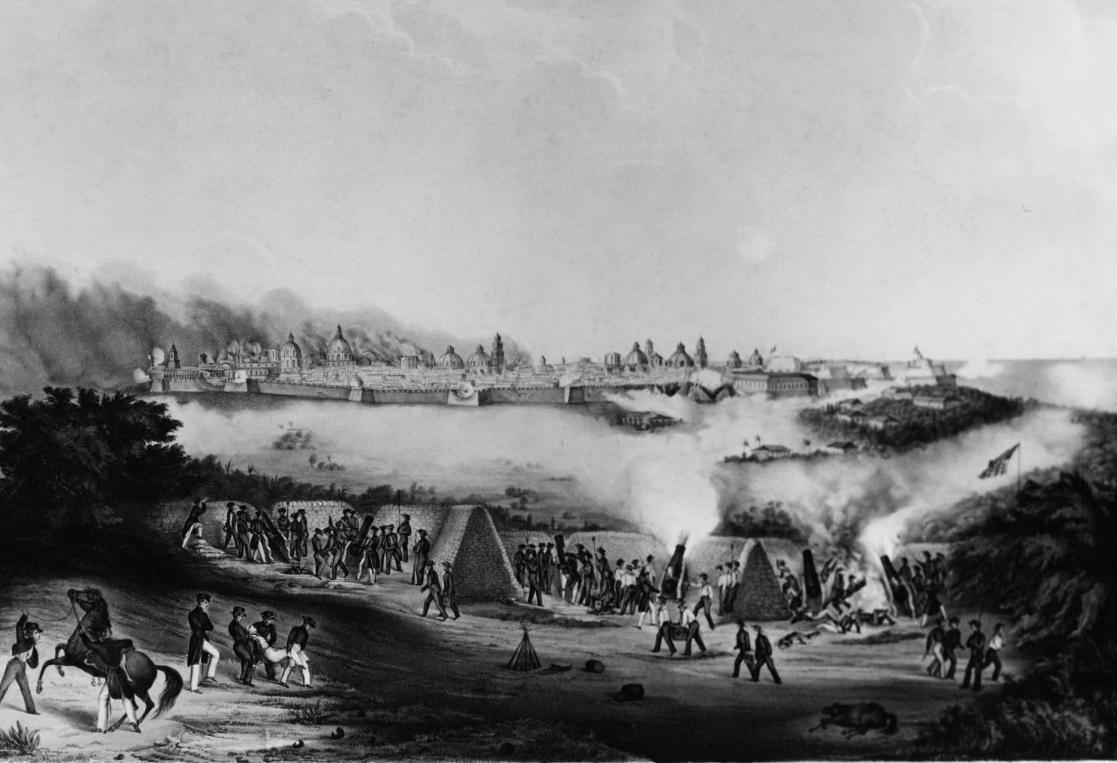
History | 25 April 1846 – 2 February 1848 | ||||||||
|---|---|---|---|---|---|---|---|---|---|
Side | USA and Mexico | ||||||||
Main Commanders (USA) | General Zachary Taylor, General Winfield Scott | ||||||||
Main Commanders (Mexico) | Antonio López de Santa Anna | ||||||||
Result | USA victory | ||||||||
Treaty | Treaty of Guadalupe Hidalgo (1848) | ||||||||
Mexican–American War was a conflict fought between the United States and México from 1846 to 1848, resulting in significant territorial losses for México. The war was directly linked to the United States’ expansionist ambition under the doctrine of “Manifest Destiny”.
The Republic of Texas, which declared its independence in 1836, was annexed by the United States in 1845, a move México labeled as an “act of aggression”. Disputes over the border further escalated: the United States claimed the Rio Grande as the southern boundary of Texas, while México recognized the Nueces River as the boundary. The territory between these two rivers, known as the “Nueces Strip”, became one of the immediate causes of the war.
President James K. Polk sent troops under the command of General Zachary Taylor to the border region. On 24 April 1846, after Mexican cavalry attacked U.S. forces, President Polk declared it an act of aggression, and on 13 May 1846, Congress formally declared war.
The U.S. war strategy unfolded in three phases:
1. Occupation of northern México and New Mexico,
2. Capture of California,
3. Seizure of Mexico City.
General Taylor achieved victories in battles such as Palo Alto, Resaca de la Palma, and Monterrey.
General Winfield Scott advanced toward Mexico City following the amphibious landing at Veracruz and captured the city in 1847.
In the California Theater, control of the region was secured with the contributions of General Kearny and John C. Fremont.
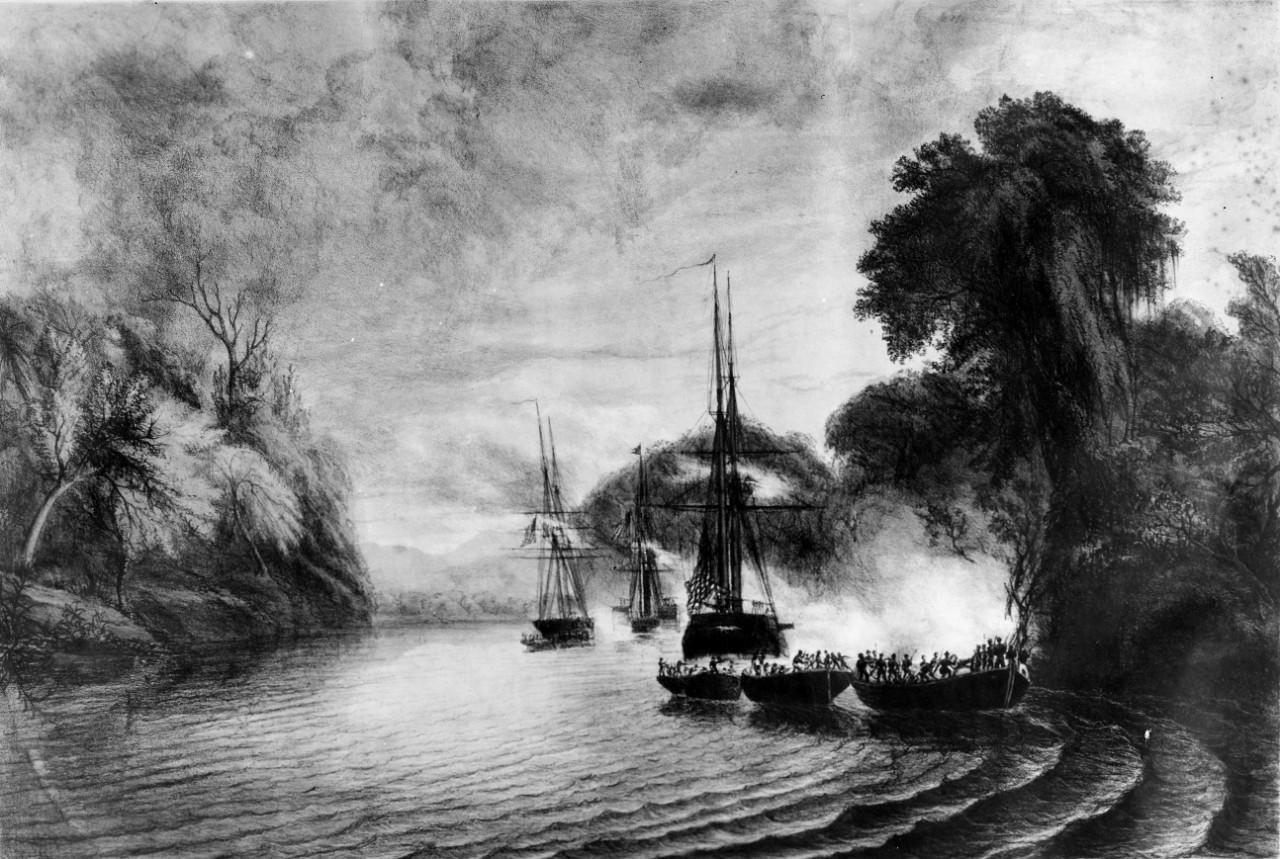
Savaşa Dair Bir Kare (Naval History and Heritage Command)
Under this treaty, México ceded to the United States the territories of California, Arizona, New Mexico, Nevada, Utah, and parts of Colorado and Wyoming (approximately 1.36 million square kilometers).
México recognized the Rio Grande as the international boundary. The United States agreed to pay $15 million in compensation and assume México’s outstanding debts.
To resolve lingering border disputes after the war, México sold southern parts of New Mexico and sections of Arizona to the United States for $10 million.
- The war generated opposition among anti-slavery factions in the United States. Politicians such as Abraham Lincoln questioned the legitimacy of the war.
- Ralph Waldo Emerson predicted that the United States would emerge from the war “poisoned”; this forecast was later interpreted as foreshadowing the Civil War.
- México lost approximately half of its territory.
- Political instability deepened.
- Santa Anna returned to power multiple times during the war but was again exiled following his failed military defenses.
The U.S. Navy blockaded key ports along the Gulf of Mexico and the Pacific coast. The amphibious landing at Veracruz was the largest such operation in U.S. history up to that point and played a crucial role in enabling the success of ground forces.
U.S. Navy. “Mexican-American War.” Naval History and Heritage Command. Accessed May 12, 2025.https://www.history.navy.mil/browse-by-topic/wars-conflicts-and-operations/mexican-american-war.html.
Wills, Lillian. “War with Mexico, 1846–1848.” Lumen Learning. Accessed May 12, 2025.https://courses.lumenlearning.com/wm-ushistory1/chapter/war-with-mexico-1846-1848/.

History | 25 April 1846 – 2 February 1848 | ||||||||
|---|---|---|---|---|---|---|---|---|---|
Side | USA and Mexico | ||||||||
Main Commanders (USA) | General Zachary Taylor, General Winfield Scott | ||||||||
Main Commanders (Mexico) | Antonio López de Santa Anna | ||||||||
Result | USA victory | ||||||||
Treaty | Treaty of Guadalupe Hidalgo (1848) | ||||||||
No Discussion Added Yet
Start discussion for "1846–1848 United States–Mexico War" article
Military Developments
Treaty and Consequences
Treaty of Guadalupe Hidalgo (2 February 1848)
Gadsden Purchase (1854)
Domestic and Foreign Political Effects
Impact on American Society
Impact on Mexican Society
Role of the Navy