This article was automatically translated from the original Turkish version.
Cats have fascinated humans throughout history, capturing attention and inspiring admiration through their remarkable and surprising qualities. In this blog, we will explore how our feline friends enrich our lives and uncover the mysterious world they inhabit. Let us step into the fascinating and enchanting world of cats!
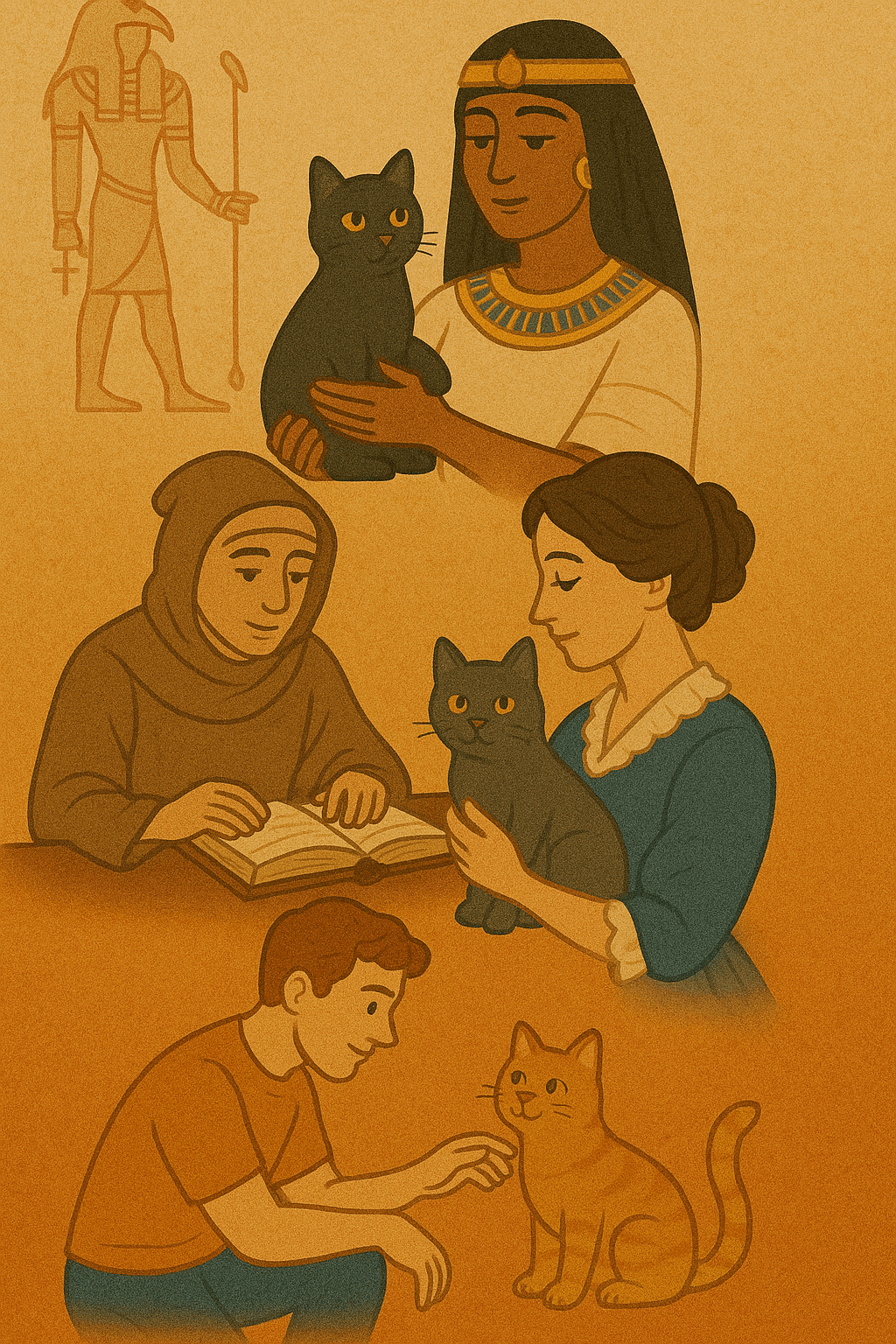
Feline Friendships Through the Ages (This image was generated by artificial intelligence)
Various studies have examined the positive effects cats have on humans. These effects can vary from person to person, and not every cat owner will have the same experience. Nevertheless, it is generally accepted that cats can have beneficial impacts on both emotional and physical health.
Some findings from these studies include:
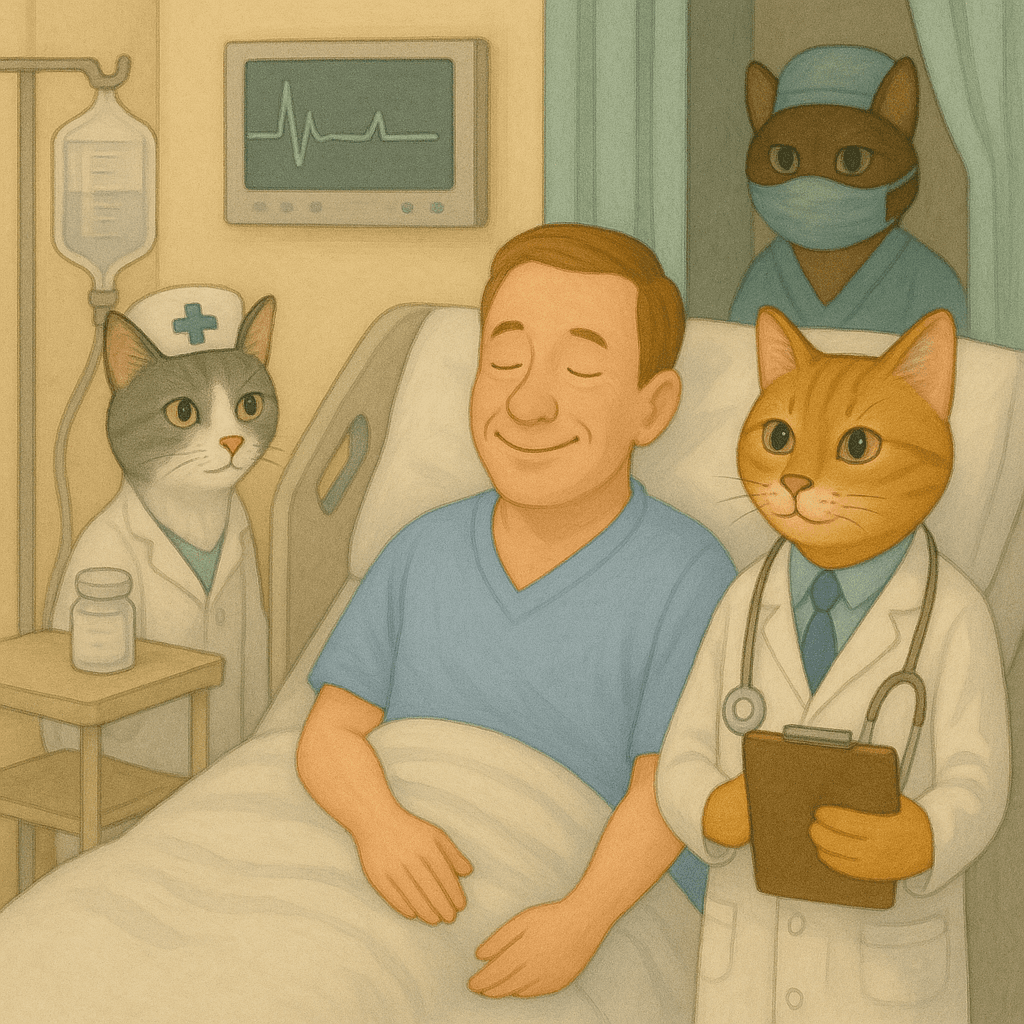
The Healing Power of Representative Cats (This image was generated by artificial intelligence)
In 1953, psychiatrist Boris Levinson was sitting in his office with his dog when an introverted, autistic, and nonverbal young patient arrived with her mother. The child’s sudden interest in and interaction with the dog caught the doctor’s attention. The dog acted as a bridge between the patient and therapist, supporting the therapeutic process. Dr. Levinson began using his dog to help children establish therapeutic bonds. His publication of these findings formally launched pet-assisted therapy.

Dr. Boris Levinson’s Clinic and His Dog Jingles (This image was generated by artificial intelligence)
In recent years, the therapeutic effects of cats have also gained increasing attention. It is well known that the sound of purring promotes psychological relaxation. As a result, therapy cats are now used in various clinical settings to provide similar benefits. Therapy cats are trained companion animals that offer emotional support to those in need. Unlike service animals, which are specially trained to assist individuals with disabilities, therapy cats are typically found in hospitals, nursing homes, schools, and rehabilitation centers. These gentle creatures provide emotional comfort, reduce stress, and support the healing process through their soothing presence.
While cat lovers experience these positive effects firsthand, those who fear cats can benefit from simple and effective methods to overcome their fears. Fear of cats is a common phenomenon, and several solutions are available for those seeking to manage it.
Everyone’s fears are unique, so personalized approaches often yield the best results. Overcoming fears takes time, so patience is essential. The moments spent with cats will ultimately reveal how valuable this journey can be.
In our “Cats 101” blog, we will continue exploring the beauty of a life filled with cats and the joy they bring to our daily lives. Here, you will find tips on building stronger bonds with cats and ways to make life more colorful alongside them. In this magical world full of feline mysteries lies a friendship worth discovering—get ready to explore it together!
The Mysterious Worlds of Representative Cats (This image was generated by artificial intelligence.)
Özdemir, Nihal, and Figen Süslü. “Psikiyatri Kliniğindeki Kedinin Hastalara Etkileri.” Kriz Dergisi 3, no. 1–2 (1993): 65–67. https://dergipark.org.tr/en/download/article-file/596118