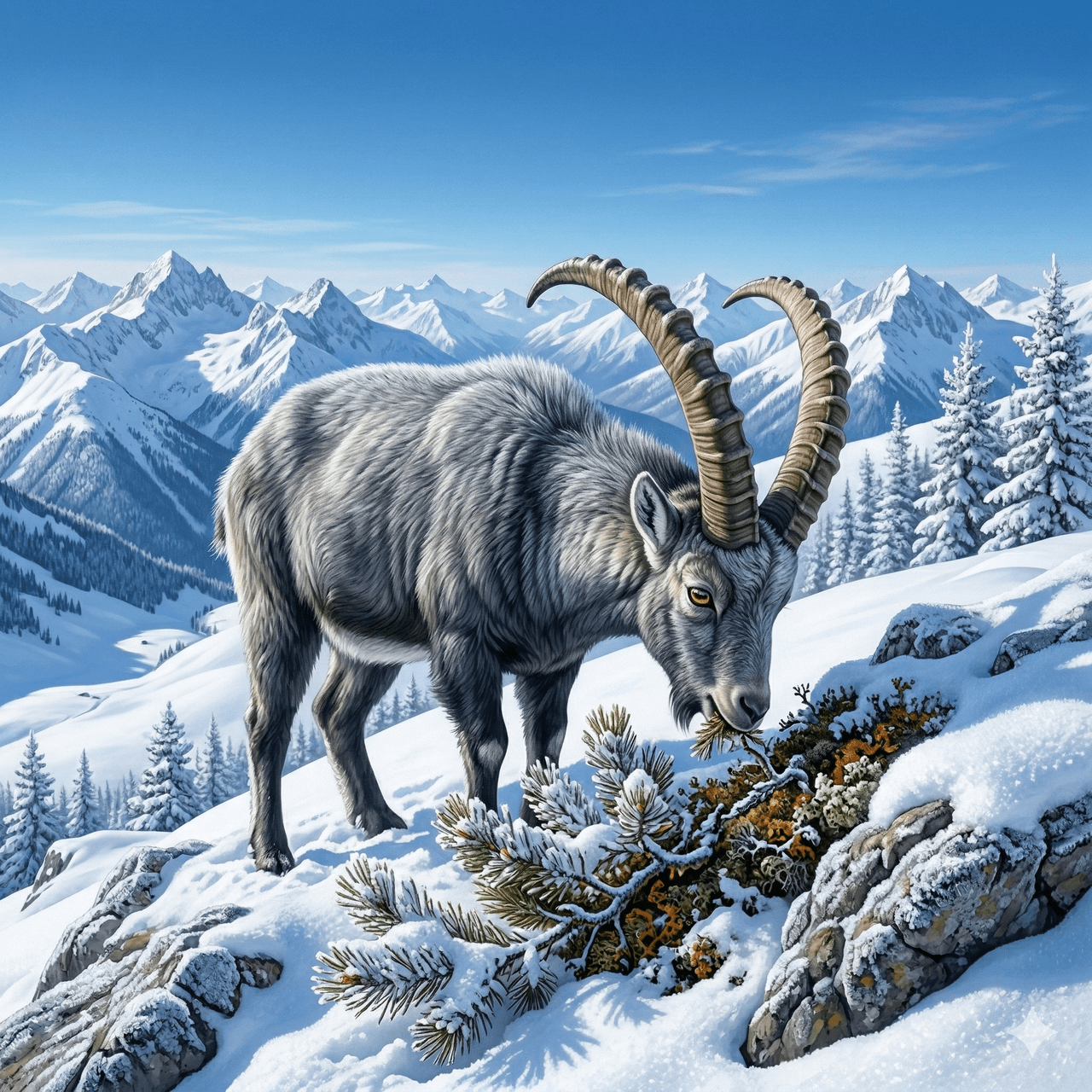


Wild Goat: Nature's Master Acrobat
The wild goat is a strong and agile mammal that has perfectly adapted to life on steep and high cliffs. It is the great ancestor of the domestic goats we see in villages today and from which we obtain milk and cheese. Climbing those towering mountains that reach toward the sky may seem extremely difficult to us. But have you ever wondered how wild goats manage to leap and jump so effortlessly across these steep and dangerous cliffs? Let us take a closer look at these skilled acrobats of the heights!
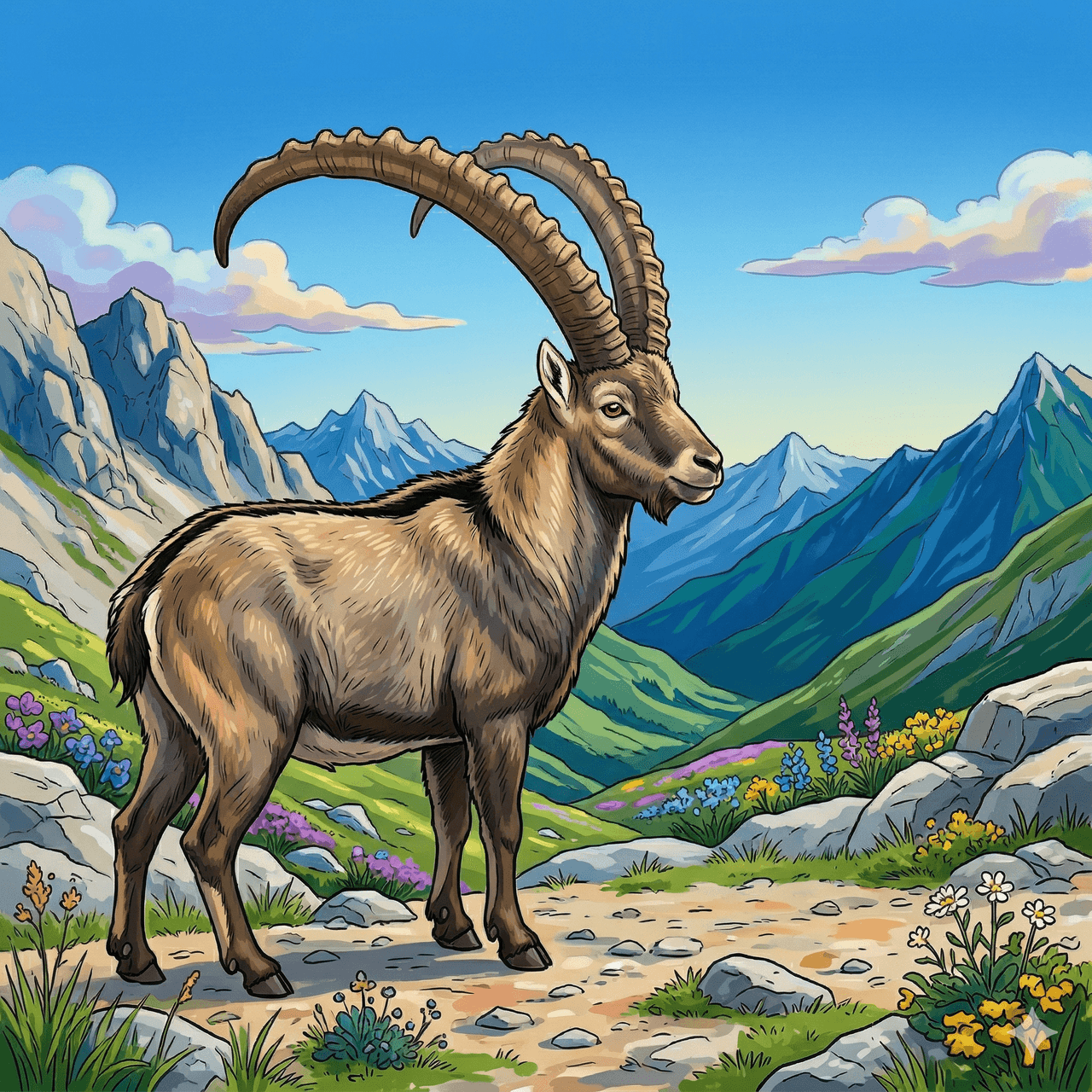
Wild goat (Image generated by Artificial Intelligence)
What Do They Look Like? 🧐
Wild goats are powerful, stocky animals with long legs. Male wild goats are called buck, females are simply called goat, and their young are known as kids. Adult males can reach up to 85 kilograms, while females are more slender and smaller.
Their most striking feature is their horns. The males’ magnificent horns curve backward like swords and can grow up to 145 centimeters long! Females have much shorter horns. Their reddish-brown coats in summer turn gray and white in winter to blend in with the snow. Additionally, males have a black stripe along their back called a mane and a long beard under their chin.
Where Do They Live? 🏔️
As their name suggests, wild goats love places so high they seem to touch the clouds. They inhabit steep cliffs, precipices, and mountain forest edges at elevations of 4,000 to 4,500 meters above sea level. Found across Asia and Europe, in Türkiye they live especially in the Taurus Mountains and on the rugged peaks of Eastern and Southeastern Anatolia.
Why do they live in dangerous cliffs rather than comfortable flatlands? Because these steep cliffs offer them the safest refuge. To protect themselves from predators such as wolves and bezoar goats, they have chosen these steep slopes as their homes—places that other animals cannot easily climb.
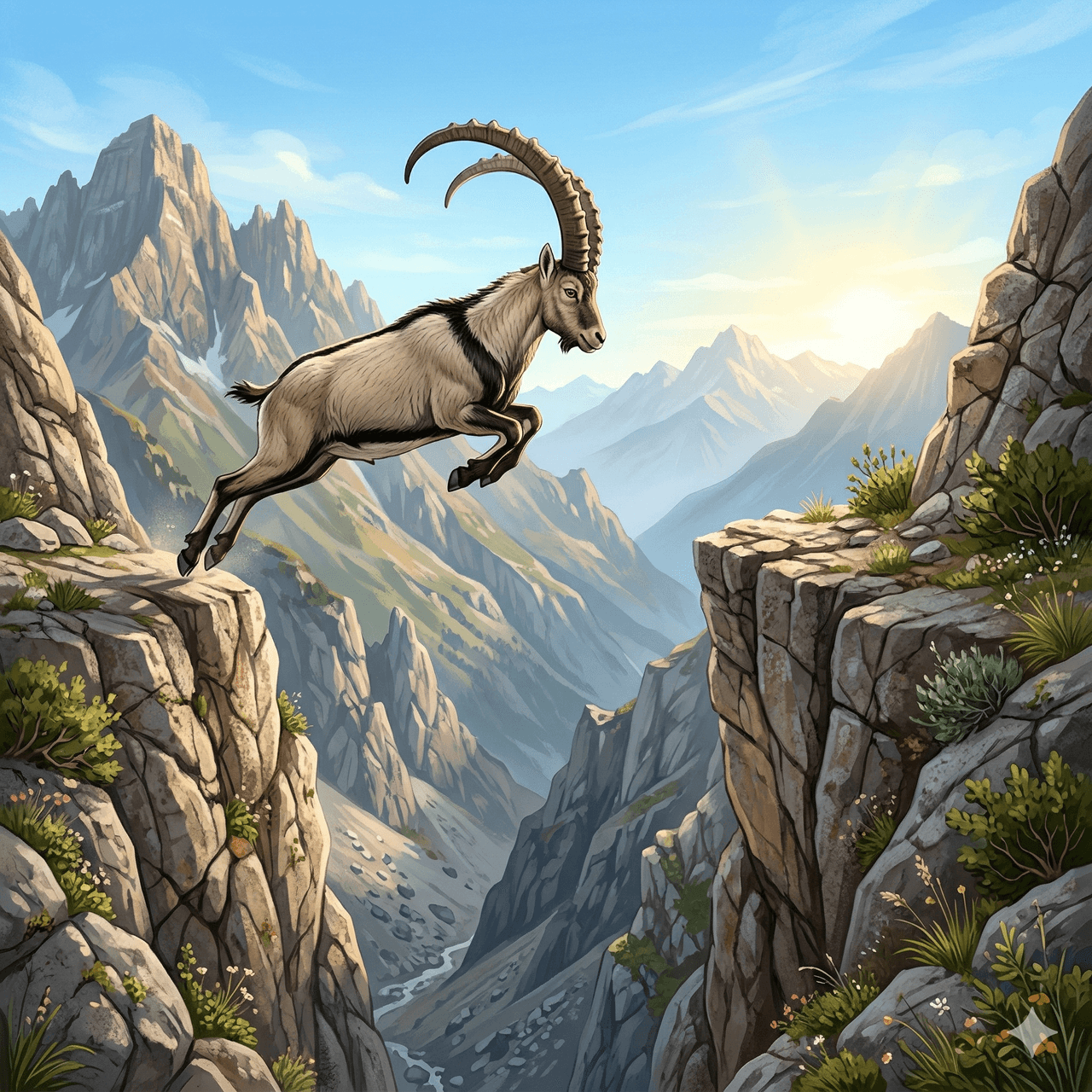
Wild goat (Image generated by Artificial Intelligence)
What Are Their Super Abilities? 🦸♂️
The hooves of wild goats are like magical climbing shoes. A thick, flexible pad beneath their hooves allows them to grip rocky surfaces tightly, while their sharp hoof tips prevent slipping on ice. Thanks to these specialized feet, they can leap up to six to seven meters horizontally and two to three meters vertically in a single bound. When deep snow falls in winter, they use a clever method to conserve energy: they walk in single file, stepping precisely in each other’s footprints, just like train cars following one another!
What Do They Eat and How Do They Live? 🍃
Wild goats are strict herbivores, feeding on fresh grasses, leaves, mosses, shrubs, and tree shoots. They obtain most of their water needs from the plants they consume. On hot summer days, they enjoy lying down on glaciers or snowbanks to cool off.
Wild goats do not live alone; females and their young form herds. The herd is usually led by an older, experienced female. While grazing, at least one goat always climbs to a high peak to act as a lookout. If it senses danger, it immediately emits a sharp, high-pitched whistle to alert the entire herd.
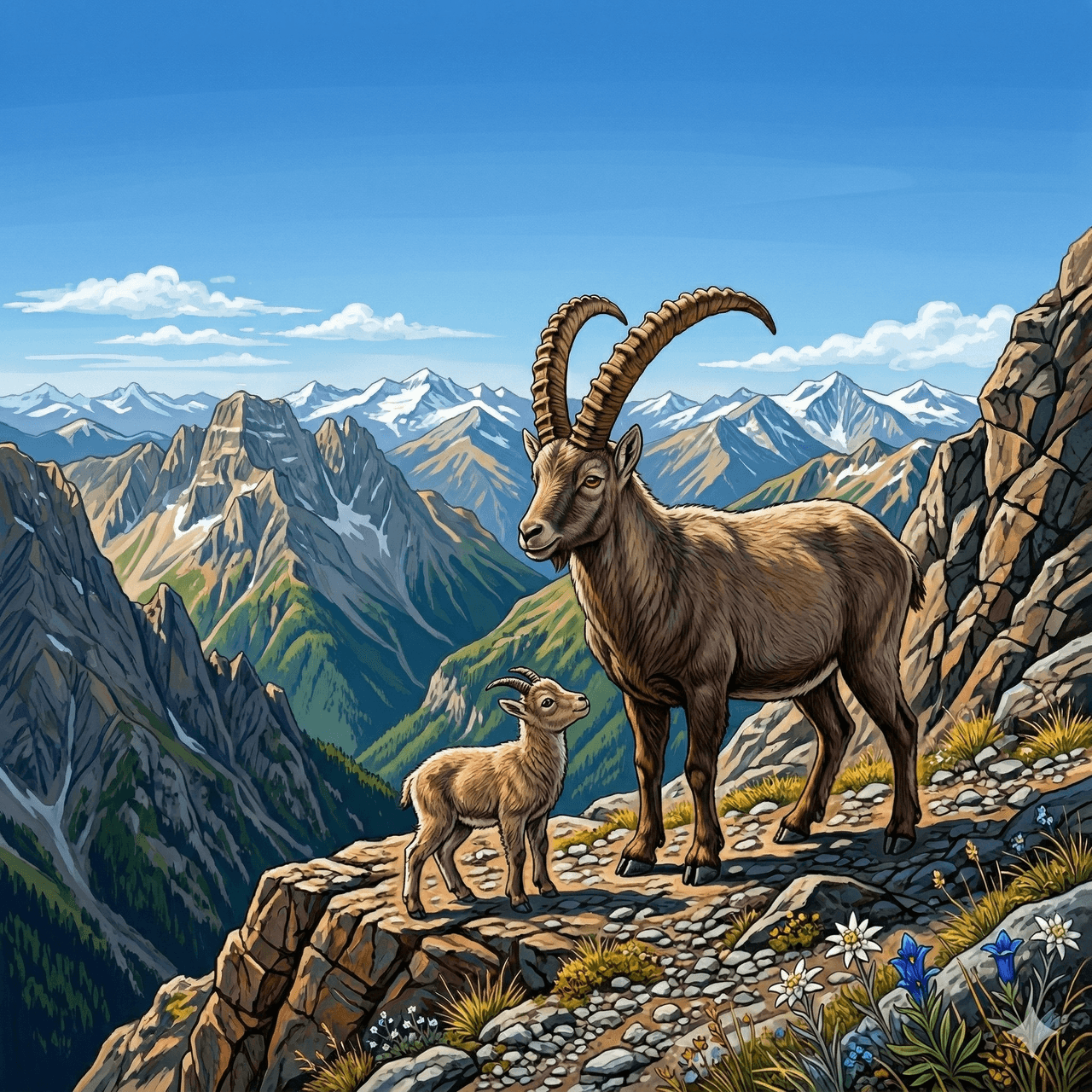
Wild goat and its kid (Image generated by Artificial Intelligence)
Wild Goat Kids👶
The young of wild goats are called kids. Females typically give birth to twins in May. These tiny kids are so skilled that shortly after birth they begin following their mothers across steep and dangerous terrain without falling. If they successfully avoid predators in their natural environment, they can live an average of 15 to 20 years.