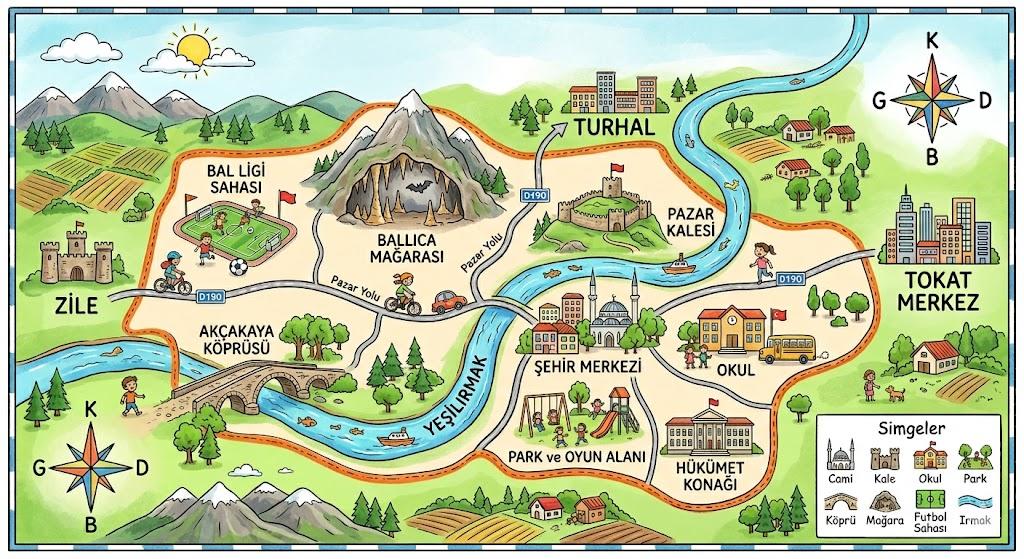


Tokat/Pazar (District)
Located 25 kilometers from the city center of Tokat, Pazar is a green and historic district. Built on the fertile lands of Kazova irrigated by the Yeşilırmak River, this settlement lies at an elevation of 623 meters above sea level. The district attracts attention both for its natural beauty and its thousands of years of history.
Following the Traces of History
Pazar was situated along the King’s Road and the Silk Road, routes used by kings and merchants in ancient times. For this reason, numerous states throughout history sought to control this area. In antiquity, the region was known by names such as Dazimon and Cellarion.
A Journey Through Time
Pazar has been home to great civilizations since around 3000 BCE, including the Hittites, Phrygians, Medes, and Persians. After 1071, it came under Turkish control, and the Danişmendids, Seljuks, and Ottomans left significant monuments in the area. In 1987, it officially gained district status.
Natural Wonder: Ballıca Cave
One of the district’s most fascinating sites is Ballıca Cave, located seven kilometers from the district center. The cave is estimated to be approximately 3.4 million years old. It consists of five levels and eight large halls. Inside, rare stone formations known as “onion stalactites” can be found, which are uncommon worldwide. Additionally, small colonies of dwarf bats live within the cave. The accessible sections of the cave have been illuminated and opened to visitors.
Historic Structures and Monuments
One of the most important structures from the Seljuk period in Pazar is the Mahperi Hatun Caravanserai, built in 1238. It was formerly used by travelers and merchants as a resting place. In the district center stands a massive plane tree erected in 1884. Additionally, there is a historic stone bridge known as the Tavukçu Bridge, spanning the Yeşilırmak River. It is believed to have been constructed during the same period as the caravanserai.
Life and Economy in Pazar
The majority of the population in the district earns their livelihood through agriculture and animal husbandry. Fruits and vegetables are cultivated on its fertile lands, and beekeeping also holds an important place. Thanks to its location at the intersection of the Black Sea and Central Anatolian climates, the region enjoys a mild climate.