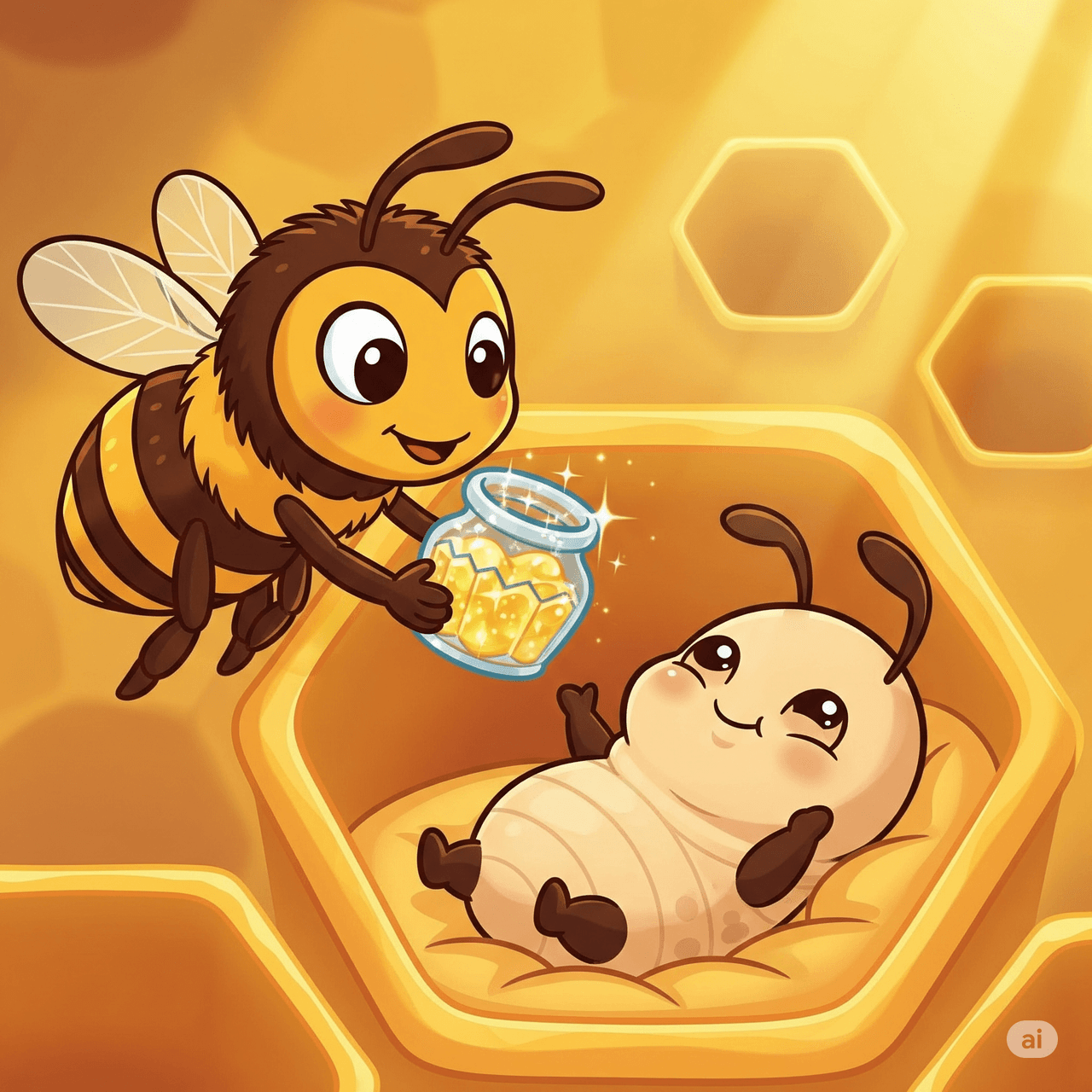


Royal Jelly
Bees produce royal jelly specifically to feed larvae (i.e. young bees) and the queen bee. All bee larvae are fed royal jelly for the first few days after hatching. However, the queen bee is fed royal jelly exclusively throughout her entire life. This special diet enables the queen bee to live longer and grow larger than worker bees. Therefore, royal jelly is essential for the development of the queen bee.
Why Is Royal Jelly Important?
Royal jelly enables the queen bee to be strong, long-lived, and capable of laying eggs. The queen bee is fed royal jelly alone! Therefore, royal jelly is highly valuable to bees.
Royal jelly may also be very beneficial for humans. It provides energy to the body, strengthens the immune system, and helps regenerate cells. However, everyone should consult a doctor before using it.
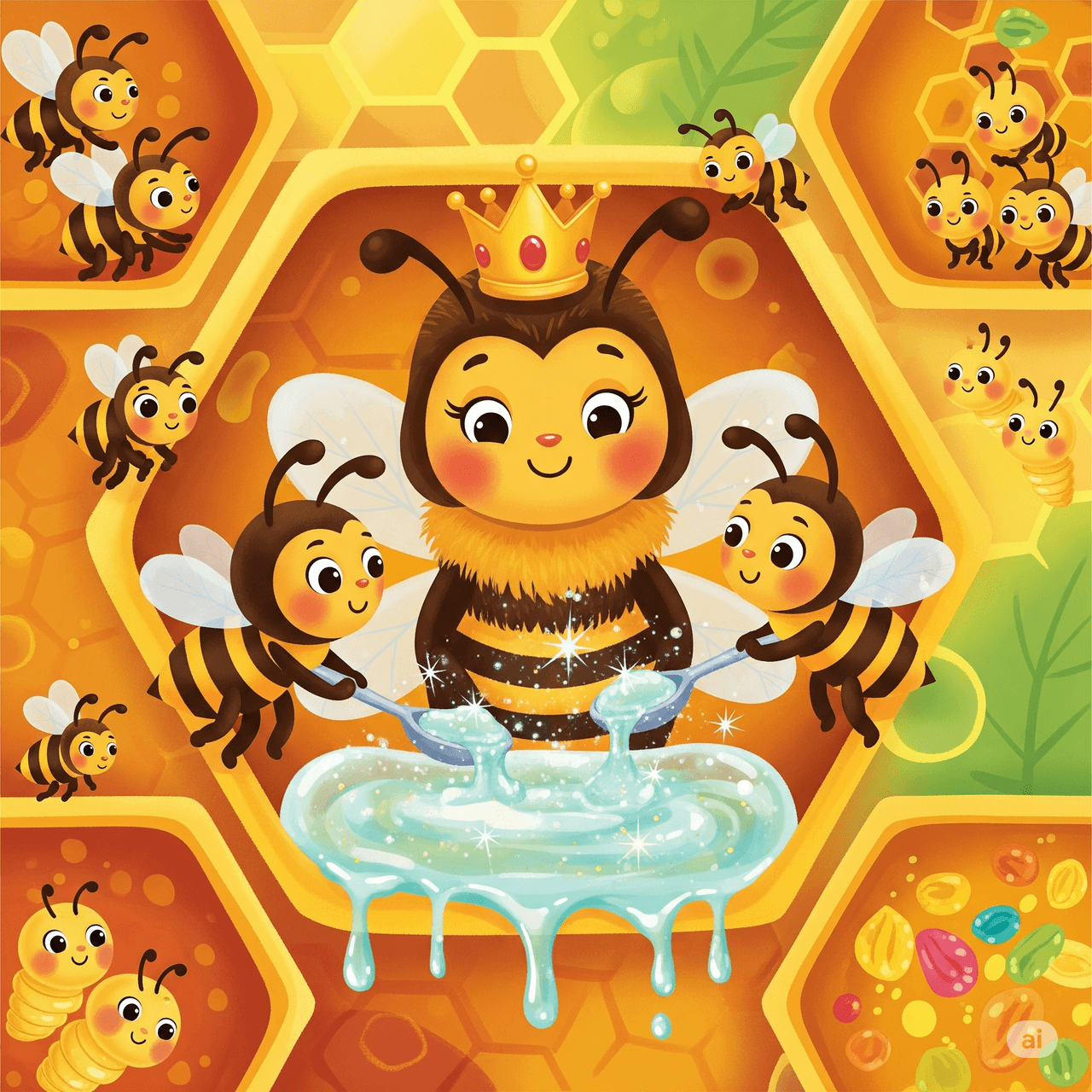
(Generated by Artificial Intelligence.)
The Importance of Royal Jelly for Humans
Scientists indicate that royal jelly may have positive effects on humans. It is believed to strengthen the immune system, provide energy to the body, slow down aging, and support brain function. However, because it can cause allergic reactions in some individuals, royal jelly should be used with caution.
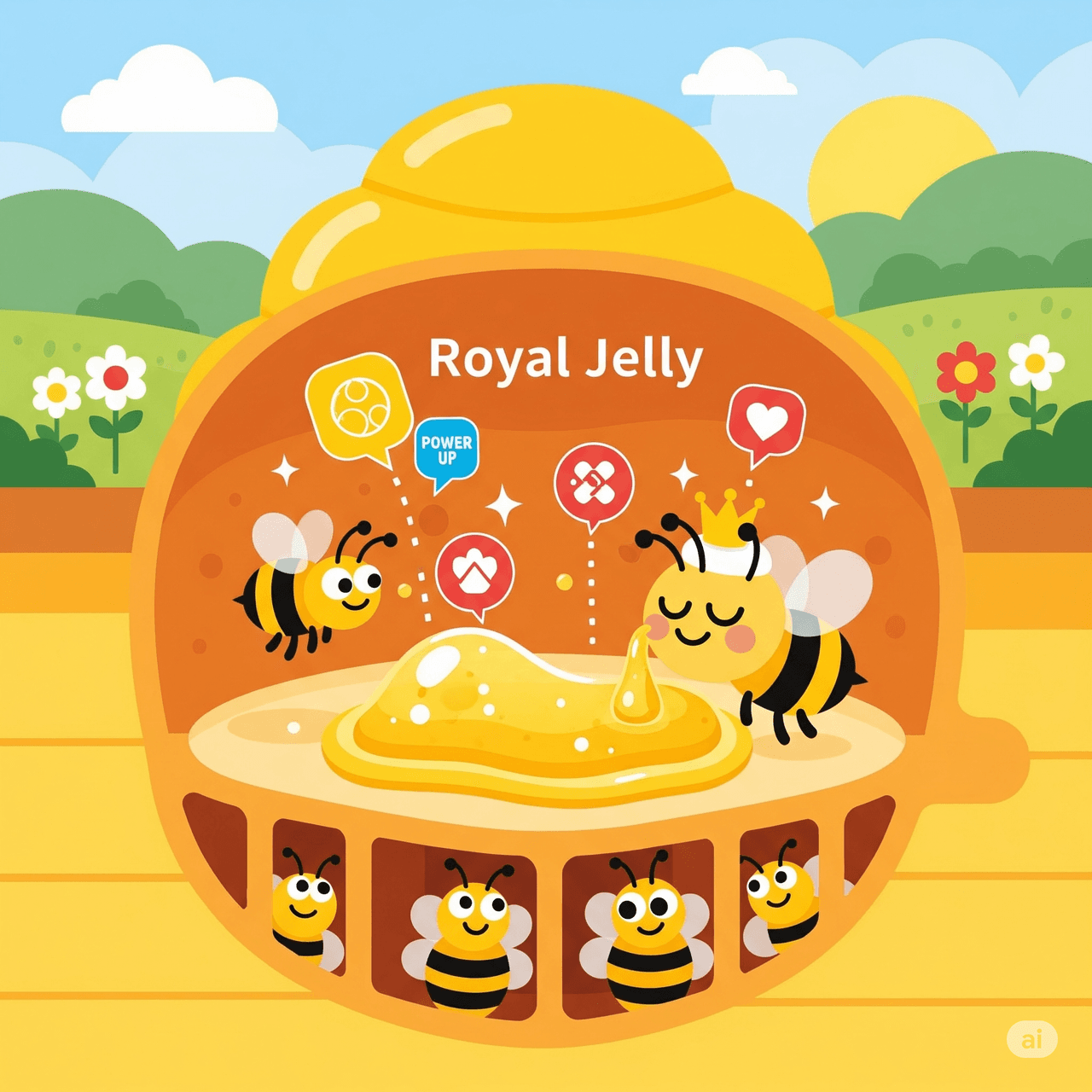
(Generated by Artificial Intelligence.)
Why Do Bees Produce Royal Jelly?
Bees produce royal jelly specifically to feed larvae (i.e. young bees) and the queen bee. All bee larvae are fed royal jelly for the first few days after hatching. However, the queen bee is fed royal jelly exclusively throughout her entire life. This special diet enables the queen bee to live longer and grow larger than worker bees. Therefore, royal jelly is essential for the development of the queen bee.
What Is the Composition of Royal Jelly?
Royal jelly is a substance with very high nutritional value. It contains large amounts of protein, amino acids, sugars, vitamins, and minerals. One of its most important components is a special group of proteins known as “major royal jelly proteins.” Additionally, royal jelly contains various B vitamins such as B1, B2, B6, and B12. Thanks to these components, royal jelly is highly beneficial for both bees and humans.
Where Is It Found?
Royal jelly is produced in special glands within the bee hive. Beekeepers collect it carefully and store it, because only very small quantities can be produced.
How Is Royal Jelly Produced?
The production of royal jelly is a delicate and specialized task. Beekeepers carefully harvest royal jelly from special queen-rearing cells in the hive. Many factors influence royal jelly yield, including bee breed, weather conditions, the age of the bees, and the overall health of the colony. Therefore, royal jelly production is both labor-intensive and limited in quantity.