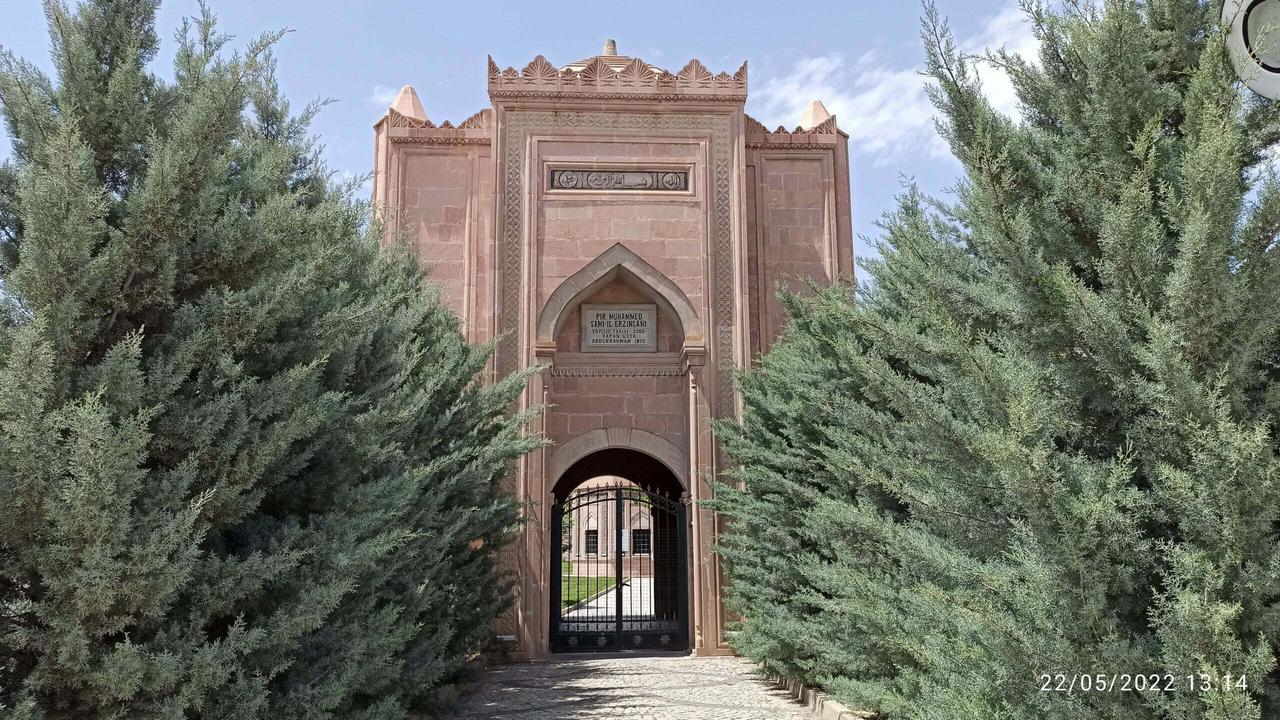


Piri Sami Türbesi
Last Updated: 04/10/2026
Share
The tomb of Pir-i Sami Hz. Türbesi, located in the center of Erzincan, is a türbe from the Ottoman period and one of the region’s most significant spiritual and historical sites.
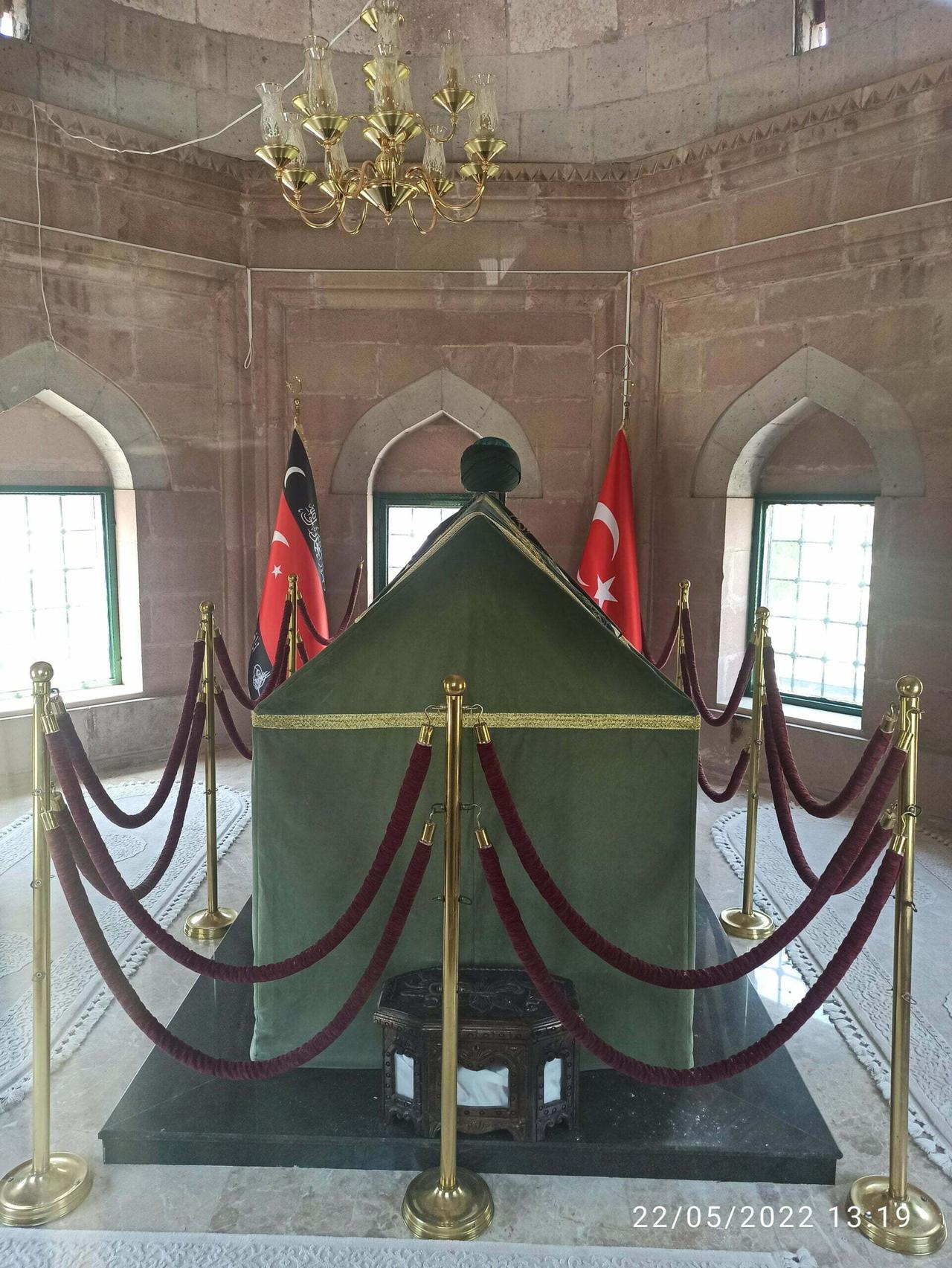
Piri Sami Türbesi (Kültür Envanteri)
📍 General Information
- Type: Türbe
- Culture: Ottoman
- Century: 19th century
- Region: Erzincan Center, Eastern Anatolia, Türkiye
- Status: Open to visitors / accessible
- Location: Situated near the center of Erzincan and well known among local visitors
📜 Who was Pir-i Sami Hz.?
The person known as Pir-i Sami Hz. is Muhammed Samî Erzincânî:
- He was born in 1842 in the village of Selüke (Yeşilçay) in Erzincan.
- After receiving his early education from local teachers, he studied at the Fatih Medrese in Istanbul, earned his ijaza, and became a müderris (teacher).
- While serving as a teacher in Hınıs district of Erzurum, he left his official position in 1882 and subsequently began studying under the Nakşî order.
- In 1883, he established the Kırtıloğlu Tekke on the site where his current tomb stands.
- In 1897, during the reign of Sultan II. Abdülhamid, he was hosted at the imperial palace in Istanbul and later completed the Hajj pilgrimage.
- After returning from Hajj, he continued his spiritual guidance activities in Erzincan and trained thousands of students.
- He passed away in 1912, and his tomb was built at this location.
🛕 The Tomb and Its Surroundings
- The tomb contains the grave of Pir-i Sami Hz. and is recognized as part of Ottoman cultural heritage.
- Adjacent to the tomb are related structures, including a small mosque and a spiritual visitation area.
The site has gained particular importance in terms of devotional tourism; local authorities have undertaken efforts to organize the area for visitor access.
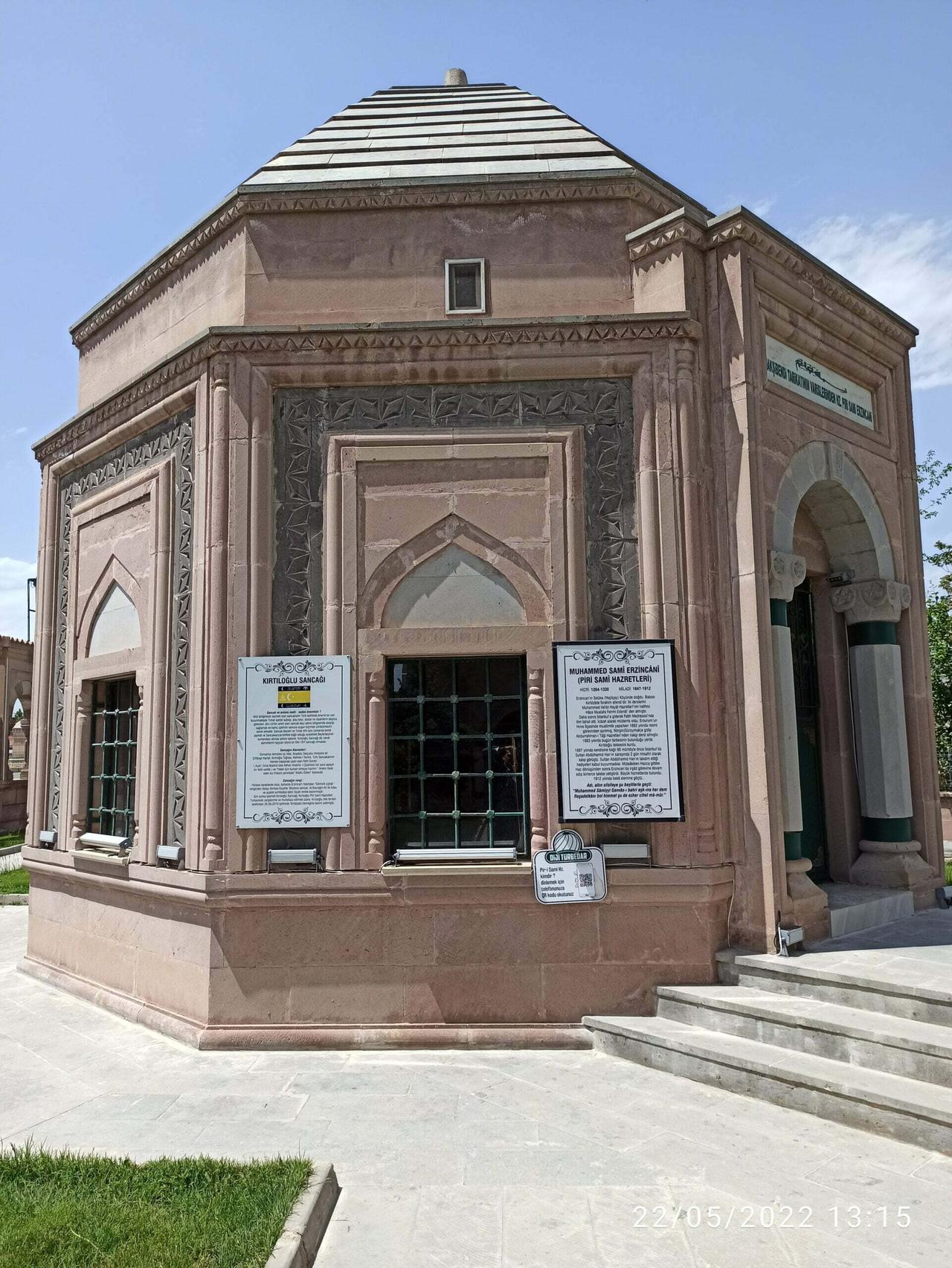
Piri Sami Türbesi (Kültür Envanteri)
🕌 Place of Worship and Restoration Efforts
- The Erzincan Municipality and local associations have carried out projects such as the construction of the Pir-i Sami Hz. Türbesi Camii and the landscaping of its surroundings.
- The site attracts large numbers of visitors, especially on Fridays, and is included in devotional tourism routes.