



Many people point the way when a car overturns.
Have you ever been working on a game or a project when everyone suddenly started offering advice at once? At that moment, you may have heard someone say, “You shouldn’t have done it that way; you should have done it like this.” Our ancestors had a wise saying for these belated pieces of advice given after everything is already over.
What Does This Proverb Mean?
This proverb illustrates that advice given after something has gone wrong or after a bad outcome has occurred is useless. It is easy to give advice after everything has fallen apart, rather than offering help while things are still on track. But the suggestions made at that point cannot fix a tipped-over cart.
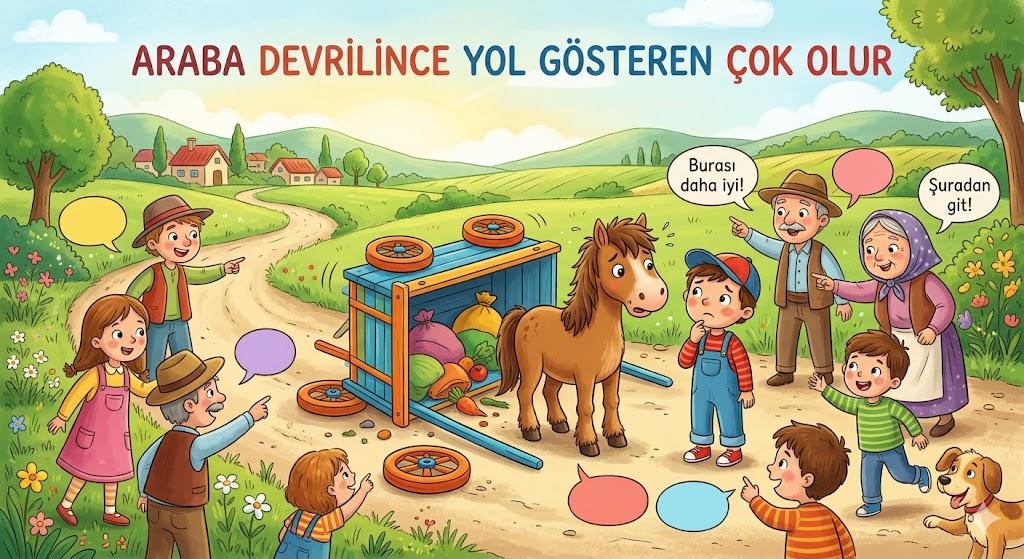
Representative Image of “Many People Give Directions After the Cart Has Tipped” (This Image Was Generated by Artificial Intelligence).
Why Is Offering Help in Time More Important?
Most people tend to say, “Why wasn’t it done that way?” only after a bad situation has arisen. Yet what truly matters is sensing danger before it arrives and warning someone before they make a mistake. A small timely warning is far more valuable than thousands of words spoken after the damage is done.
Understanding Through a Concrete Example
Think of it like a game: If you see your friend’s shoelace coming undone and say, “Be careful, you might fall,” that is real help. But if you wait until they trip over their shoelace and then say, “You should have tied your shoelace,” that is giving directions after the cart has tipped.
Time Travel
In the past, people traveled from place to place using carts. Roads were not paved or smooth like they are today. A broken axle or a tipped cart meant lost cargo and an interrupted journey. This proverb has endured to our day, shaped by the difficult travel experiences of those times.





