

`proverb` Related Article Results

Drop by drop, a lake is formed
Have you ever thought that a single drop of water could fill a lake? The proverb “Damlaya damlaya göl olur” illustrates how small things, when accumulated, can lead to great results. This proverb is used to teach the importance of patience and persistent effort, demonstrating in everyday life how minor actions can transform into major achievements. What Does This Proverb Mean? This proverb expresses how small steps can, over time, produce a significant impact. For example, if you read one page o
EN
Ayşe Hümeyra Akkanat

Grape looks at grape and ripens
Have you ever wondered how grapes change color by looking at each other? Or do people also change color—become hardened or influenced—by looking at one another? If your answer is yes, keep reading! The proverb “Üzüm üzüme baka baka kararır” describes how people who spend time together, laugh together, play together, and become friends gradually begin to resemble each other in character. It expresses how, in daily life, people’s behaviors, speech, and shared habits can make them more alike over t
EN
Nida Öztürkmen

Falls at the base of the pear branch
This proverb illustrates that children often resemble their parents. Just as a pear falling from a tree lands directly beneath it, children may inherit their family’s traits, abilities, or temperament. This applies not only to physical appearance but also to ways of thinking and behavior. 🌳 Where Does It Come From? This proverb arises from a simple observation in nature. Imagine a pear tree: when ripe pears detach from their branches under the influence of gravity, they do not fall far away but
EN
Nida Üstün

Speech is silver, silence is gold
Have you ever considered how valuable silence can be, sometimes more than speaking? The proverb “Speech is silver, silence is golden” tells us precisely this. Sometimes saying something may be as valuable as silver, but knowing when to remain silent is even more precious, like gold. This saying emphasizes the importance of thinking before speaking and, at times, choosing silence. (Generated by artificial intelligence) " image-element-format="right" image-source="https://cdn.t3pedia.org/media/upl
ENNida Üstün

The Blind Man Who Lay Down Rises Up Strange
Our elders say that if you get too close to a person or an environment, you will be influenced by them. The proverb “He who sleeps with the blind wakes up blind” illustrates exactly this situation. A person’s behaviors, habits, and thoughts can spread to those around them, much like a common cold. Where Does It Come From? The origin of this proverb lies in ancient beliefs about eye diseases. In the past, people believed that illnesses could be transmitted from one person to another. It was thoug
ENNida Üstün

Home Purchase, Neighbor Purchase
“Buying a house means buying neighbors” is a Turkish proverb that emphasizes the importance of neighbors when choosing a home. This saying conveys that good neighbors make life happier and safer than even the most beautiful house. Neighbors are people who live in the same neighborhood or apartment building and support each other daily with love and respect. The friends you play with in the yard are part of this very circle of neighbors! Meaning of the Proverb This proverb teaches that the people
ENAyşe Hümeyra Akkanat

The sound of the davul sounds pleasant from afar
Some tasks or situations may appear easy, comfortable, or enjoyable from the outside. However, once one becomes involved in them, it becomes clear that they are not as simple or pleasant as they seemed. The proverb “The sound of the drum is pleasant from afar” is used to describe such situations. What Does This Proverb Mean? The proverb “The sound of the drum is pleasant from afar” illustrates how people who are not directly involved in a task may perceive it as easy, attractive, or profitable.
EN
Zelal Çakar

Turn into a nightingale after eating the mulberry
The expression “dut yemiş bülbüle dönmek” is a fixed phrase that describes a person becoming speechless due to surprise, embarrassment, or inability to find the right words. It conveys the state of falling silent and being unable to speak. Turkish idioms passed down from generation to generation represent one of our most important cultural heritages, as they succinctly and vividly summarize situations that would otherwise require lengthy explanations in daily life. (Generated by artificial intel
EN
Eylül BOLAT
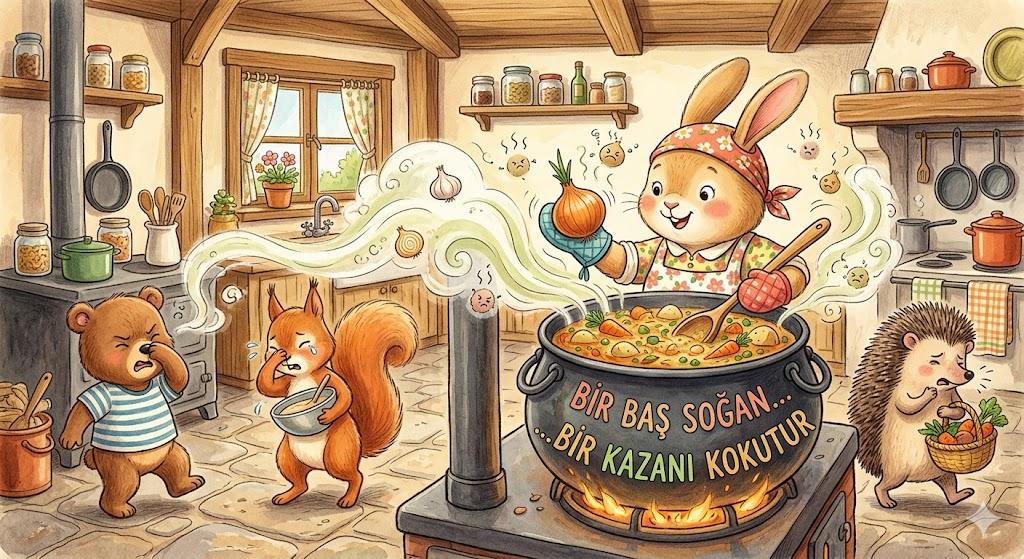
One onion spoils a pot.
Imagine a large pot of food simmering in the kitchen, filling the air with delicious aromas. What if just one spoiled onion were dropped into it? That single small onion could ruin the scent of the entire dish. Our ancestors beautifully illustrated human relationships with this very concrete example. What Does This Saying Mean? The proverb “One bad onion spoils the pot” conveys how a single negative person, harmful behavior, or cruel word can disrupt the harmony of an entire group. This saying i
ENgamze halil
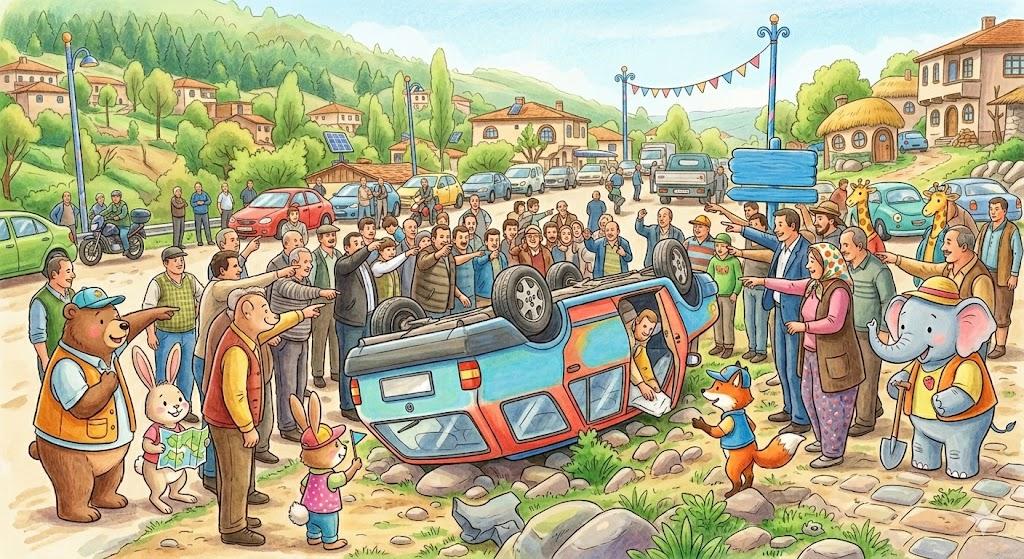
Many people point the way when a car overturns.
Have you ever been working on a game or a project when everyone suddenly started offering advice at once? At that moment, you may have heard someone say, “You shouldn’t have done it that way; you should have done it like this.” Our ancestors had a wise saying for these belated pieces of advice given after everything is already over. What Does This Proverb Mean? This proverb illustrates that advice given after something has gone wrong or after a bad outcome has occurred is useless. It is easy to
ENgamze halil