Long-nosed Monkey
Long-nosed monkeys are among the most intriguing-looking creatures in the forest, with their enormous noses and swollen bellies. Did you know that these large-nosed members of the primate world are also excellent swimmers? Let’s take a closer look at these unique animals that love leaping from the treetops into the water!
Where Do They Live? 🌴
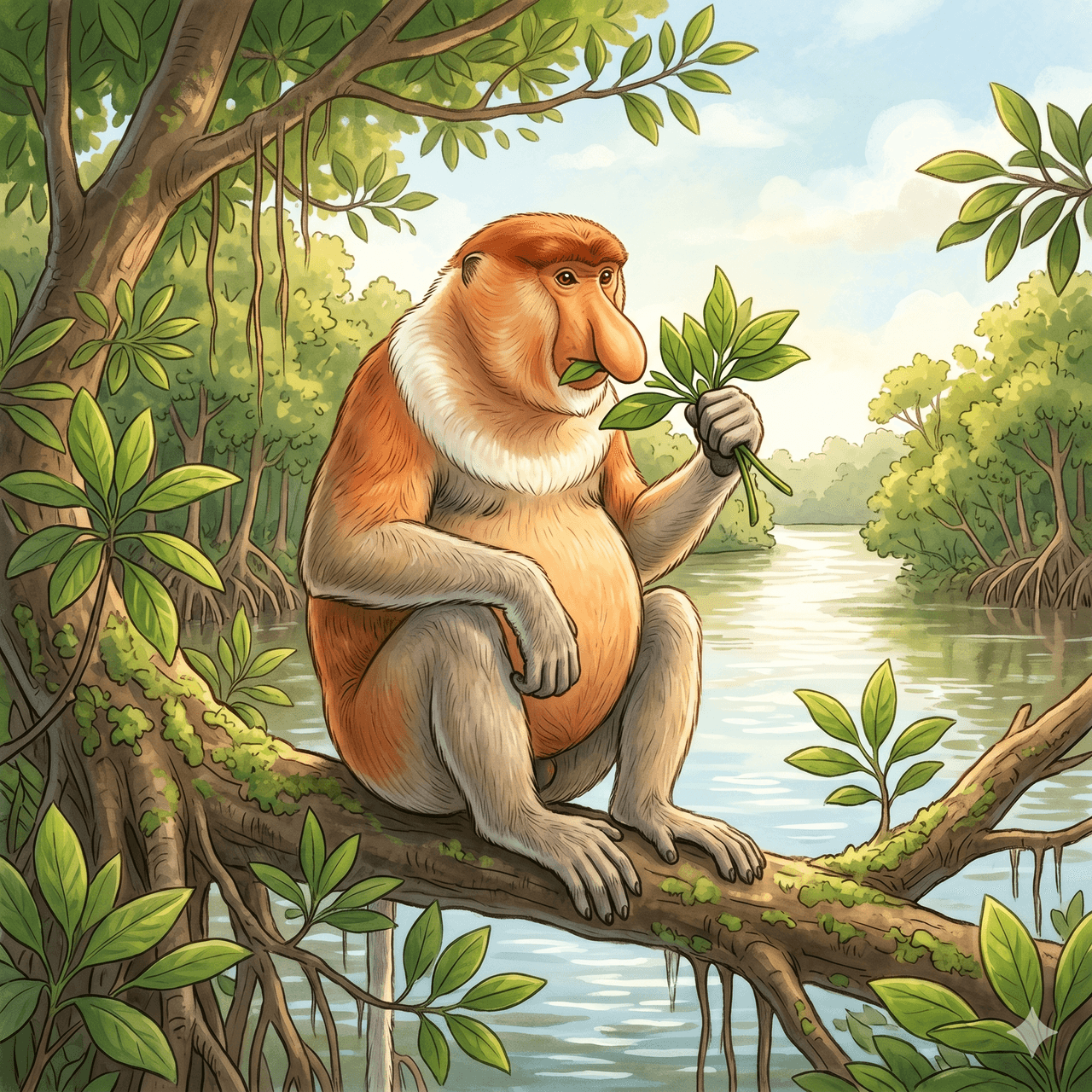
Long-nosed monkeys live only on the large island of Borneo in Southeast Asia. You will not find them deep in the forest or in dry areas; they strongly prefer mangrove forests and riverbanks along the sea.
They spend most of their days resting safely on tree branches and never stray far from rivers or other water sources. Life along the riverbanks provides them with both food and protection from danger.
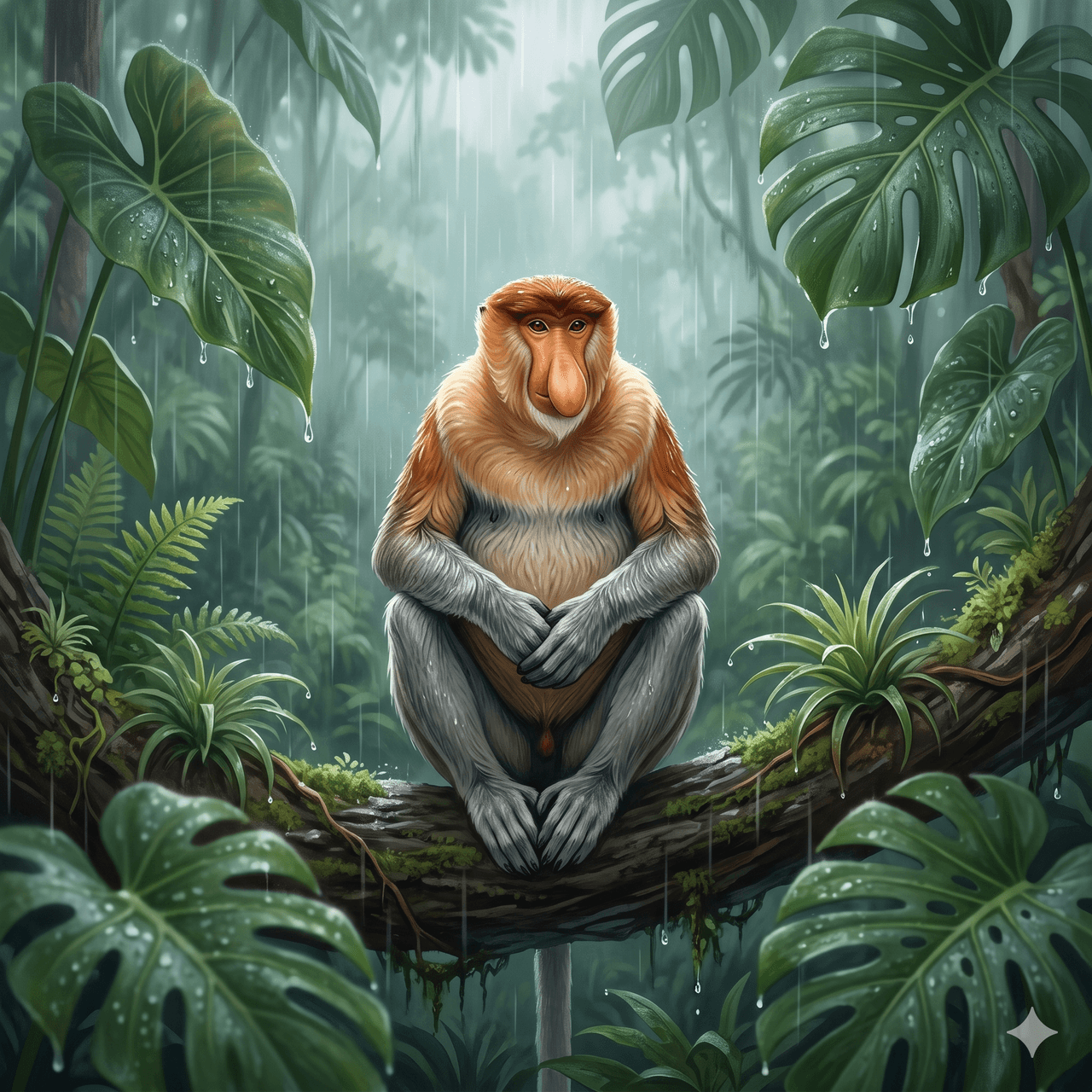
Long-nosed Monkey (Image Generated by Artificial Intelligence)
What Do They Look Like? 👃
The most striking feature of these monkeys is the massive nose that hangs down from the face of males. This large nose acts like a speaker, amplifying and echoing their calls through the forest to aid communication. Females, by contrast, have much smaller noses that gently curve upward like a slide.
Their backs are covered in orange fur, while their arms and legs have soft gray hair. One of the most interesting facts is that newborns have dark blue faces. As they grow, this color gradually changes to a cream tone.
What Do They Eat and How Do They Digest It? 🍃
Long-nosed monkeys have a strong preference for tree leaves and unripe, firm fruits. Unlike most animals, they do not enjoy sweet, ripe fruits because the sugars in them cause severe stomach pain.
Like cows, they have a highly specialized, multi-chambered stomach. To better digest tough leaves, they swallow them first, then regurgitate and re-chew them. Because of this slow and laborious digestive process, they always have a swollen, large belly.
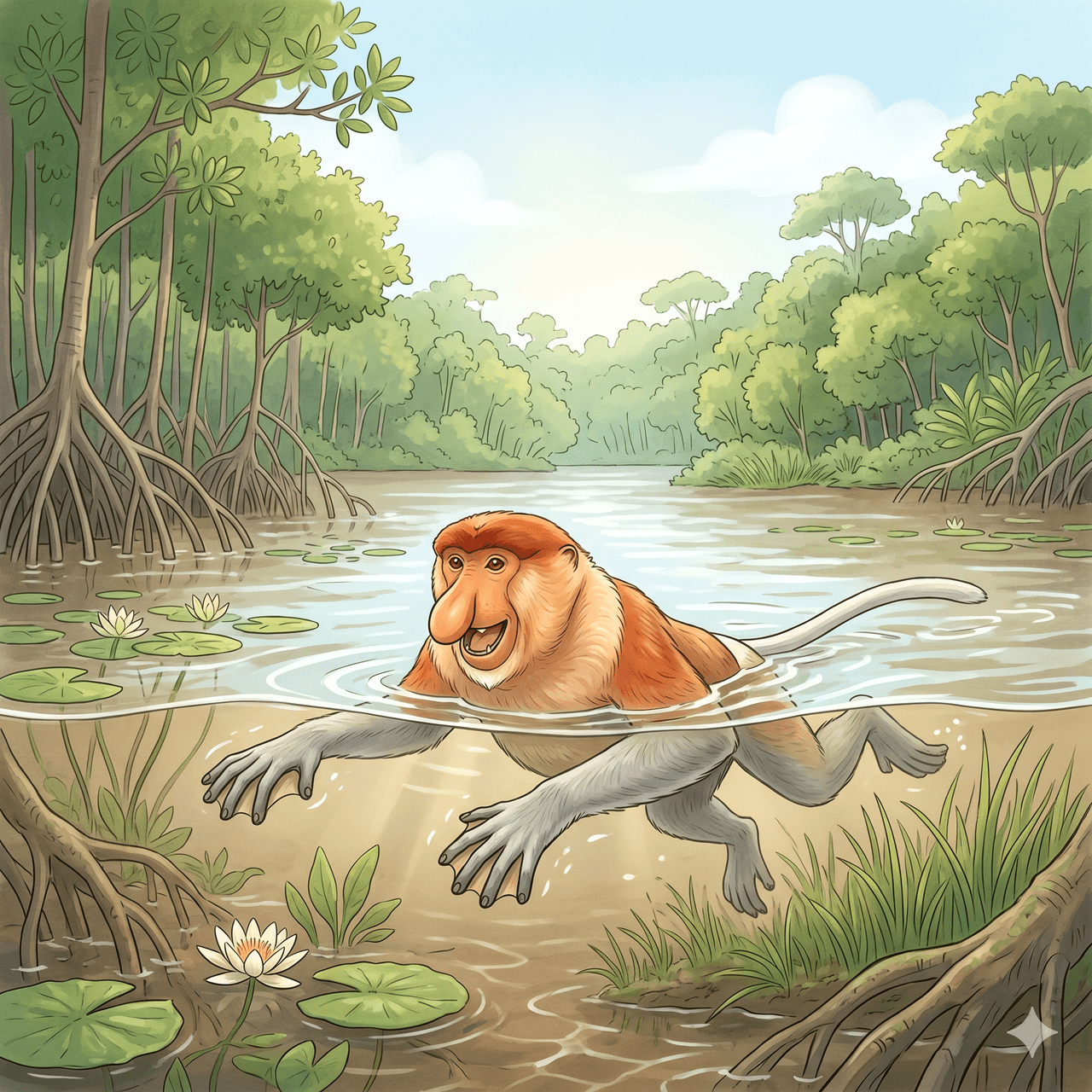
Long-nosed Monkey (Image Generated by Artificial Intelligence)
Why Are They So Good in Water? 🏊♂️
It might seem strange to think of a monkey swimming, but long-nosed monkeys have webbed feet just like a frog. These membranes between their fingers and toes allow them to swim with incredible speed through rivers.
When they need to move quickly through the forest, they sometimes leap from the highest branches directly into the cool waters below. They can hold their breath underwater for distances of up to 20 meters. This ability helps them quickly escape predators such as crocodiles.