

Komodo Dragon: The World's Largest Lizard
Let us imagine: could dragons from fairy tales actually exist? Although they do not breathe fire, a gigantic lizard species that closely resembles them lives on our planet: Komodo dragon! These creatures, the largest lizards in the world, are among nature’s most fascinating animals due to their massive size and powerful build.
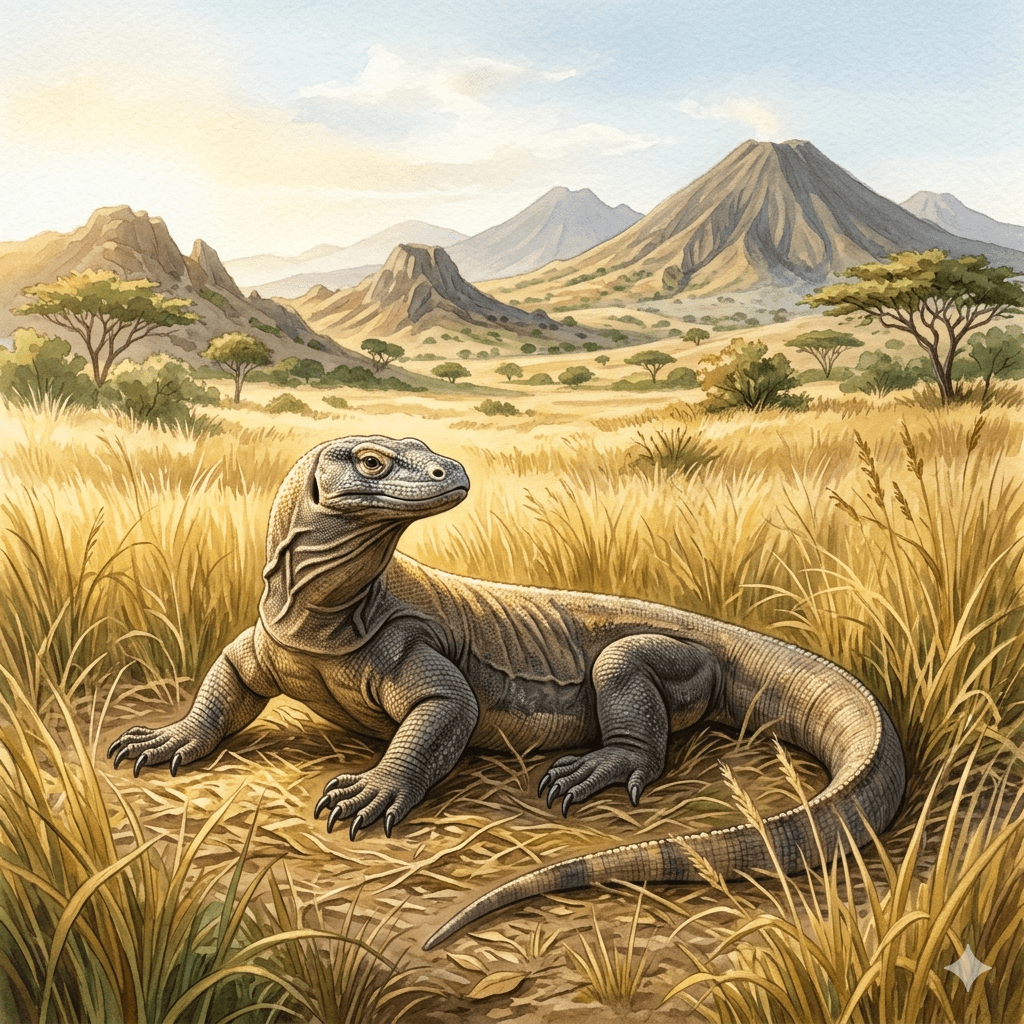
Komodo Dragon (Image Generated by Artificial Intelligence)
Where Do They Live? 🏝️
To see Komodo dragons in the wild, we must travel to the far reaches of the world—to the islands of Indonesia. These giant lizards inhabit warm tropical savannas on islands such as Komodo, Flores, Rinca, and Padar.
When the weather becomes very hot, they dig burrows in the soil to cool down, and use them to rest comfortably at night. They greatly enjoy wandering among tall yellow grasses, shrubs, and sometimes on sandy beaches.
What Are Their Physical Characteristics? 📏
How large do you think a Komodo dragon can grow? An adult Komodo dragon can reach a length of up to three meters and weigh as much as 165 kilograms! That means their body length can rival that of a small car you might see on the road.
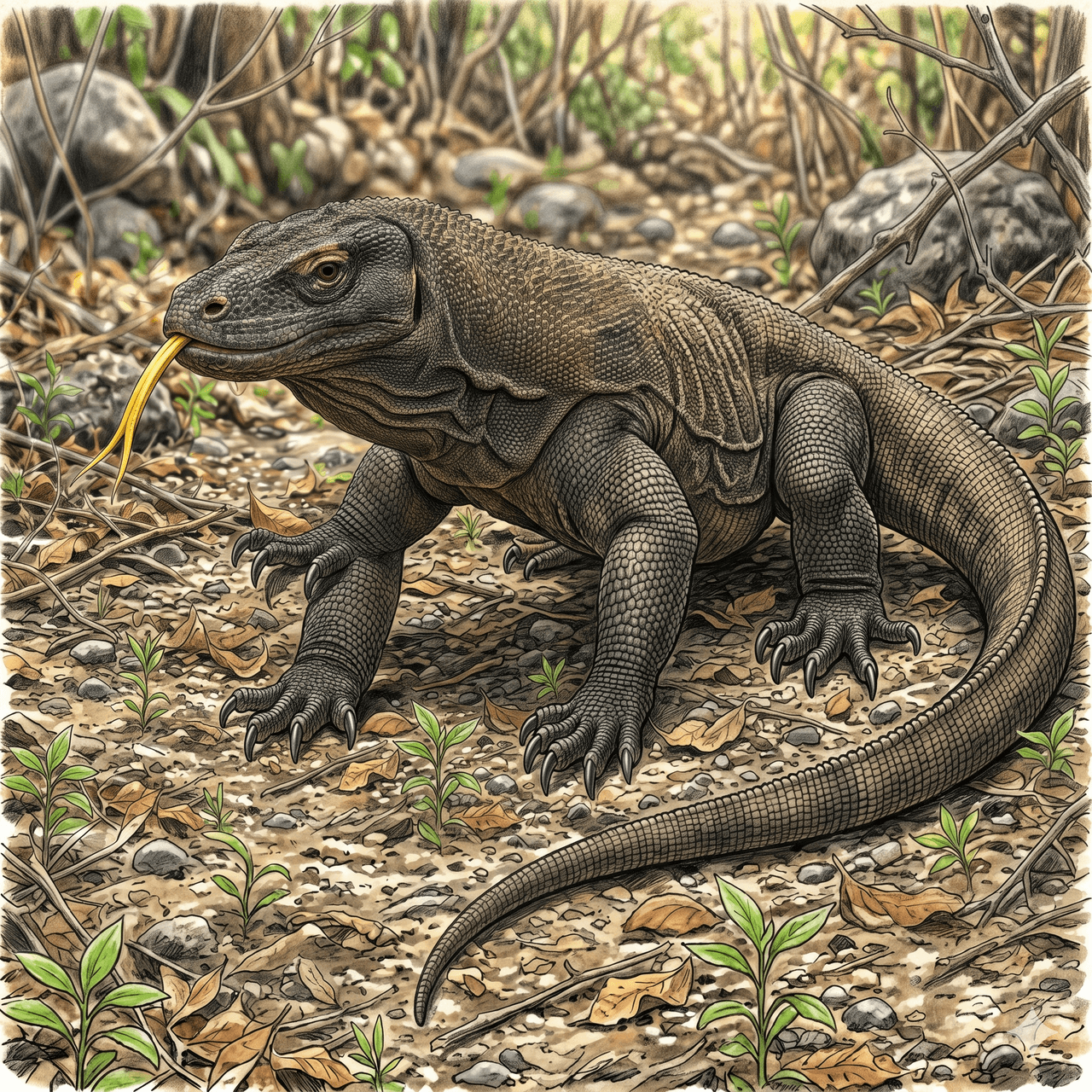
When young, they have yellow and black stripes, but as they mature their color changes from brown to grayish-red. Their skin is covered in thick, armor-like scales, similar to those of a knight’s armor. They also possess long, forked, yellow tongues that they use to detect scents in their environment.

Komodo Dragon (Image Generated by Artificial Intelligence)
How Do They Feed and Grow? 🥩
These giant lizards are skilled hunters in the wild. They feed on large animals such as deer, wild boar, and water buffalo. Their stomachs and skulls are so flexible that they can easily swallow enormous meals whole.
Komodo dragon hatchlings, however, begin life very differently. Immediately after hatching, they climb trees to escape predators and spend their early years living among the branches. While in the trees, they feed on insects, grasshoppers, and small lizards to grow. Once they reach about 1.2 meters in length and gain sufficient strength, they descend from the trees and begin their terrestrial life.