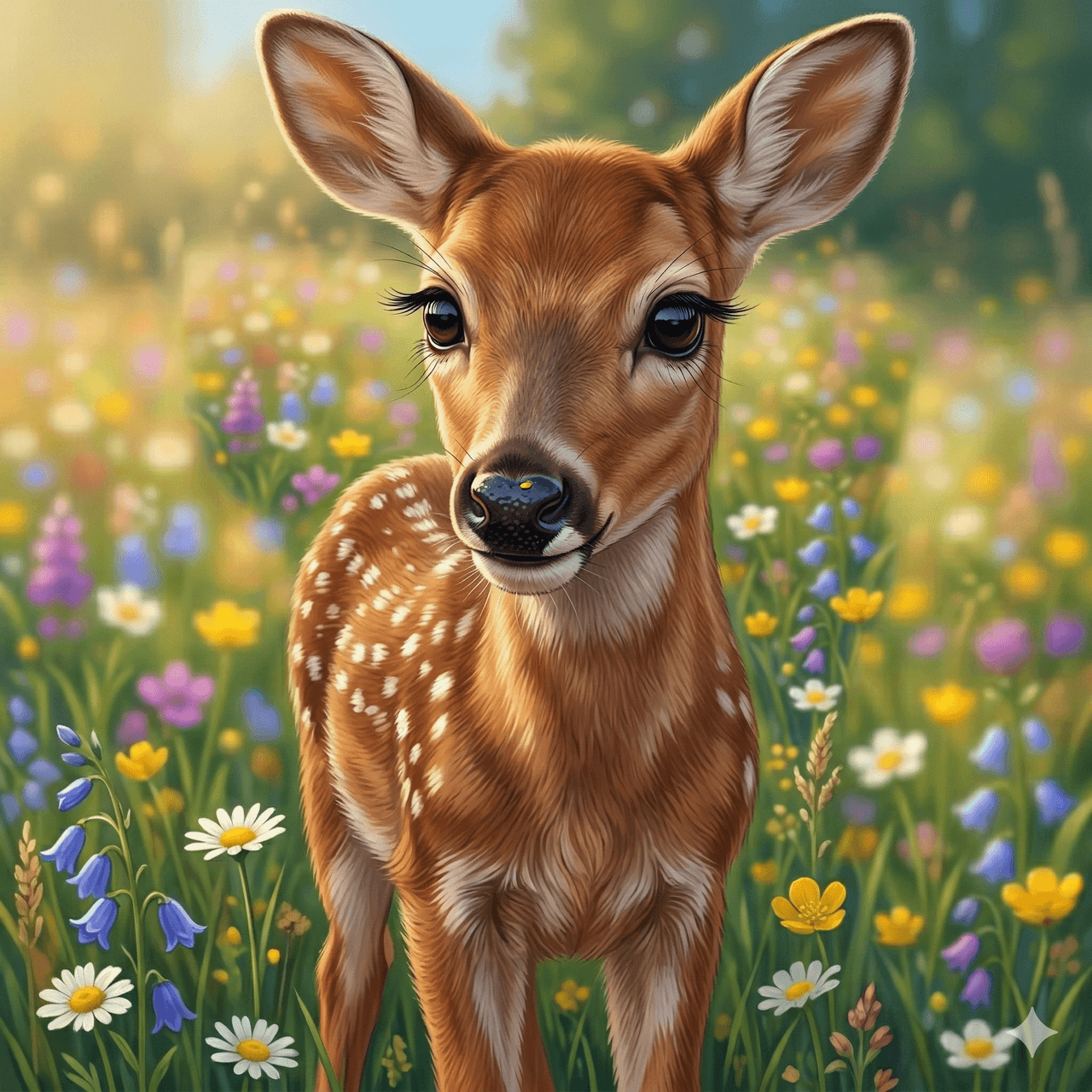
Karaca: Türkiye's Smallest Deer
Roe Deer are elegant and mysterious creatures of the forests. These charming animals, the smallest deer species in Europe and Türkiye, resemble characters stepped out of a fairy tale with their large eyes and long eyelashes. Seeing them quietly wander through the forest or leap across fields fills one with great delight. Let us get to know these delicate creatures more closely!
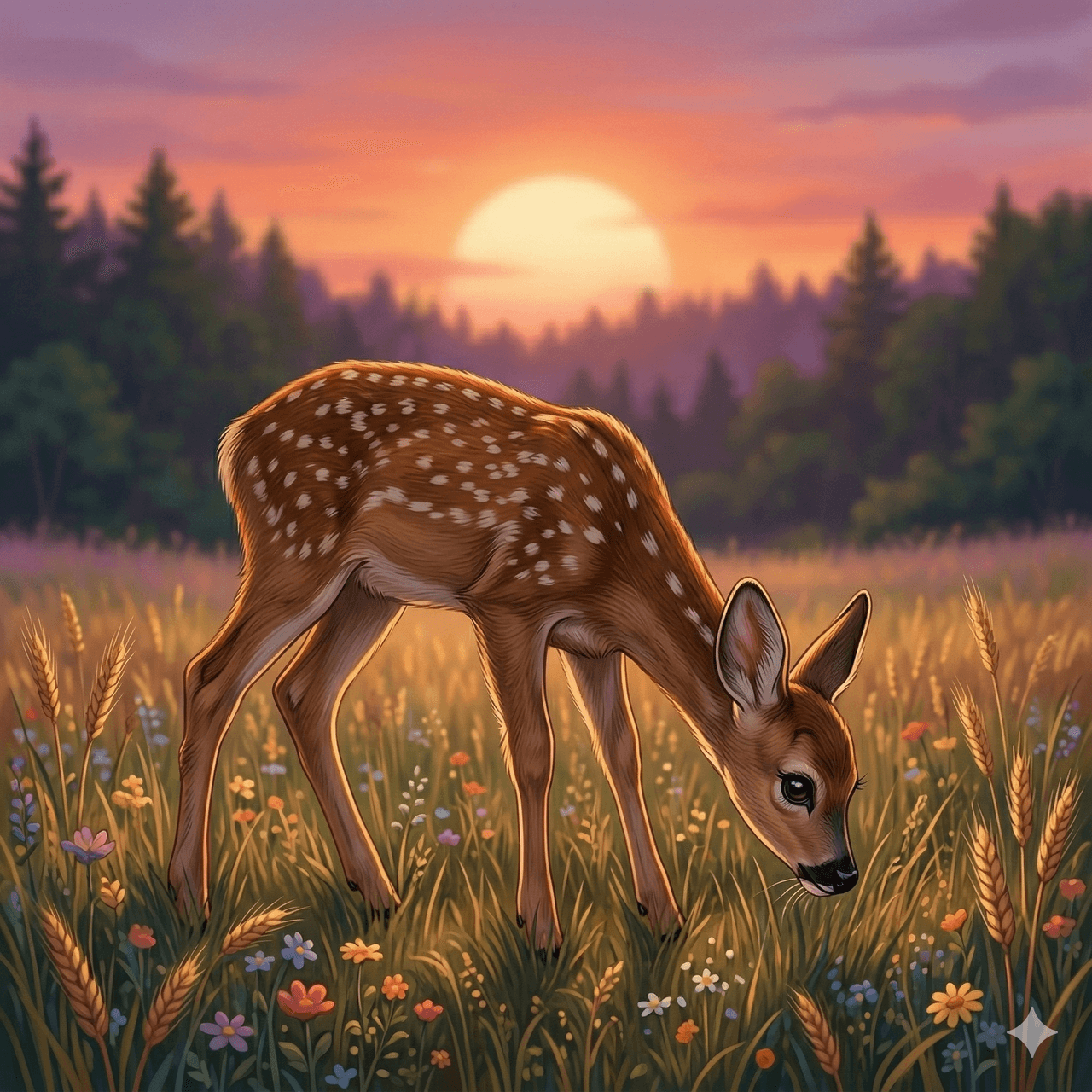
Roe Deer (Generated by Artificial Intelligence)
What Do Roe Deer Look Like? 👀
Roe Deer are considerably smaller than other deer species. They can be about the same size as an average dog, with a height of 65 to 75 centimetres and a weight of only 18 to 35 kilograms. They have slender long legs, a long neck, and large ears that stand upright relative to their head size.
One of their most endearing features is their large eyes and the long eyelashes on their upper eyelids. They also have a very short tail, measuring only 2 to 3 centimetres, with a large white patch known as the "mirror" surrounding it. Only male roe deer possess short, branched, and rough antlers on their heads.
Their coat changes with the seasons! In summer their fur is a bright reddish-brown, while in winter it thickens and turns into greyish-brown tones to blend better with the snow.
Where Do They Live? 🌲
These charming deer inhabit a wide area stretching from Northern Europe to Central Asia. In Türkiye they are most commonly found in the forests of the Black Sea and Marmara regions. In recent years they have also begun to live in forested areas such as the steppe regions of Central Anatolia and the Karagüney Mountains in Kırıkkale.
They make their homes in deciduous forests, shrublands, and occasionally in agricultural fields. Roe deer do not undertake long migrations. Only when heavy snowfall makes food scarce in winter do they descend slightly lower from the mountains or into open fields in search of sustenance.
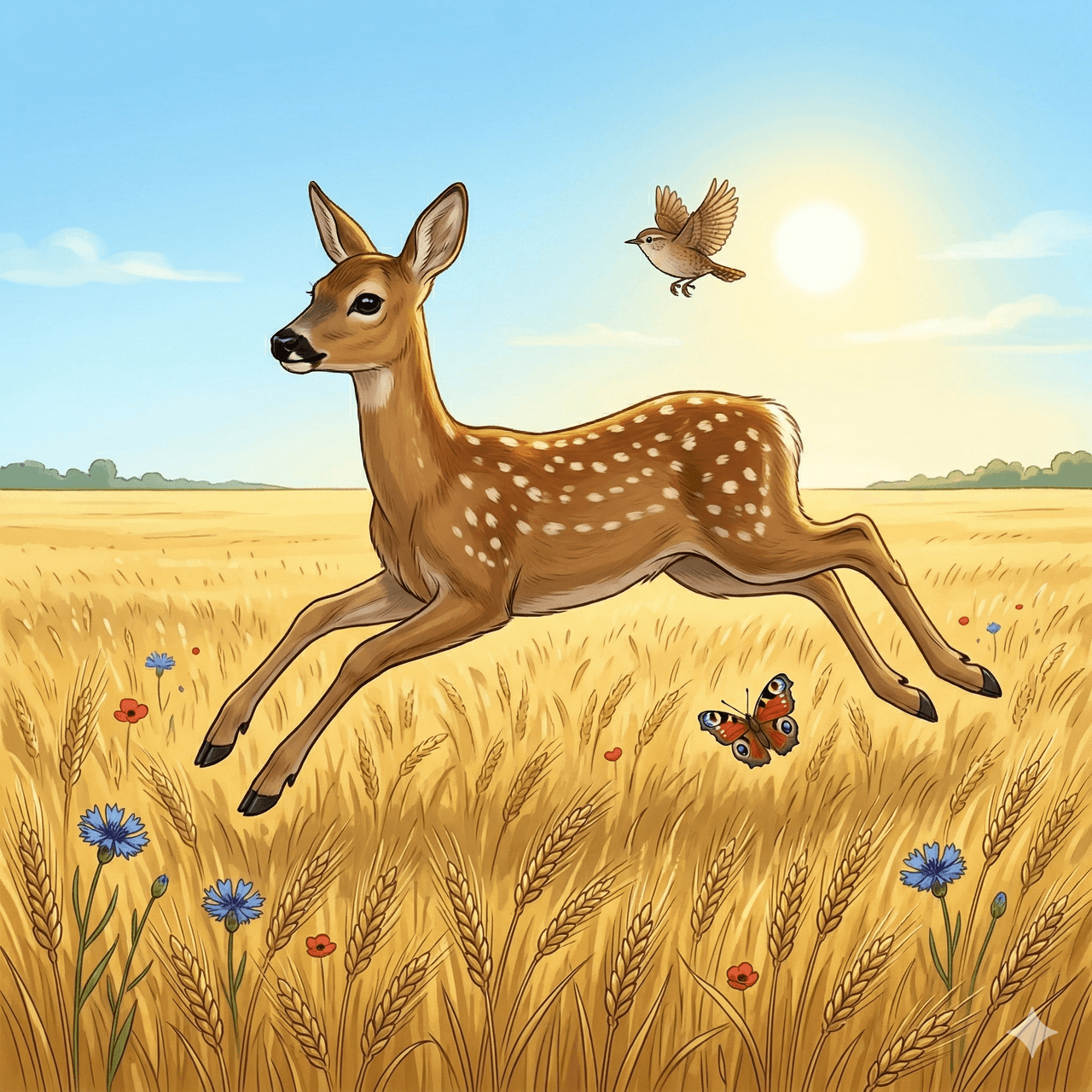
Roe Deer (Generated by Artificial Intelligence)
What Do They Eat and Drink? 🍃
Roe deer are strict herbivores! While wandering through forested areas they delight in eating fresh leaves and young shoots of trees such as oak, pine, and fir. When roaming fields they prefer herbaceous plants.
They also never miss out on nature’s delicious snacks. Fresh fruits such as ferns, grapes, plums, mulberries, and blackberries are among their favourite foods. When winter covers everything in snow and food becomes scarce, they feed on lichens and mosses growing on tree bark to satisfy their hunger.
How Do Roe Deer Fawns Grow? 🦌
Female roe deer give birth between April and July, usually to twins. When the mother needs to leave to forage, she carefully hides her fawns among tall grasses, as newborn fawns are not yet strong enough to walk or defend themselves.
For the first six weeks of life, roe deer fawns have white spots on their fur. These spots act as natural camouflage, allowing them to blend perfectly into the grass like an invisibility cloak.
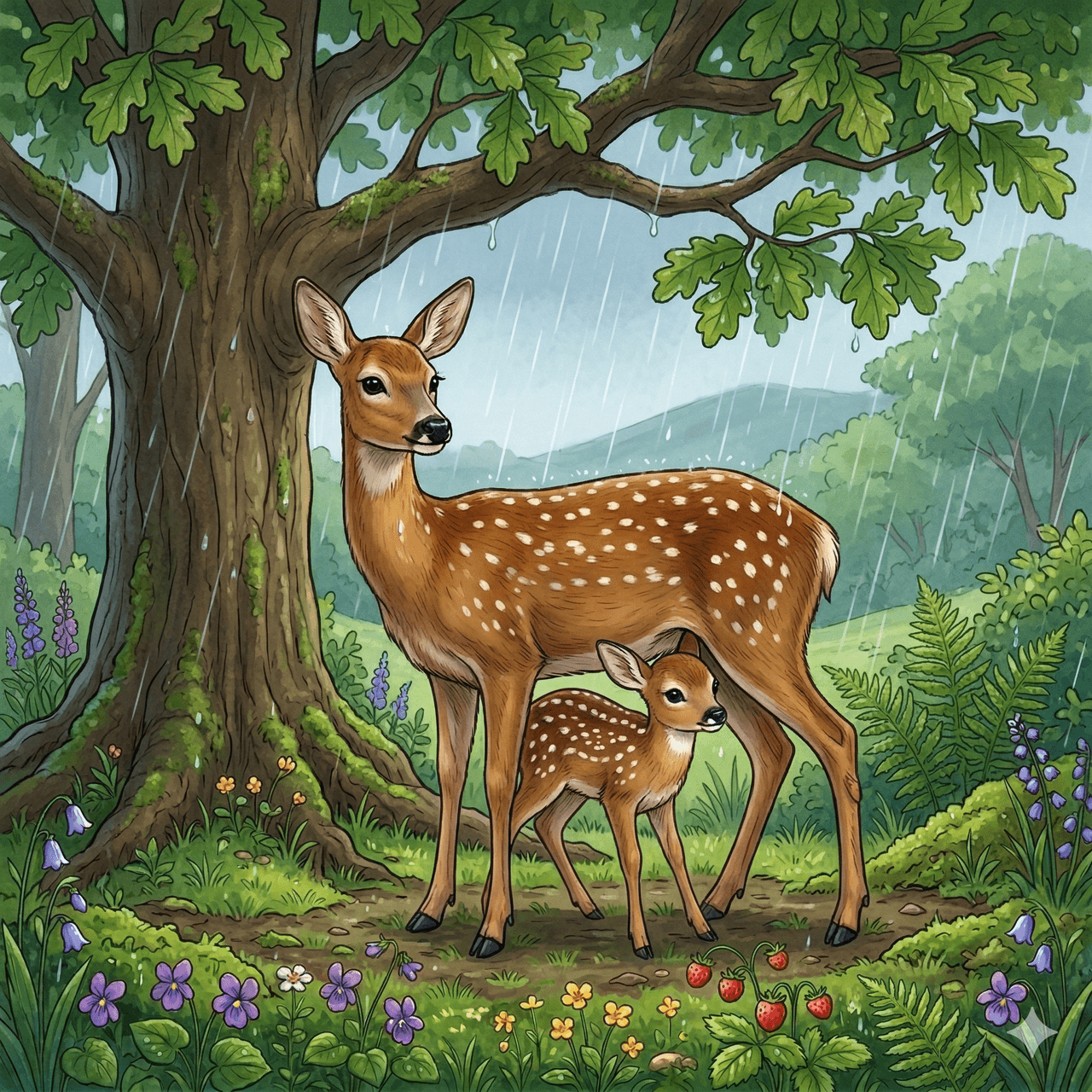
Roe Deer and Fawn (Generated by Artificial Intelligence)
The Daily Life of Roe Deer 🏃♂️
Roe deer are most active at dawn and dusk. During these hours they emerge onto open meadows to feed quietly. When they sense any danger, they can sprint at speeds of up to 70 kilometres per hour, fleeing like a storm into the depths of the forest!
During winter months they move in small groups of four to five individuals for mutual support. However, when summer arrives, male roe deer prefer solitary life and fiercely defend their own territories against other males.