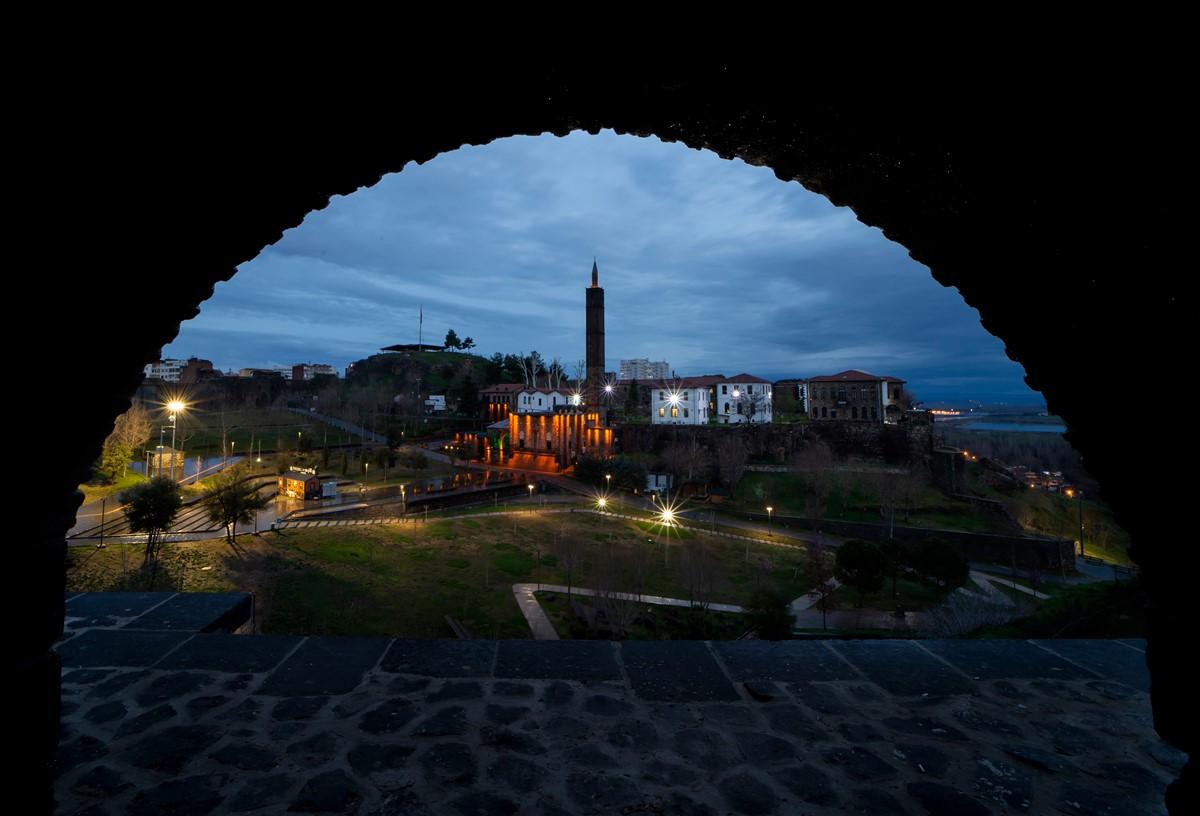


Hazreti Süleyman Camii
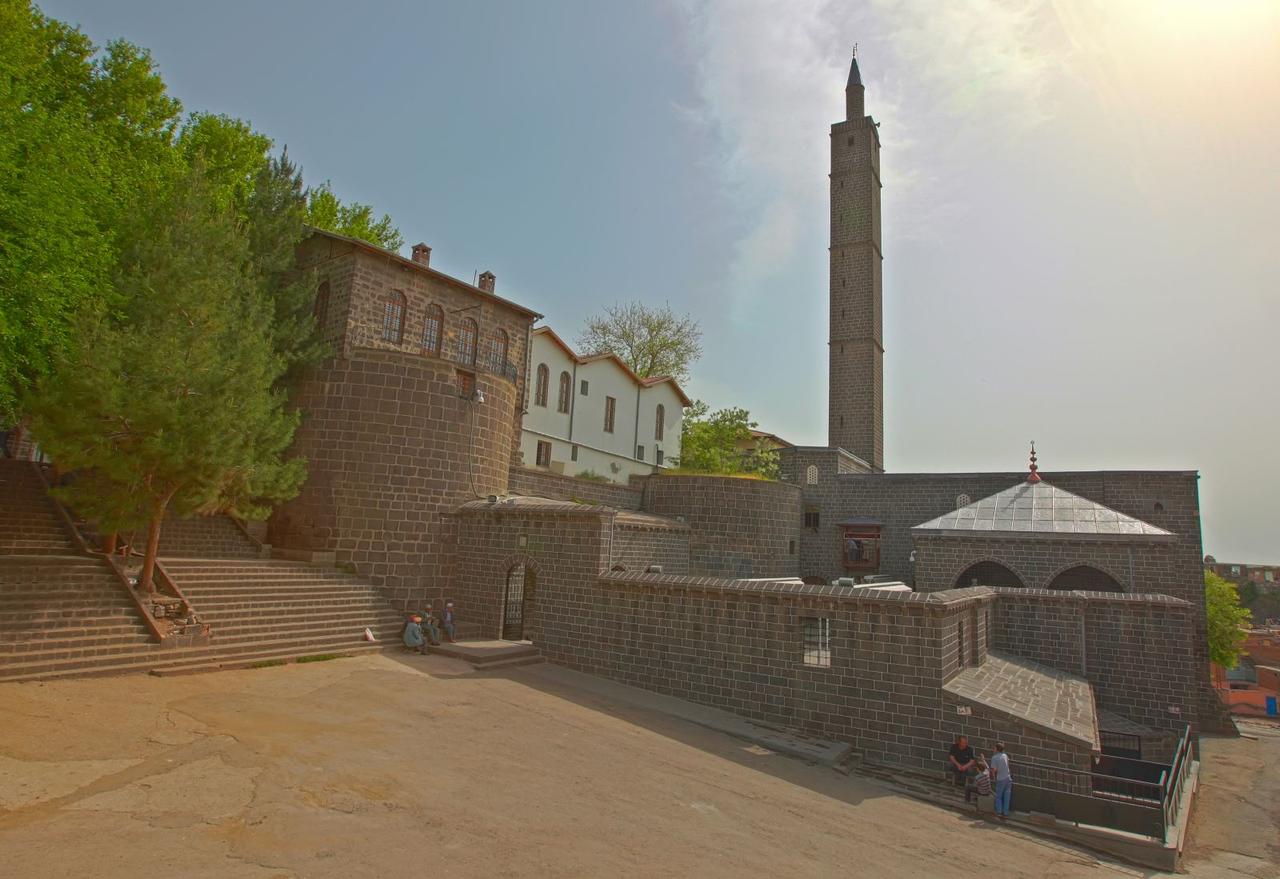
Hazreti Süleyman Camii(kültür portalı)
Location: Sur, Diyarbakır (near İç Kale, south of Oğrun Gate)
- Construction Date: Between 1155 and 1160 (Artuklu period)
- Founder: Nisanoğlu Ebul Kasım (or Nisanoğlu Kemaleddin Abu’l-Qasim Ali)
- Design: Square-plan tall minaret; notable for its stonework and inscriptions.
🕌 History and Significance
Hazreti Süleyman Camii is situated on a sloping terrain near Diyarbakır’s İç Kale. The inscriptions on the minaret indicate the year 1160. The mosque is one of the earliest examples of Islamic architecture in the region.
The most significant historical feature of this mosque is that the conquest of Diyarbakır (Amida) during the time of Caliph Umar began at this very location.
🪦 Tomb and Pilgrimage Site of the Companions
Adjacent to the mosque is a meşhed/tomb complex containing the graves of Sulayman, son of Khalid ibn al-Walid, and other companions who were martyred during the Arab army’s conquest of Diyarbakır. These graves render the site both a historical monument and an important destination for religious tourism.
According to some sources, a total of 27 companions are buried within the mosque complex. Non-formal Learning
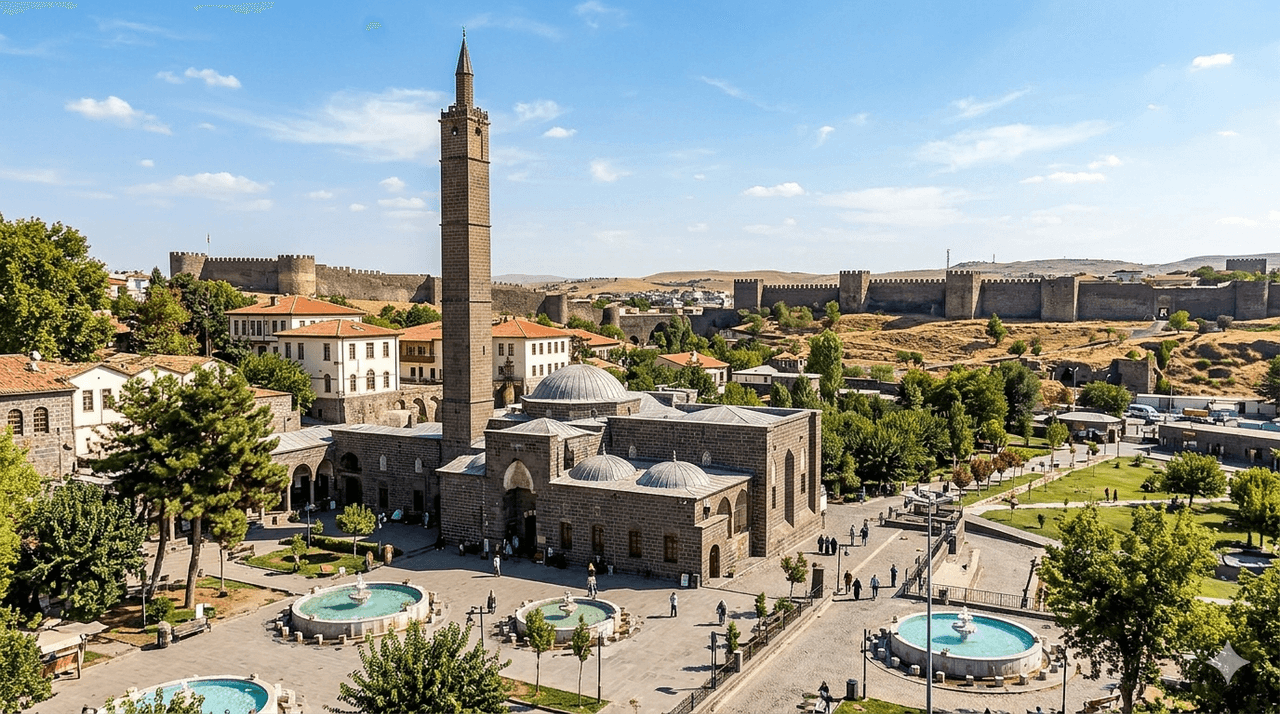
Hazreti Süleyman Camii(Generated by Artificial Intelligence)
🛠 Architecture and Restorations
- The structure has undergone repairs and additions in various periods; the most comprehensive restoration was carried out between 1631 and 1633 by Governor Silahtar Murtaza Pasha.
- The mosque is constructed of stone and has a rectangular plan oriented north-south; the interior features a mihrap and limited decorative elements on the ceiling.
🙏 Visit and Cultural Value
Hazreti Süleyman Camii is not merely a historical monument but continues to function as a place of visitation and prayer. It is visited by both local communities and tourists for both religious and historical reasons.