

Eskişehir Kurşunlu Mosque and Complex
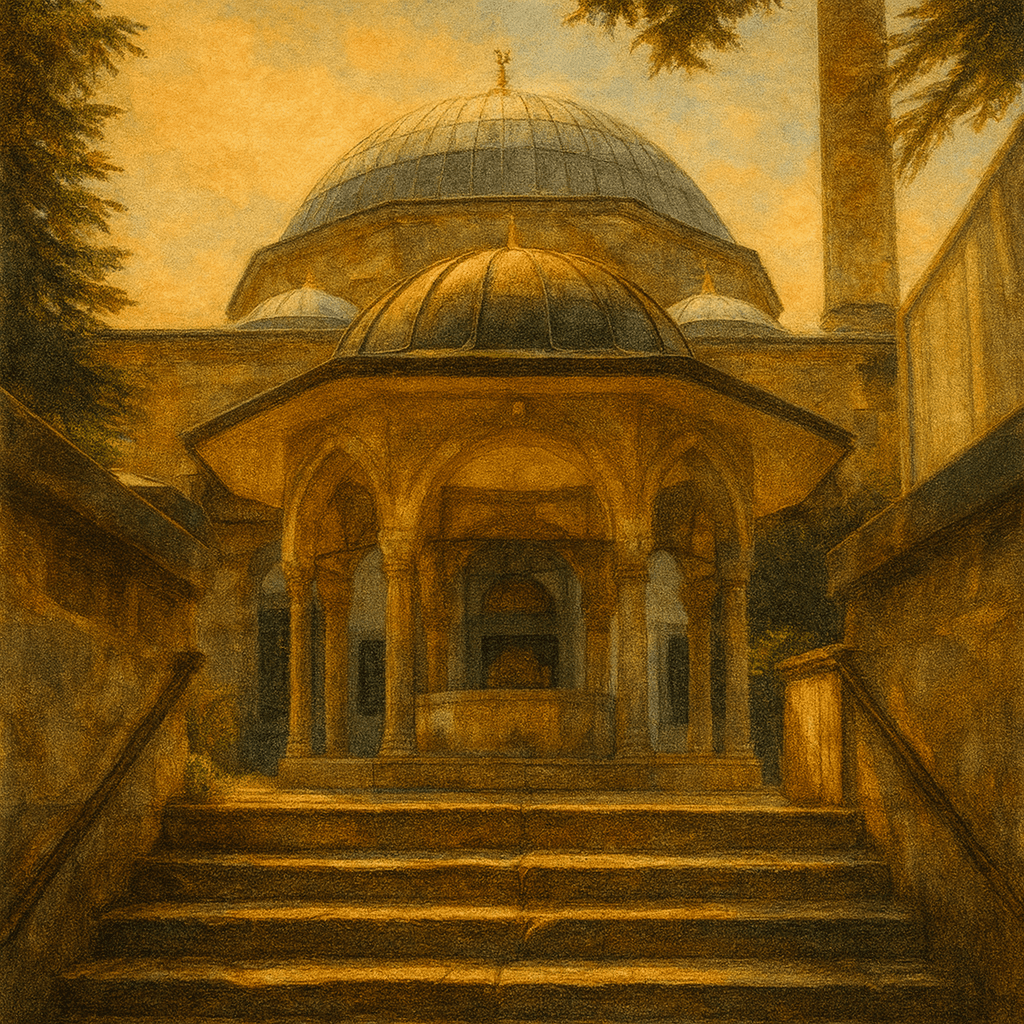
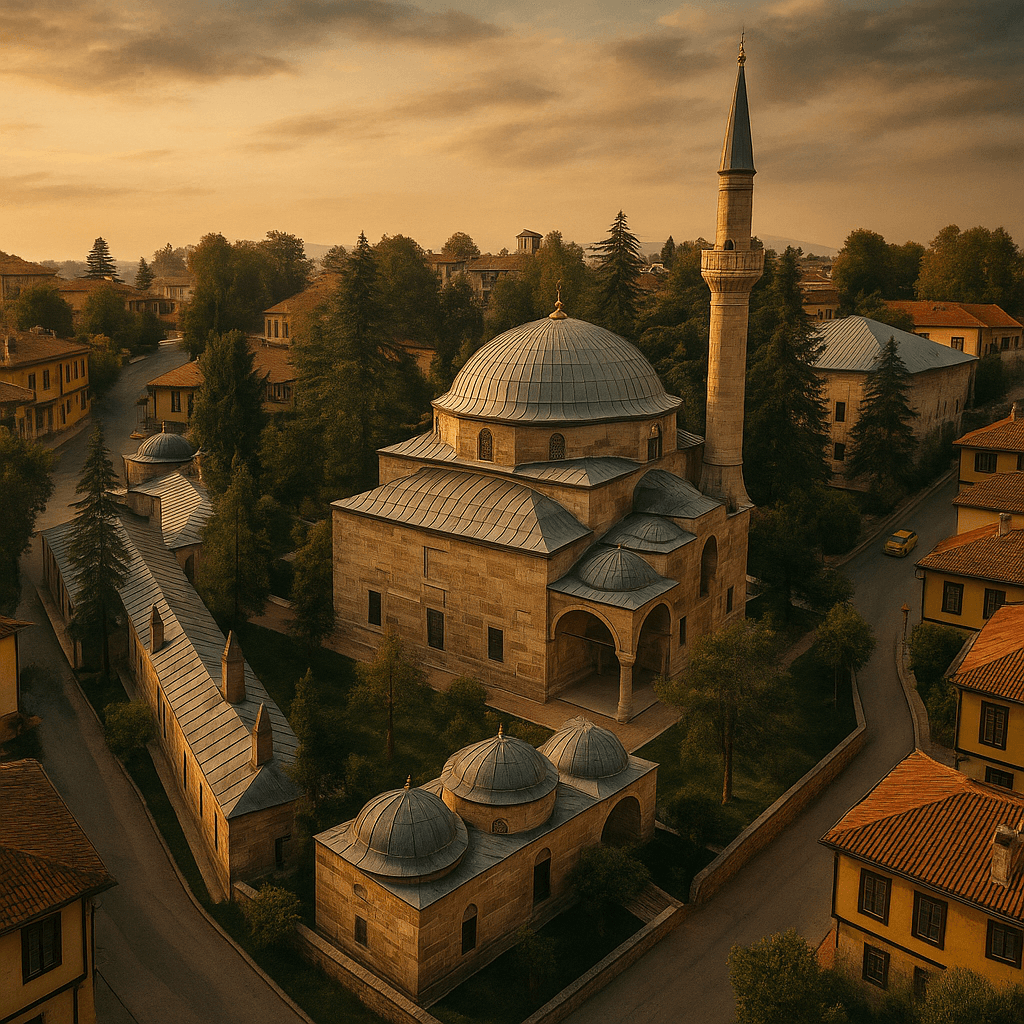
Located in the Odunpazarı neighborhood of Eskişehir, the Eskişehir Kurşunlu Mosque and Complex is one of the most important structures of the Ottoman period. This complex, situated right next to the historic Odunpazarı Houses, is a unique place that bridges the past and the present.
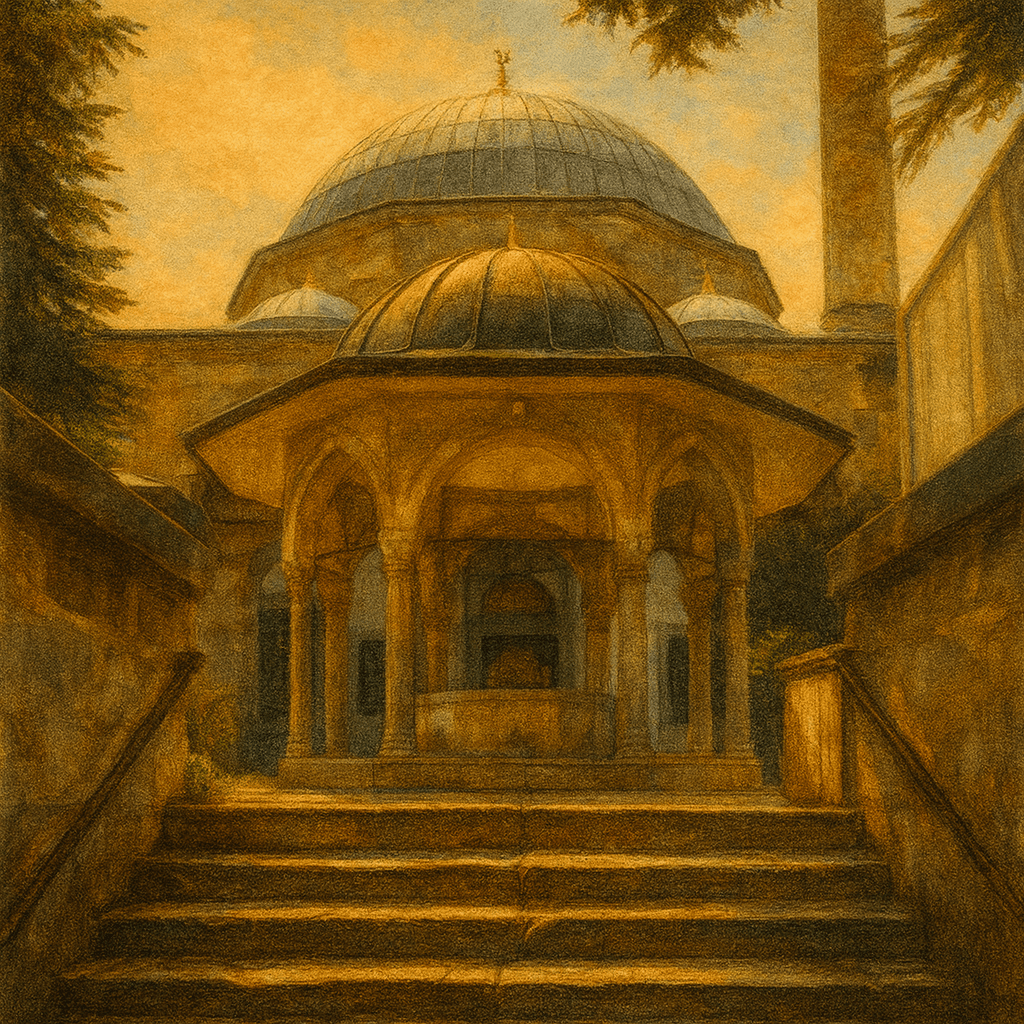
(Generated by Artificial Intelligence)
How Did It Come Into Existence?
The complex was commissioned in 1517 by Çoban Mustafa Paşa, a vizier of the Ottoman State. Its construction took approximately eight years and was completed in 1525. The architect of the mosque and the entire complex was Acem Ali, who served as the chief architect of the Ottoman Empire before Mimar Sinan.
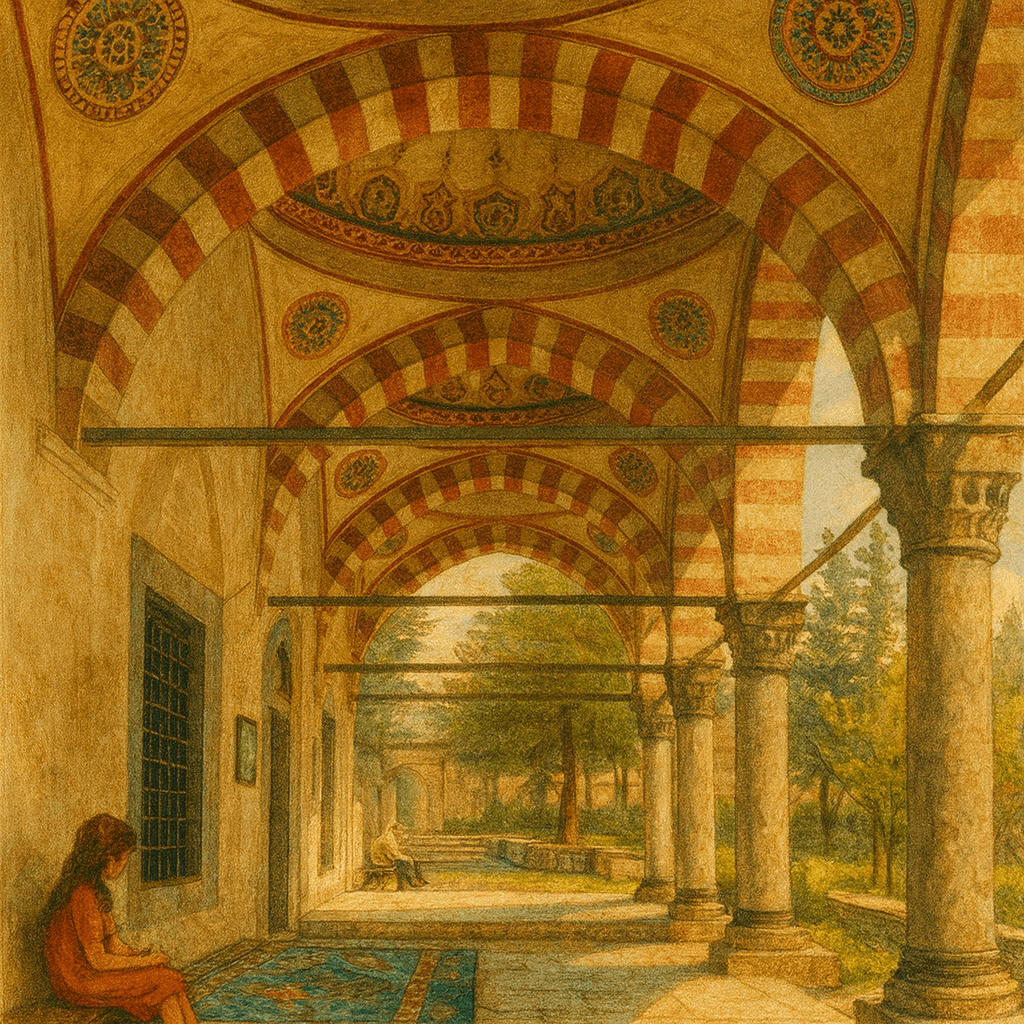
(Generated by Artificial Intelligence)
Components of the Complex
The Kurşunlu Complex is not merely a mosque; it encompasses a variety of distinct structures:
- Mosque: Built on a square plan with a dome, it acquired its name “Kurşunlu Mosque” because its dome was covered with lead.
- Şadırvan: A water structure located in the courtyard of the mosque.
- Medrese and Mevlevihane: Once used for education, these sections are now utilized as the Lületaşı Museum and workshops.
- İmaret and Aşevi: Kitchens that formerly provided meals to the public.
- Kervansarays: Today they serve as wedding halls and the Center for Ceramic Arts.
- Sıbyan Mektebi: This section, where children received education during the Ottoman period, now functions as a library.
Why Is It Important?
The Kurşunlu Complex is a complex that served both religious and social purposes. The interior decorations reflect the characteristic features of classical Ottoman architecture. Moreover, due to the presence of the Mevlevihane, Eskişehir became one of the major centers of the Mevlevi order.
Today, the Kurşunlu Complex functions as both a cultural and arts center and a space where visitors can experience the historical atmosphere.
(Generated by Artificial Intelligence)