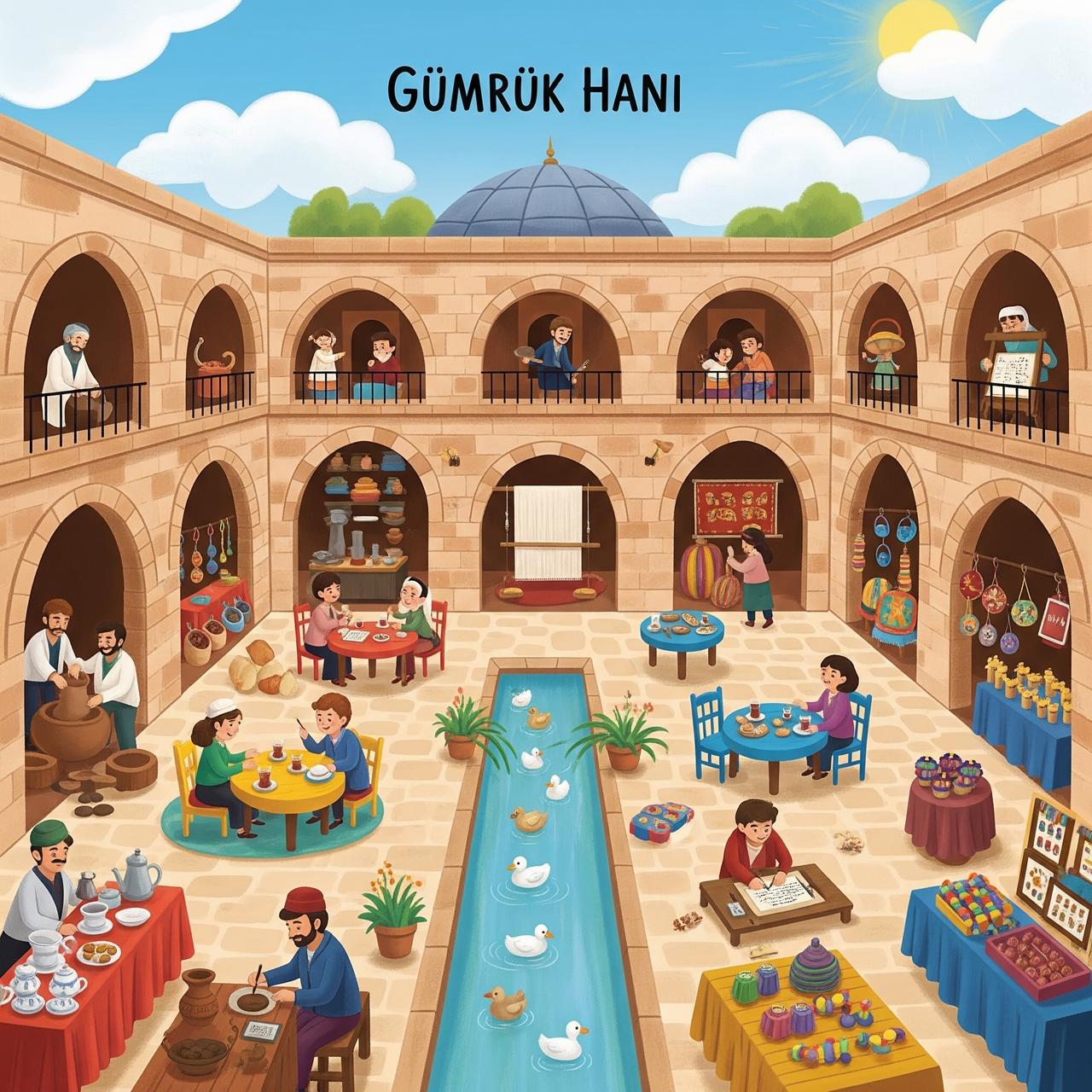


Customs Inn
The Gümrük Hanı, a testament to Şanlıurfa’s deep-rooted past, is one of the city’s oldest and most renowned structures. Once a major commercial center where caravans and merchants arriving from distant lands would rest, this caravanserai was once the very heartbeat of an era. Centuries ago, travelers journeying by camel and horse would pause here to refresh themselves, sell their goods, and prepare for new routes. Even today, walking through its courtyard, one can easily imagine the bustling activity of those days.
A Journey Through Time
The foundations of Gümrük Hanı were laid approximately 460 years ago, in 1563, during one of the most powerful periods of the Ottoman Empire under the reign of Kanuni Sultan Süleyman. This caravanserai was a significant contribution to the city by the then-governor of Urfa, Halhallı Behram Paşa. Its purpose was to provide safe lodging and facilitate trade for caravans arriving in the city.
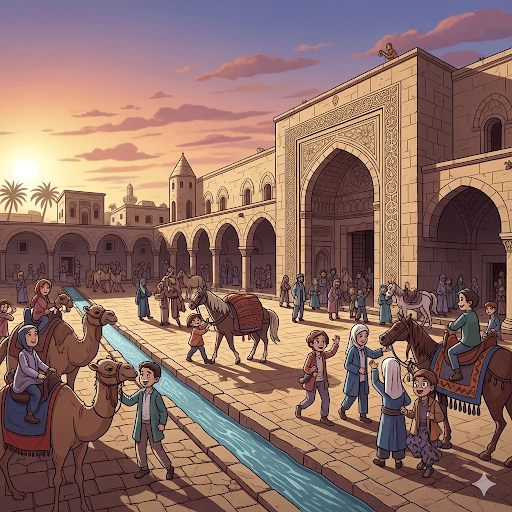
Gümrük Hanı (Generated by Artificial Intelligence.)
The famous traveler Evliya Çelebi spoke of the han’s grandeur and importance, referring to it as the “Seventy Inns.” For centuries, Gümrük Hanı served as a vital hub for the exchange of goods such as silk and spices, playing a central role in Şanlıurfa’s economic and social life. The structure was meticulously restored in 2001 to its original form, acquiring its present-day vibrant and majestic appearance.
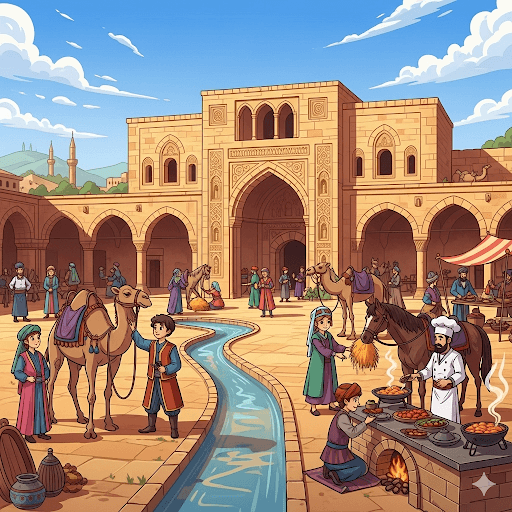
Gümrük Hanı (Generated by Artificial Intelligence.)
What Are the Features of the Han?
Gümrük Hanı is a two-story building centered around a spacious courtyard. Constructed using locally quarried cut stone characteristic of Şanlıurfa, the han combines durability with aesthetic appeal. One of its most striking features is a canal that runs through the courtyard, carrying water from the nearby Balıklıgöl. This flowing water adds a natural sense of coolness and tranquility, accompanied by the soothing sound of trickling streams.
Gümrük Hanı Today
Today, Gümrük Hanı retains its historical commercial function while also serving as a modern social space. On the ground floor, tea gardens and handicraft shops serve as gathering spots for locals and tourists alike. Particularly, prayer bead vendors add an authentic charm to the han’s atmosphere. The sound of water in the courtyard, mingled with the lively chatter of visitors, infuses the space with energy and joy.