Blue Morpho Butterfly
Do you know who the shining jewel of the rainforests is? Meet the blue morpho butterfly! With a wingspan reaching up to 20 centimeters, these are among the largest and most colorful insects in the world. When you see this creature whose wings shimmer like a brilliant blue diamond, you might feel as if you’ve stepped into a fairy tale. Let’s get to know this magical creature of nature up close!
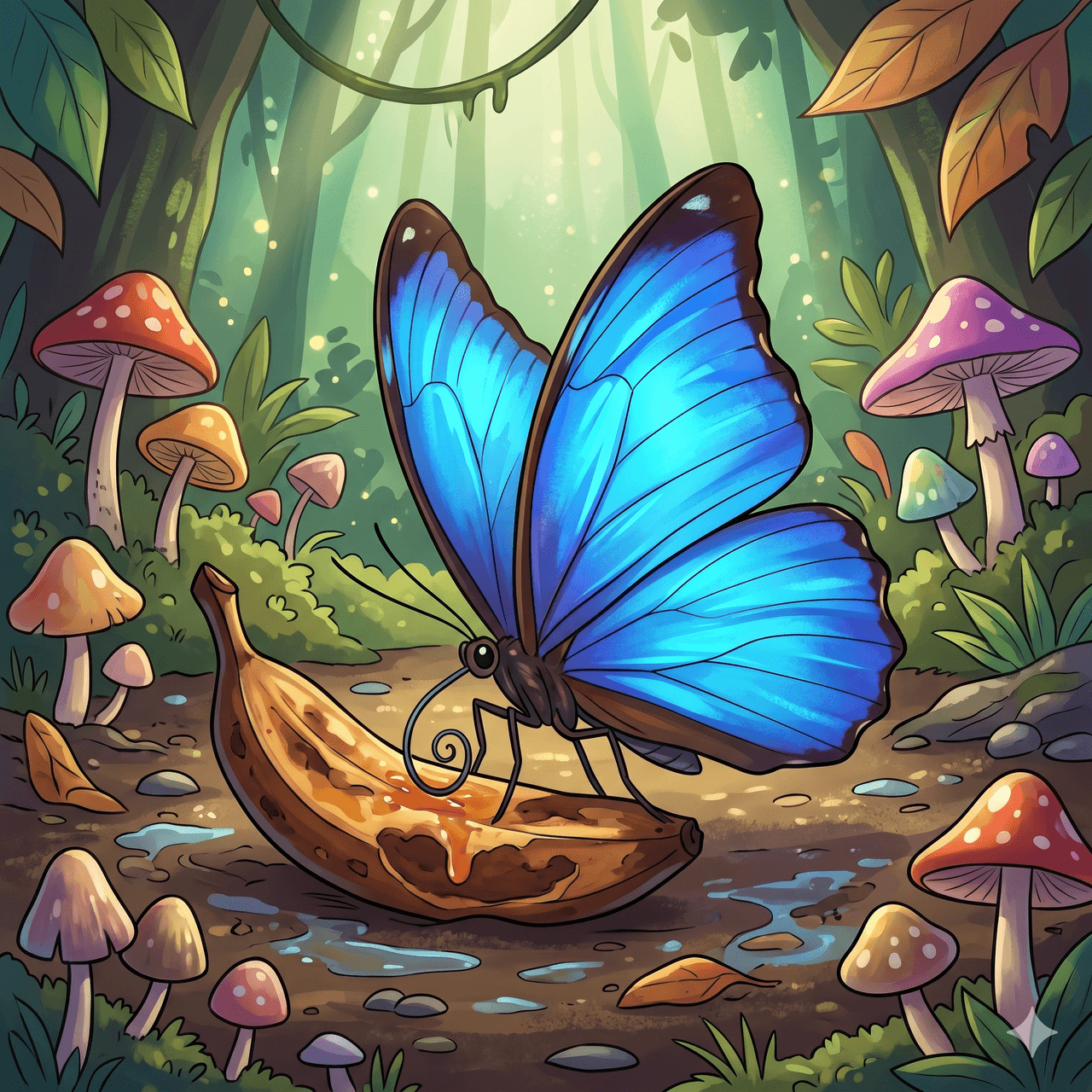
Blue Morpho Butterfly (Image Generated by Artificial Intelligence)
🌳 Where Does It Live?
Blue morpho butterflies live in the warm, humid tropical rainforests of Central and South America, especially in the Amazon rainforest. They spend most of their lives among the shrubs on the forest floor. However, when they want to bask in the sunlight or find a mate, they can fly up to the tallest trees of the canopy. In fact, their brilliant blue wings have even been spotted by pilots flying above the forest.
🎨 Why Are Their Wings So Blue?
Here is a surprising secret: There is actually no blue pigment in the wings of these butterflies! The upper surface of their wings is covered with microscopic, diamond-shaped scales. When sunlight hits these tiny scales, it is refracted and reflected back to our eyes as that dazzling, brilliant blue color.
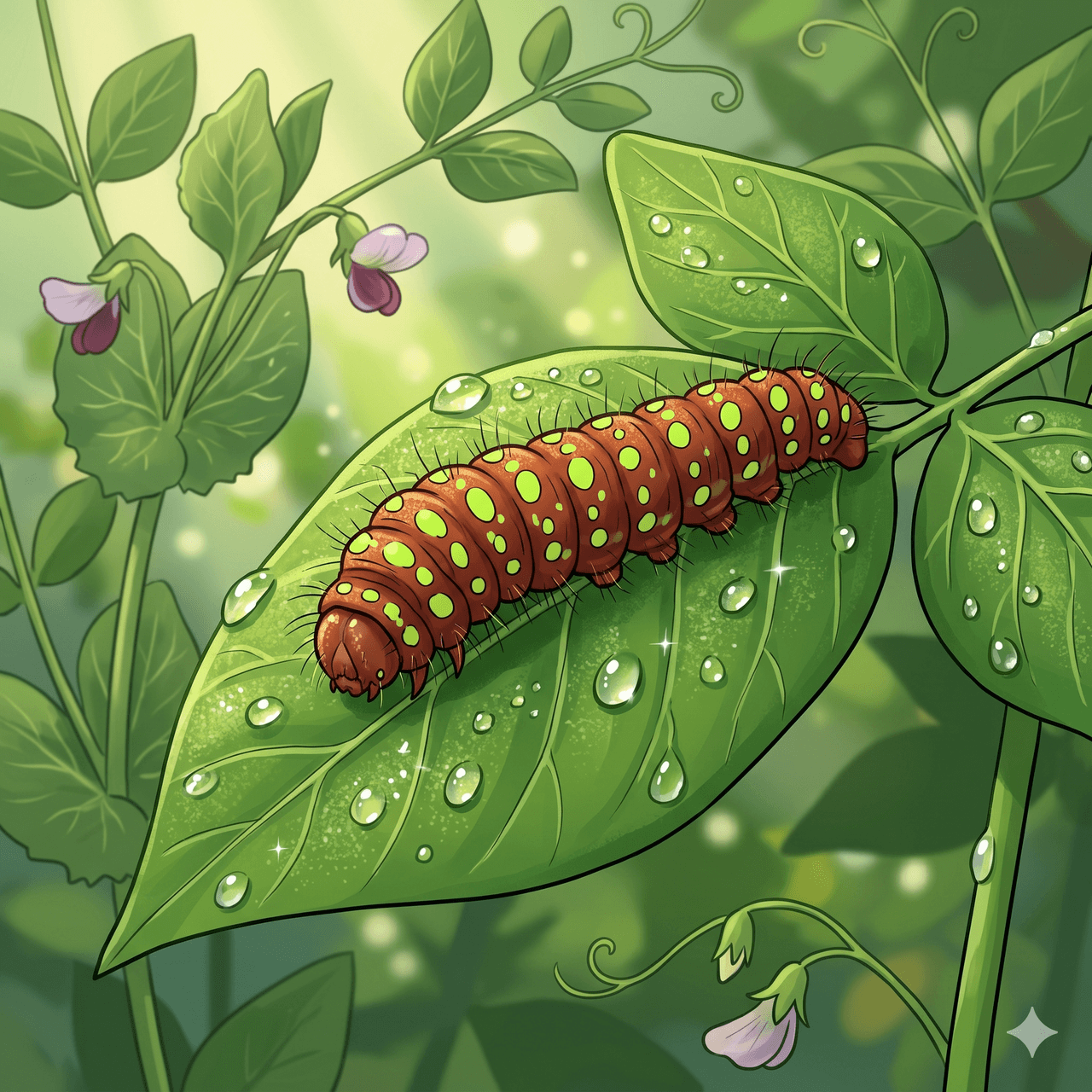
Blue Morpho Caterpillar (Image Generated by Artificial Intelligence)
🦋 A Master of Disguise
These butterflies are experts at playing hide-and-seek. When they land and close their wings, the underside is entirely brown and features large, eye-like spots. These large eyes scare off birds that try to prey on them. When flying, they open and close their wings, alternating between flashes of blue and brown. This color play makes them appear to vanish and reappear in the forest, confusing their predators.
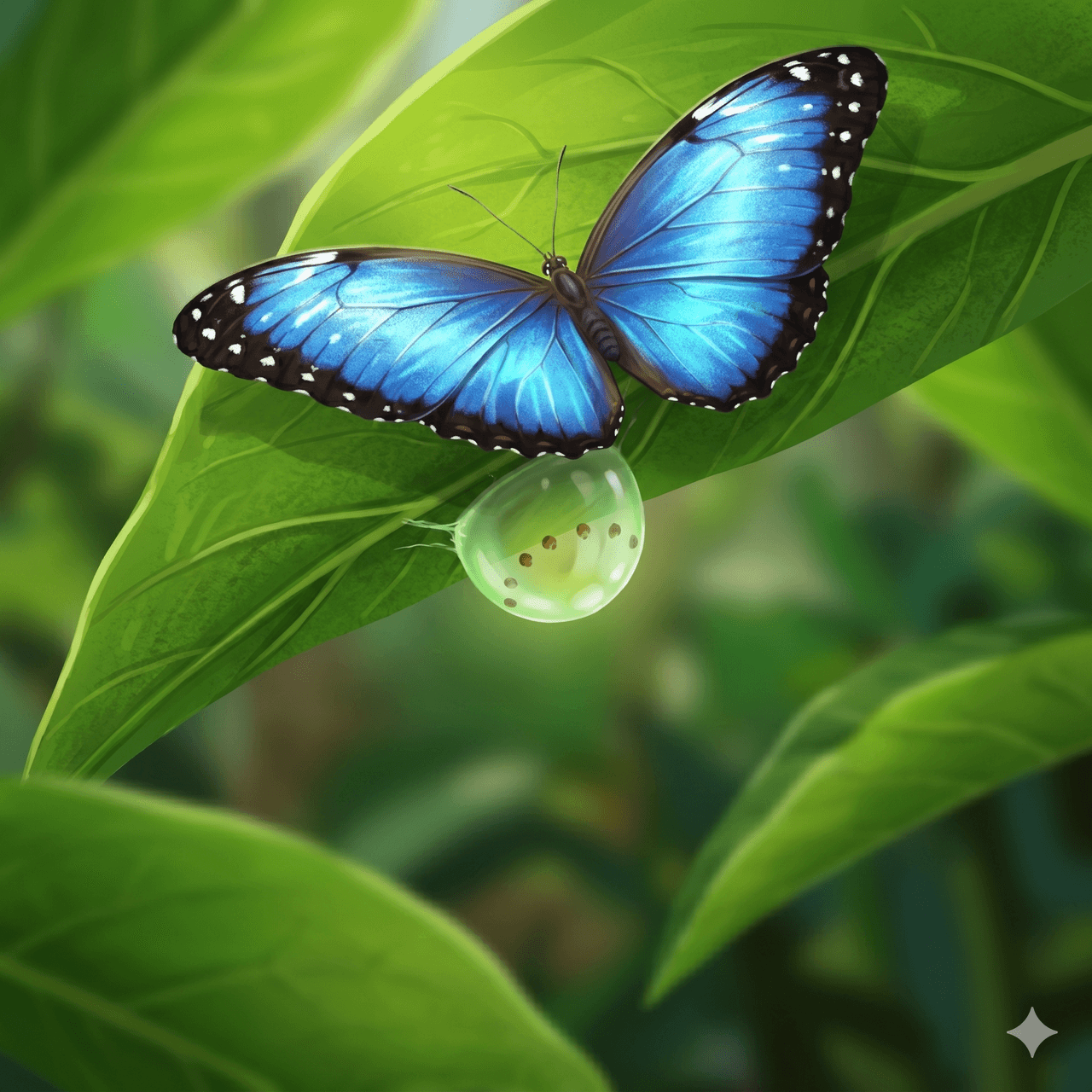
Blue Morpho Butterfly (Image Generated by Artificial Intelligence)
🍓 What Does It Eat and Drink?
You may have heard that most butterflies sip nectar from flowers, but blue morphos are a bit different. They have no teeth for chewing. Instead, they have a long, coiled tube called a proboscis in their mouth. They use this like a straw to suck up the juice from rotting sweet fruits on the forest floor, tree sap, and even moist mud. They also have a fascinating way of tasting their food: special sensory receptors on their feet allow them to taste their meals with their legs.