


Birds Perched on Electrical Wires
Electric wires, in energy facilities generated current is carried to our homes through conductive pathways. The high electric current flowing through these wires is extremely dangerous for both humans and animals. However, we often observe birds safely perching on these wires. This phenomenon is based on certain principles of physics.

Generated by Artificial Intelligence.
How Does Electric Current Move?
Electric current is formed by the movement of negatively charged electrons around atoms. Like water flowing downhill, current tends to move from a point of high potential to a point of low potential. The force that drives electrons to move is called "tension" or "voltage".
Why Birds Are Not Harmed
- No Potential Difference: When a bird perches on a single wire, the voltage difference between the two points where its feet touch the wire is nearly zero. Since current requires a potential difference to flow, it continues along the wire without entering the bird’s body.
- Difference in Resistance: Electrical wires are typically made of materials like copper that conduct electricity very easily, meaning they have "low resistance". In contrast, a bird’s body has much "higher resistance" than the wire. Since electric current always follows the path of least resistance, it does not pass through the bird.
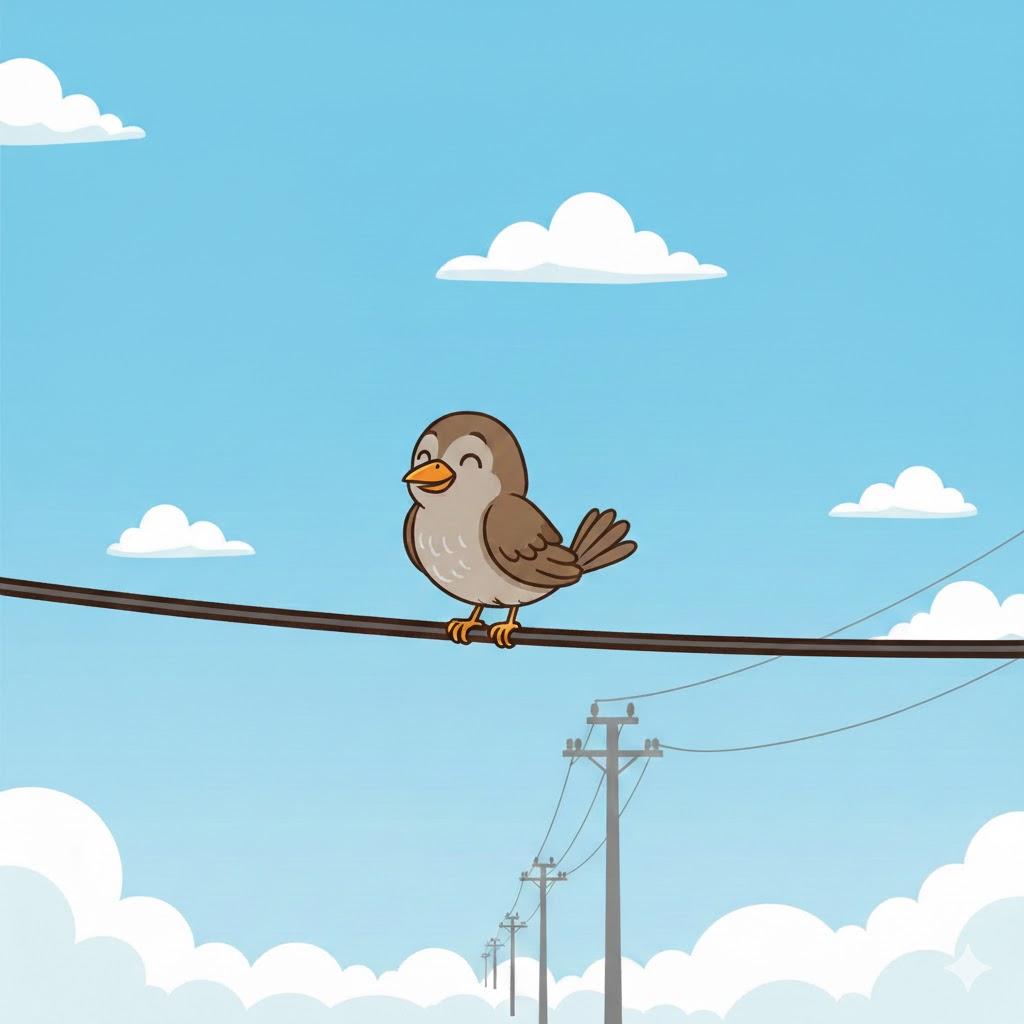
Generated by Artificial Intelligence.
When Are Birds in Danger?
Birds are at risk only when their bodies create a bridge between two points with different energy levels.
- If a bird spreads its wings and simultaneously touches another wire, it completes a circuit between two wires with a voltage difference and receives an electric shock.
- If a bird simultaneously touches a wire and a grounded pole or the ground, current flows through its body due to the potential difference between the wire and the ground.
Protective Measures
Experts increase the distance between wires or cover them with special insulating materials that do not conduct electricity to prevent harm to birds.