

`strain` ile İlgili Madde Sonuçları
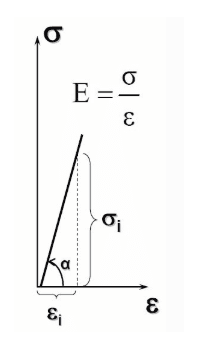
Elasticity (Young's) Modulus
Discovery The concept of the modulus of elasticity was first introduced by Thomas Young in 1807. Definition Also referred to in some sources as Young's modulus, the modulus of elasticity (E) is a value that represents a material's resistance to deformation under load. This value (E) serves as a measure of how stiff or flexible a material is. A higher value indicates that the material will deform less compared to one with a lower value. Determination and Base Unit This value is calculated from th
EN
Elyesa Köseoğlu

Von Mises Stress (Distortion Energy Theory)
Von Mises stress is a stress criterion used to determine whether a material will yield or not. It is particularly widely used for metals and ductile materials (materials that exhibit the same properties in all directions). The von Mises theory is based on the concept of distortion energy and is also commonly referred to as the "distortion energy theory" or "maximum distortion energy theory". Development of the Theory The concept of von Mises stress was first proposed by Maksymilian Huber in 1904
ENElyesa Köseoğlu
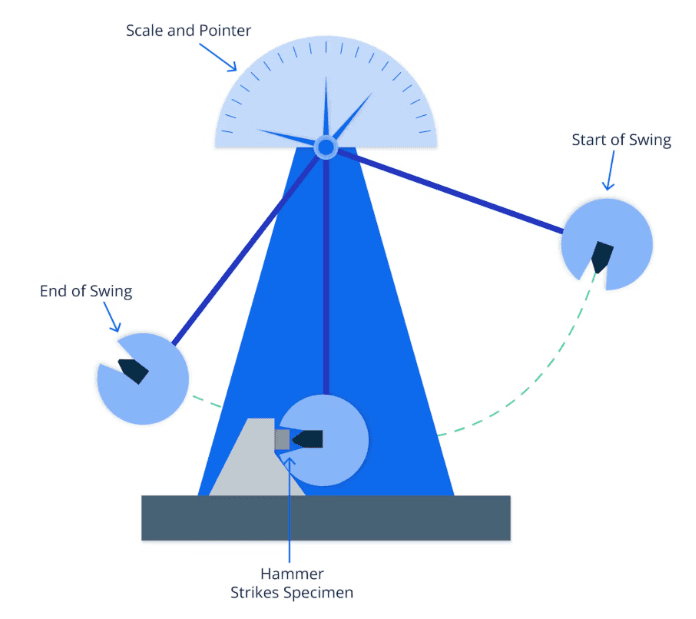
Toughness
Toughness is the total amount of energy a material absorbs until the point of fracture. This property indicates the material’s capacity to store energy under impact like external loads. Toughness is directly related to the area under the stress-strain curve, which represents the energy absorbed per unit volume. A material with high toughness is expected to have both high ductility and high strength. Brittle materials with high strength but low ductility, and materials with low strength but high
ENElyesa Köseoğlu
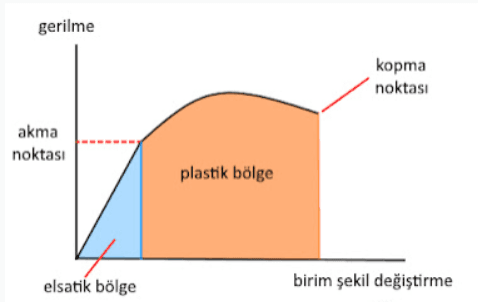
Plastic Deformation
Definition The phenomenon in which a body together fails to return to its original shape after the applied force is removed is called plastic deformation. How It Is Obtained In a stress-strain graph, the area under the linear region region is called the elastic region while the area under the nonlinear region is called the plastic region elastic region plastic. Whether a body undergoes plastic deformation is determined by the stress value reached by the material below its load. Accordingly if th
ENElyesa Köseoğlu

Tensile Test
Tensile test is one of the fundamental and most widely used experimental methods for quantitatively determining the mechanical behavior of engineering materials. This test involves subjecting a specimen to uniaxial tensile force, allowing detailed information to be obtained about the material’s elastic and plastic deformation limits, ductility, fracture behavior, and strength. This information is critical in numerous engineering applications including material selection, product design, quality
ENMuzaffer Yalçın
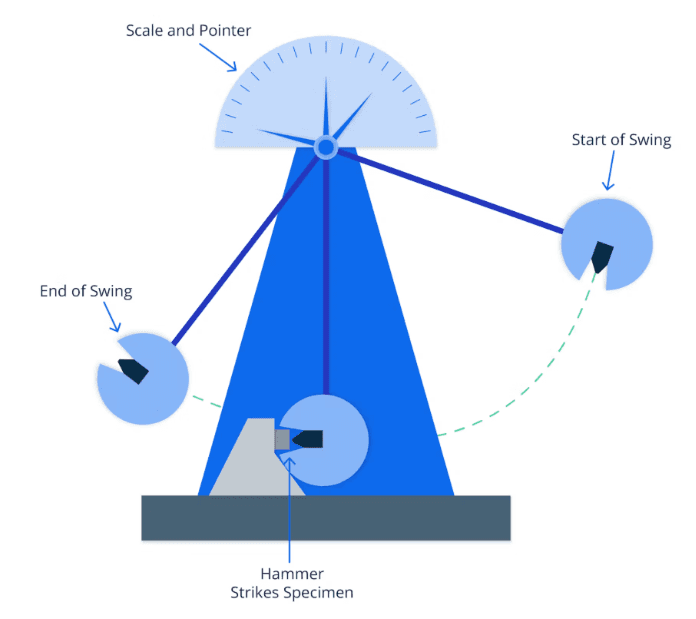
Toughness
Toughness is the total amount of energy a material can absorb until fracture. This feature represents the material’s coup like capacity to absorb energy under external loads. Toughness is directly related to the area under the stress-strain curve, which indicates the energy absorbed per unit volume. A material with high toughness is expected to have both high ductility and high strength. Brittle materials with high strength but low ductility, and materials with low strength but high ductility, a
ENElyesa Köseoğlu
Çekme Testi (Tensile Test)
Çekme testi, mühendislik malzemelerinin mekanik davranışlarını nicel olarak belirlemede kullanılan temel ve en yaygın deney yöntemlerinden biridir. Malzemenin bir eksen boyunca çekme kuvvetine maruz bırakılmasıyla gerçekleştirilen bu deney sayesinde, malzemenin elastik ve plastik deformasyon sınırları, sünekliği, kopma davranışı ve dayanımı hakkında ayrıntılı bilgi elde edilir. Bu bilgiler, malzeme seçimi, ürün tasarımı, kalite kontrol ve hasar analizi gibi çok sayıda mühendislik uygulamasında k
TRMuzaffer Yalçın