

`language` ile İlgili Madde Sonuçları
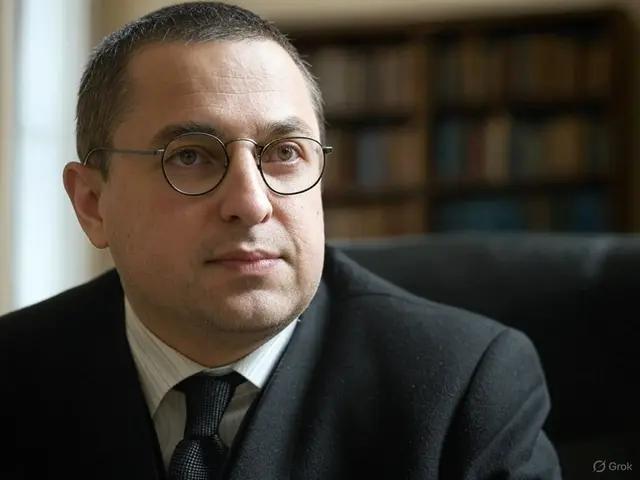
Lev Semenovich Vygotsky
Lev Vygotsky (November 17, 1896, Orsha, Belarus – June 11, 1934, Moscow, Soviet Union) was a psychologist known for his revolutionary work on child development and learning. Vygotsky emphasized how mental development is shaped within a social context and developed theories linking individual development with social interactions. Vygotsky introduced a sociocultural approach to psychology, focusing especially on the role of language and culture in individual development. His best-known contributio
EN
Nida Üstün
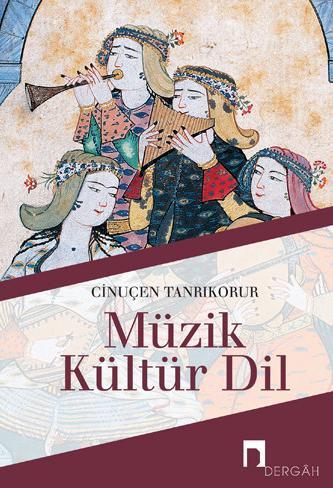
Music Culture Language (Book)
Music Culture Language is a work by Cinuçen Tanrıkorur (1938–2000), one of the most significant figures in Turkish music, published as part of Dergâh Publications’ “Music” series. It combines musicology, philosophy of art and cultural essay, presenting a collection of research, essayistic and reflective writings that reveal not only Tanrıkorur’s identity as a musicologist but also as a thinker, scholar and stylistic prose writer. First published in October 2003, the book comprises 367 pages and
EN
Muhammed Samed Acar

What Is a Tongue Twister?
Nursery rhymes are word sequences that are fun to say and pleasing to the ear. They contain abundant rhyme, rhythm, and repetition. Children typically encounter these phrases while playing games, singing songs, or listening to fairy tales. Nursery rhymes both amuse and teach proper language use! 🎵How Did Nursery Rhymes Emerge? The origins of nursery rhymes lie in the oral culture of the people. Long ago, people began combining words in playful ways to develop their speaking and storytelling ski
EN
Nida Öztürkmen
 Th
ThThe Past Extending into the Future
Humanity distinguishes itself from other living beings through reason, the capacity for thought, and the ability to generate values. Its most fundamental quality that renders it free and active is its capacity to open itself to the world and establish relationships with entities. This ability grants humans the opportunity to alter, transform, and shape their environment and future. It is precisely this accumulation that forms the foundation of what we call culture. Development The transmission o
EN
Muhammed Emin Ortakuş

Editor
Editor, written, visual, or digital content is reviewed, edited, and prepared for publication. The word derives from the Latin editor, meaning “one who presents or publishes,” which itself comes from the past participle (editus) of the verb edere (to bring forth, produce, publish).Harper, Douglas. “Editor.” Online Etymology Dictionary. Erişim 19 Ekim 2025. https://www.etymonline.com/word/editor ">【1】 The term acquired the meaning “a person who prepares written text for publication” in 1712 an
EN
Melike Erol

Leibniz's Universal Language Project
Leibniz’s Universal Language Project (Latin: characteristica universalis) is a philosophical and logical endeavor developed by 17th century philosopher Gottfried Wilhelm Leibniz with the aim of representing thoughts in a universal form and making reasoning calculable. Leibniz designed this project not merely as a language to facilitate communication but also as a rational writing system that reflects the workings of the human mind. The project is later regarded as one of the precursors to the co
EN
Esra Can

Translation Studies
Translation Studies is an academic discipline that examines translation as an activity in terms of its theoretical foundations, descriptive approaches, and practical dimensions. This field investigates the processes of meaning transfer between different languages on one hand, and on the other hand explores the cultural, social, and cognitive aspects of these processes. Translation Studies has a multilingual and interdisciplinary character; it is closely related to fields such as linguistics, cul
EN
Özge Buslu

The Importance of Language from the Conceptual Difference Between Duty and Responsibility
In the dictionary, the word “görev” is defined as “a duty, obligation, or responsibility” and is explained through three distinct concepts; it is a modern term shaped by the linguistic revolution. Etymologically derived from the verb “gör,” which originally carried the meaning of “the thing that must be seen or done,” the word gradually came to be used in institutional and human contexts to denote “assumed responsibility or obligation.” This article aims to examine why the word “görev” does not
EN
Gürkan Pur
ThThis Country (Book)
Cemil Meriç’s work Bu Ülke is a notable piece both literary and philosophical in nature. First published in 1974, this book consists of essays that present the author’s own ideas observations and criticisms. In this work Meriç examines the identity and culture problems of a country caught between the East and the West. Written with a critical and questioning approach Bu Ülke takes the reader on a profound journey through individual and social thought. With his distinctive style Meriç offers both
EN
Ahsen Karakaş

Why Is Arabic Considered So Difficult?
Arabic has historically been one of the foreign languages Turks have shown the greatest interest in learning, and this interest led to the development of diverse learning methods; however, today this process has become a difficult journey overshadowed by strategic errors rather than the nature of the language itself. This perception of difficulty is not merely rooted in the grammar structure of the language but is a multilayered problem arising from the teaching methods employed and student moti
EN
Elif KARDAŞ