

`wahdat-al-wujud` Related Article Results
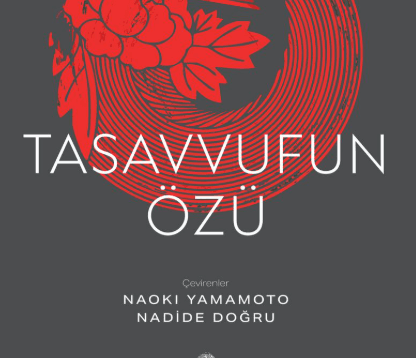
The Essence of Sufism (Book)
The Essence of Sufism was written by Japanese thinker and Islamic philosopher Toshihiko Izutsu. The work centers on the concept of waḥdat al-wujūd (Oneness of Being), a doctrine with a significant place in Islamic thought, and examines its historical development, theoretical framework, and linguistic foundation through a philosophical analysis. The book is grounded in the idea that the conceptual structure of Sufism must be evaluated not only through surface-level symbols but also through the de
EN
Elyesa Köseoğlu
 Ib
IbIbn Arabi: Time and Cosmology (Book)
Muhammad Hacı Yusuf’s work Ibn al-Arabi: Time and Cosmology examines Ibn al-Arabi’s concepts of time and universe by comparing these ideas with modern scientific theories. The book particularly highlights Ibn al-Arabi’s concept of “ân-ı dâim.” This concept posits that time exists as a continuously renewed and unbroken “one.” According to the Islamic thinker, past and future converge within this perpetual “an,” and this perspective exhibits certain parallels with modern scientific theories such a
ENElyesa Köseoğlu