

`uyghur` Related Article Results
 Ci
CiCity among the Old Turks
Urbanism among the Ancient Turks encompasses settled life practices shaped by environmental necessities, economic demands, and political objectives within a society traditionally associated with nomadic lifestyles. Historical evidence from archaeological findings and written sources confirms that Turkish communities were not exclusively nomadic; they exhibited advanced examples of urbanization during various periods. For the Ancient Turks, urbanism was not merely a form of settlement but also a
EN
Duygu Şahinler
OrOrigin Epic
Türeyiş Destanı is a mythological and historical narrative that recounts the origins, salvation from extinction, and rebirth of the Turkish people. Within Turkish cultural history, this epic is regarded as a “origin myth” that not only explains how a lineage began but also encompasses the values, cosmological understanding, and sacred symbols of Turkish society. The epic describes how Turkish communities, particularly the Göktürks and Uyghurs, reemerged after catastrophic events such as genocide
EN
Yahya B. Keskin
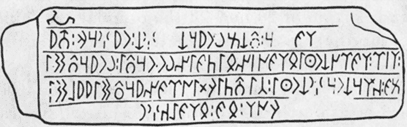
Tes Inscription
The Tes Inscription is an Old Turkic (runic) epigraphic example in the form of a reddish rectangular granite block with inscriptions on all four sides, dated to the Uyghur Khaganate period. It is located in the Hovsgol (Hövsgöl) region of Mongolia, within the Tes (Tesiin Gol) River basin. The preserved portions of the inscription consist of a total of 22 lines and contain content relating to early Uyghur political and administrative events, tribal names, and expressions concerning boundaries and
EN
Meryem Şentürk Çoban