

`underworld` Related Article Results
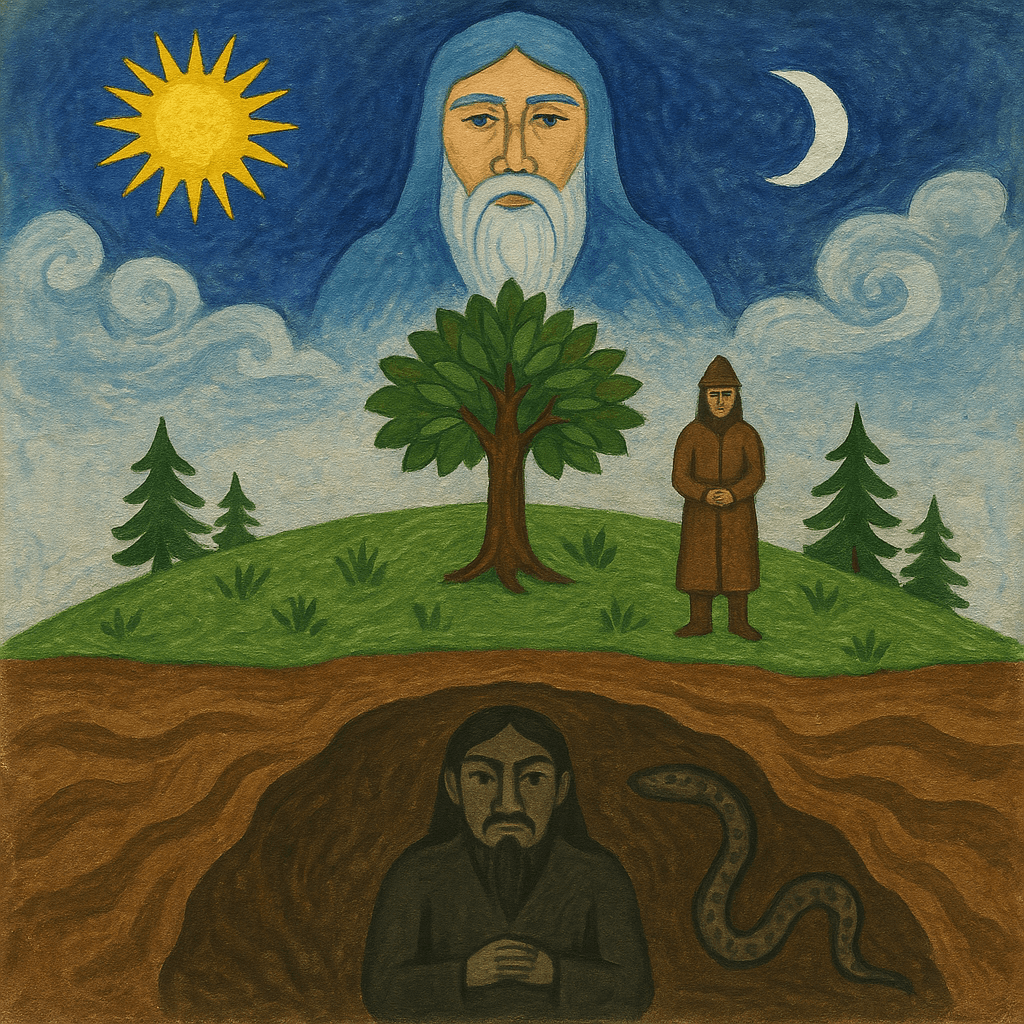
The Concept of the Triple World in Turkish Mythology
In Turkish mythology, the tripartite conception of the world is a cosmological model reflecting the ancient Turks’ understanding of the universe. According to this model, the universe consists of three main planes: the sky, the earth (surface), and the underworld. Each plane is defined by its own unique beings, spirits, and conceptual order. This worldview occupied a central place in the belief systems of the ancient Turks and shaped their social, cultural, mythological, and ritualistic lives. S
EN
Neriman Çalışkan
 Gr
GrGreek Mythology
Greek mythology is a cultural and literary reflection of the ancient Greek peoples’ efforts to understand the universe, their gods, nature, humanity, and heroic history. The term “mythology” derives from the Greek words “mythos” (word, story, legend) and “logos” (reason, thought, discourse); these narratives formed the foundation of rituals and left lasting impacts on art, literature, philosophy, and social structures. Greek myths have reached us primarily through the works of poets such as Hesi
EN
Duygu Şahinler