

`thermoelectric-generator` Related Article Results
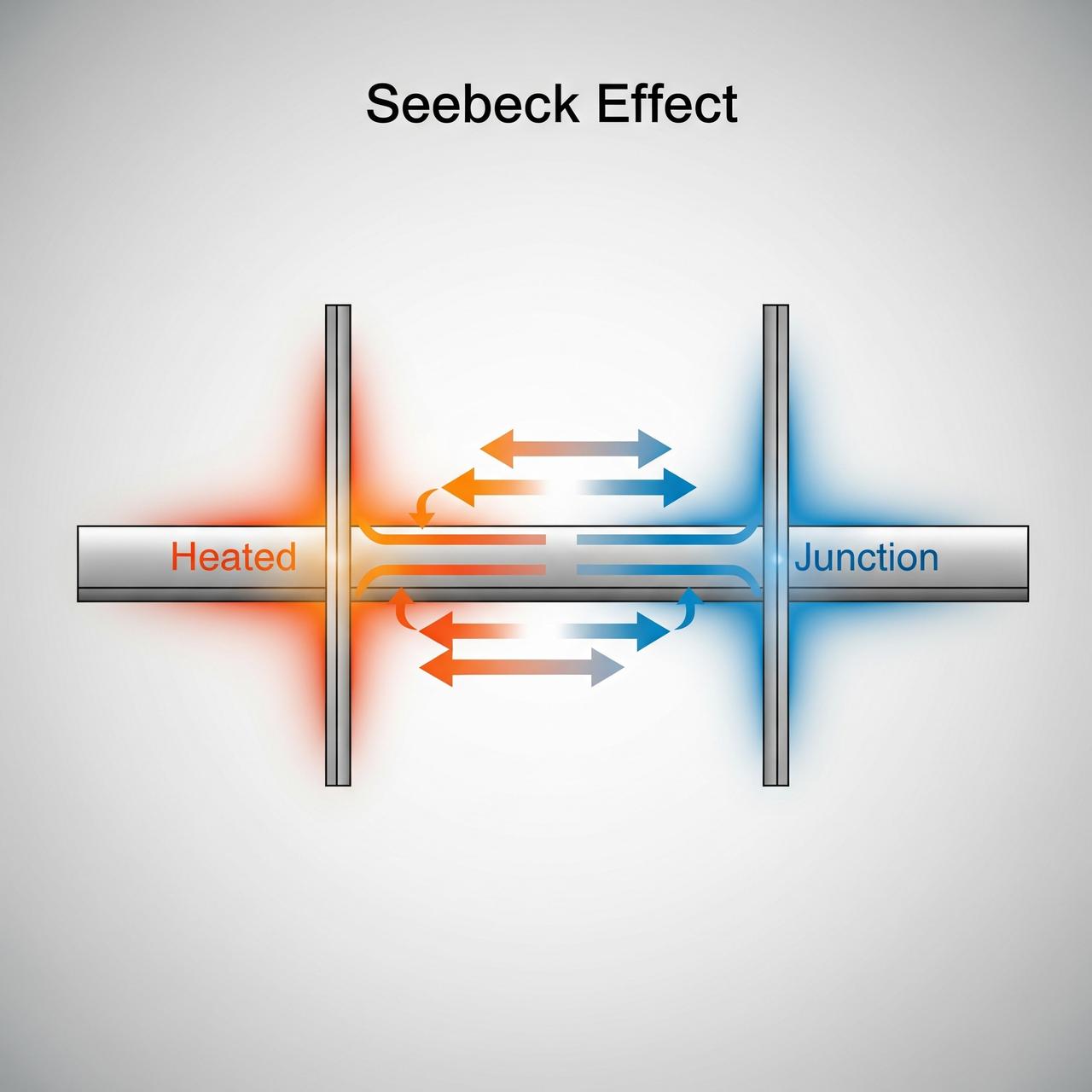
Seebeck Effect
The Seebeck effect is the phenomenon in which an electrical potential difference arises in a closed circuit formed by joining two different conductive or semiconductive materials when a temperature difference is created between their junctions. It was discovered in 1821 by the German physicist Thomas Johann Seebeck. Seebeck observed that when he heated one junction of a circuit made from two dissimilar metal wires the compass needle deflected and initially believed the effect to be magnetic. How
EN
Muhammet Ali Demir

Curium (Cm)
Curium is a radioactive, silvery metallic element in the actinide series of the periodic table, with atomic number 96 and chemical symbol Cm. It is named after the pioneering scientists in the field of radioactivity, Marie and Pierre Curie. Classification and Fundamental Properties Curium is the eighth element in the 7th period of the periodic table within the actinide group. Its electron configuration is [Rn]5f⁷6d¹7s². This electronic structure determines its chemical behavior and its common ox
EN
Caner Sefa Koçyiğit