

`theory-of-forms` Related Article Results
 Pl
PlPlato's Allegory of the Cave
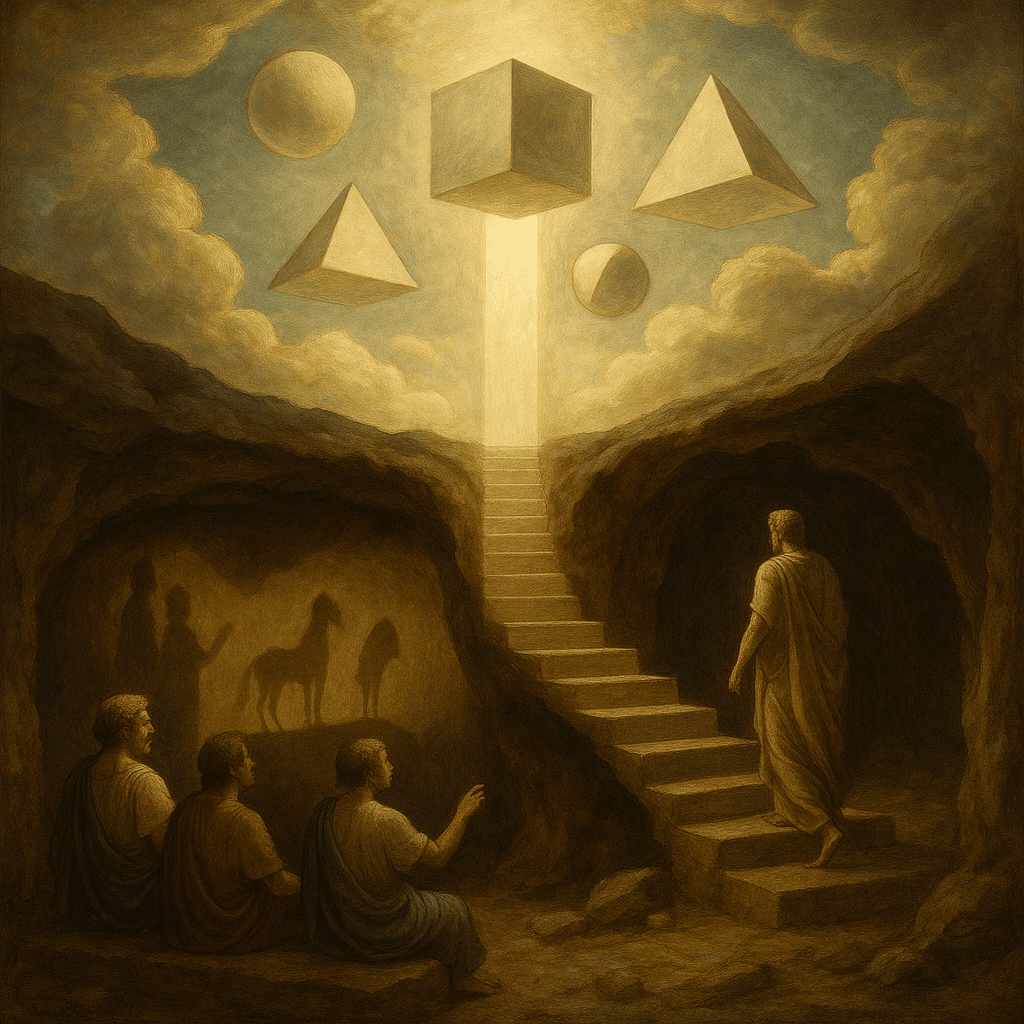
Plato’s Allegory of the Cave is a narrative found in the seventh book of the ancient Greek philosopher Plato’s work Republic (Politeia). The allegory is employed to concretize Plato’s theory of Forms, which forms the foundation of his metaphysics (ontology) and epistemology. The narrative addresses themes such as the nature of reality, the possibility of knowledge, the process of transition from ignorance to enlightenment, and the transformative role of education. The allegory has been interpret
EN
Yunus Emre Yüce
Platonism
Platonism is a philosophical movement that originated in the late 4th century BCE at the Academy in Athens, founded by the ancient Greek philosopher Plato, and later developed by his students and followers into a systematic tradition of thought. At the core of this philosophy is the belief in a transcendent realm of unchanging eternal and perfect forms or ideas, accessible only through reason, which exists beyond the mutable flawed and ever-changing physical world perceived by the senses. This u
EN
Ömer Said Aydın