

`telomerase` Related Article Results
 Te
TeTelomerase
Telomerase is a ribonucleoprotein complex that synthesizes DNA repeat sequences at chromosome ends, thereby preventing telomere shortening and playing a central role in determining cellular lifespan. This structure is active in numerous biological processes, primarily human cell division, aging, cancer, and immune system regulation. Telomeres consist of repetitive DNA sequences located at the ends of chromosomal DNA and shorten slightly with each cell division. In cells where telomerase is activ
EN
Bekir Öztürk
TeTelomere Effect
Telomeres are specialized DNA-protein complexes located at the ends of eukaryotic chromosomes, composed of TTAGGG repeat sequences. Their function is to protect chromosome ends and prevent the loss of genetic information that may occur during DNA replication. Due to the mechanism of action of DNA polymerase, a portion of the DNA is lost from the ends with each cell division, leading to telomere shortening. Telomerase Enzyme and Activation Telomerase is an RNA-containing reverse transcriptase enz
EN
Saliha Nur Demir
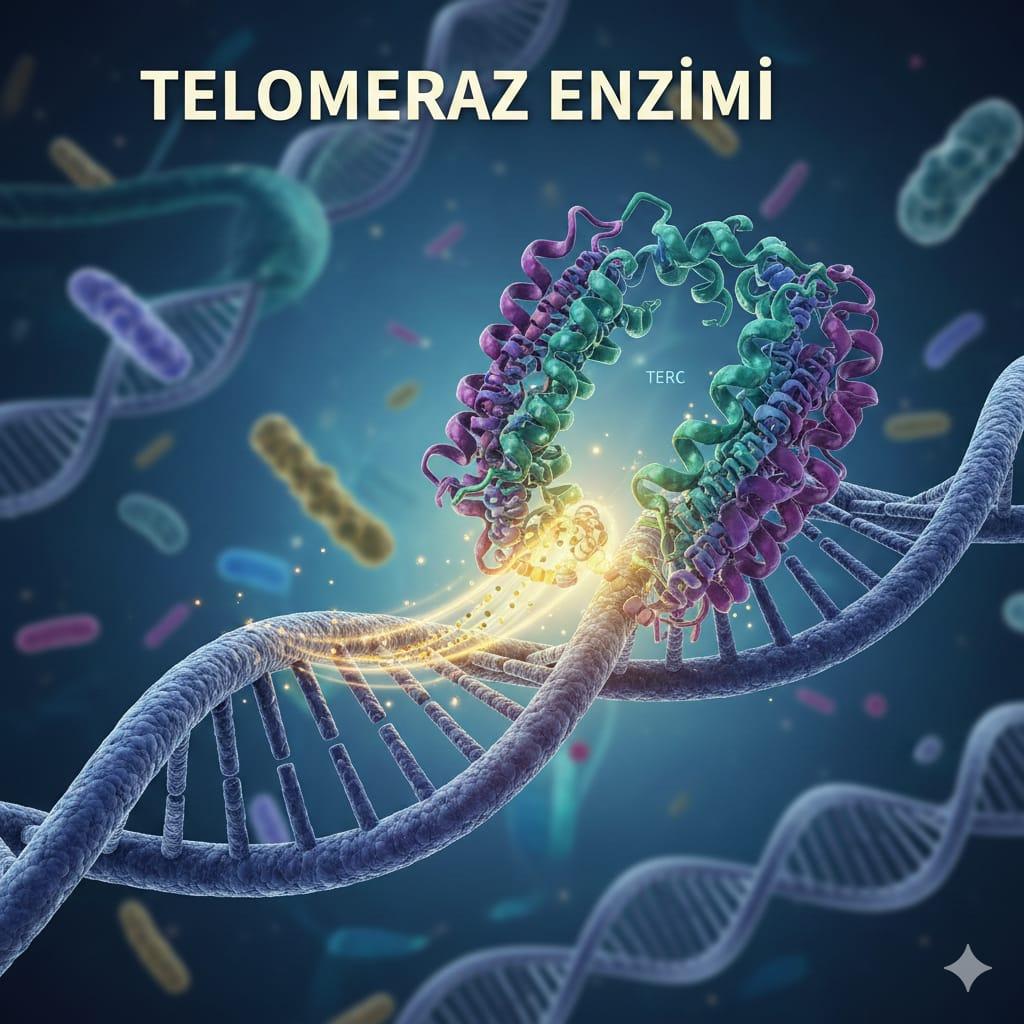
Telomerase Enzyme
Telomerase is a ribonucleoprotein enzyme that protects and extends repetitive DNA sequences called telomeres at the ends of chromosomes in eukaryotic cells. Its structure includes a catalytic reverse transcriptase subunit (TERT) and an RNA component (TERC) that serves as a template for the enzyme. Using RNA as a template, telomerase adds nucleotides to telomeric DNA, compensating for the shortening that occurs during replication. Primary Function The primary function of telomerase is to preserve
ENÜmmügülsüm Kaydan