

`song` Related Article Results
 Co
CoCompletely different
No friend, no enemy, No beloved, no stranger. Every word of ours is a knife, Every silence a gravestone. Even as we destroy each other, we stand side by side. To be your enemy has become a kind of loyalty to me. Sometimes our harmony frightens me, Even when we fight, we keep the rhythm. Before you speak, I have already written my reply. You treat me like an enemy, Yet I am still, at heart, on your side. We are utterly different, yet in harmony, yet in war. Even as we destroy each other, we are m
EN
Selahattin Köseoğlu
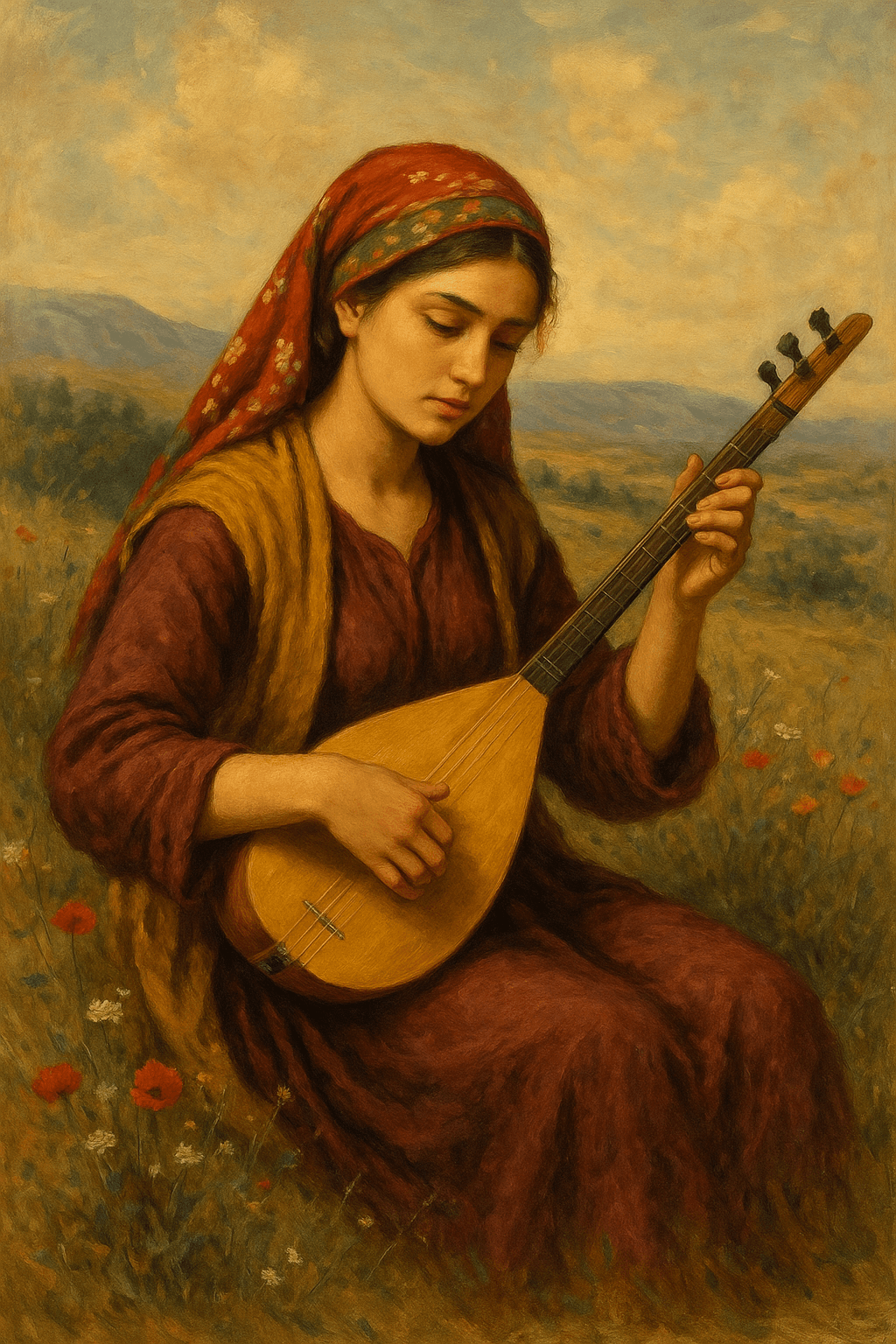
Acem Kızı Türküsü
“Acem Kızı” is a Turkish folk song transmitted orally across generations in Central Anatolia and Çukurova regions, characterized by its lyrics, melody, and narrative layers. From the second half of the 20th century onward, it reached wide audiences primarily through radio and vinyl records, becoming embedded in public memory, and was formally registered in the TRT repertoire as originating from the Kırşehir region. However, differing accounts have emerged regarding the song’s origin context, its
EN
Burak Enes

Beş Minare (Folk Song) in Bitlis
“Beş Minare in Bitlis” is a historical legend and lament that emerged during the Russian occupation of Bitlis in the years of the First World War, shaped by forced migrations and the extensive destruction the city endured. Over time, it acquired a musical form and became embedded in the regional culture. As a local oral narrative, this legend addresses the social devastation caused by the war and the grim reality faced by civilians who were compelled to abandon their homes and, upon returning, f
ENSelahattin Köseoğlu

Next
It didn’t work out, my love, I couldn’t learn how to live. I began with enthusiasm, but left it half-finished. I couldn’t find a way; I grew narrow, believe me. Now, to the next one... People said, “You’ll get used to it with time.” I got used to time, but never to myself. The same thing always lingered in my mind—not me; Perhaps that’s why I became numb. Maybe I achieved some things, But I don’t know what good they did. I wanted silence, not applause, Because in silence I could hear myself. It
ENSelahattin Köseoğlu

A Modern Poet in Values Education: Barış Manço
Barış Manço is an original artist who actively used music as a vehicle for conveying messages, interpreting traditional sources in an original form—not only through his music but also through his lifestyle and appearance. The transmission and preservation of cultural heritage, which constitutes a society’s material and spiritual existence as well as its written and oral values, through language and cultural education holds vital importance for the development of individuals and societies. Barış
EN
Gözde Cabadak
A A Song Appearing Before Us "At the Perfect Time"
Some songs leave behind a strange feeling the moment you first hear them. They feel familiar, as if you have heard them hundreds of times before, yet the issue is not about recognizing the melody. Rather, it is about how the song coincides with an emotion already present within you. Sometimes a person cannot clearly articulate what they have been feeling for days, perhaps even months, until a single line from a song puts everything into place. In that moment, the person no longer feels as though
EN
Ebrar Sıla Peri

Emotional Words
Songs always comfort people. When they are sad, they let them fully experience their sorrow. When they are happy, they allow them to laugh wholeheartedly. When missing someone, they miss them through songs; they are never alone. When saying goodbye to a loved one, they bid farewell to their former self through songs. Sometimes the words within songs are the expressions of inner feelings. Sometimes the rhythm of songs is the heartbeat itself. Sometimes the remedy for loneliness lies in songs. And
EN
Gülşen Arslan

Light
I was a foreigner in my own home I crashed and turned against the walls a thousand times In your voice I found a breath I drowned in suffocation a million times I searched for an exit in your eyes I thought you were the only light in the darkness I came for you, I burned everything I scattered it all, I suppose I came for you, I returned hoping for you I saw light in you, I extinguished my own light I filtered the light through my eyes and saw you in myself On your face, from your face Your abse
ENSelahattin Köseoğlu

The Turks Are Coming (Song)
"Türkler Geliyor" is a fan anthem specially prepared for the Türkiye A National Football Team's journey to the 2026 FIFA World Cup and released on digital platforms on 14 May 2026. The lyrics and production of the piece were handled by musician Sinan Akçıl. Officially presented to the public with the support of the Turkish Football Federation (TFF), the anthem was created to support the national team in its international campaigns and to amplify fan enthusiasm. Sinan Akçıl - Türkler Geliyor (Sin
ENBurak Enes
WhWhat are you doing, for example? The Silent Account of a Half-Finished Love
Sometimes a relationship ends, but the questions within it do not. BLOK3’s song “Napıyosun Mesela?” speaks directly from this emotion. You have neither fully forgotten nor been able to return; all that remains is a silent curiosity. The question posed seems simple: “What are you doing right now?” But this question carries dozens of unsaid sentences within it. “Napıyosun Mesela?” is one of the standout tracks from the artist’s Virtüöz EP project. The fact that both the lyrics and music are direct
EN
Melda Asya Şereflişan