

`socialization` Related Article Results

Youth Offenses
Juvenile delinquency refers to behaviors by individuals classified legally as children or youth (typically aged 12–25) that violate societal legal norms. These delinquent behaviors can manifest in various forms, including theft, violence, substance use, school dropout, and public disorder. Juvenile delinquency is not viewed solely as individual deviance but also as a consequence of structural factors such as socioeconomic inequality, educational opportunity disparities, family instability, socia
EN
Eceay Öz
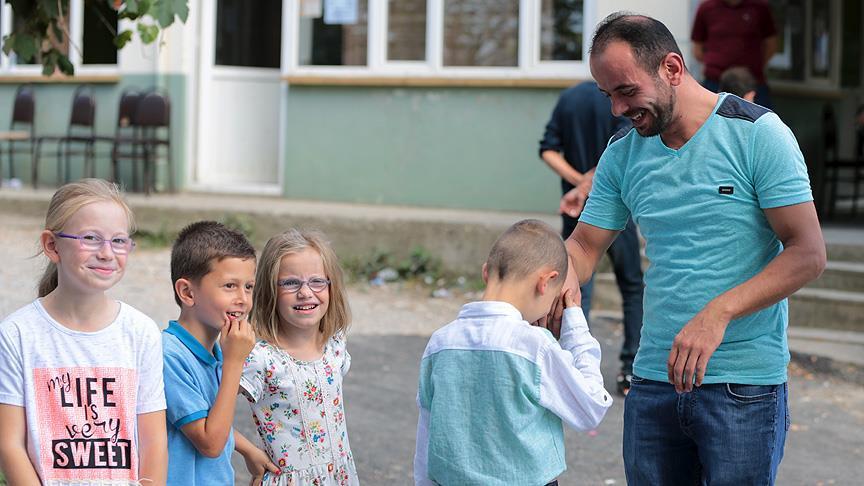
Festival Grounds
Bayram yeri is a traditional space in many regions of Türkiye, particularly during Ramazan and Kurban Bayram, fulfilling social, cultural, and ritualistic functions. These spaces serve as communal gathering points where collective bayram celebrations take place, games are played, meals are shared, visits are exchanged, and intergenerational cultural transmission occurs.Adem Koç, Kültürel Mekânsızlık Bağlamında Kaybolmaya Yüz Tutmuş Bir Gelenek: Bayram Yeri ve Mihalgazi Örneği, Türkbilig 38, 2019
EN
Duygu Şahinler
 Fu
FuFunctions of Education
Education is a multidimensional social institution that occupies a dual position as both a goal and a means in the development of individuals and societies. The functions of education are generally examined under two main categories: manifest and latent functions. Manifest functions refer to the intended outcomes directly pursued through education, whereas latent functions denote the unplanned but consequential effects that emerge in the course of the educational process. Social Functions Educat
ENKevser Çınar
OtOttoman Coffeehouses
Ottoman coffeehouses, from the mid-16th century onward, became important public spaces in Ottoman social life. With the introduction of coffee from Yemen to Istanbul, these institutions quickly evolved beyond mere venues for beverage consumption to become centers of socialization, communication, entertainment, and even political debate. Emergence and Spread Coffee is believed to have first arrived in Istanbul in the early 16th century following Yavuz Sultan Selim’s campaign in Egypt. According t
ENYunus Emre Yüce
UsUse of Coffee in Private and Public Areas
Coffee holds a distinguished reputation and profound significance worldwide. With its diverse material and spiritual meanings across many cultures, coffee is one of the most important and valued elements of Turkish culture. The saying, “A cup of coffee is worth forty years,” illustrates the deep value assigned to coffee. This significance has given rise to social institutions such as the coffeehouse in the Ottoman era. As one of the key dynamics of society, coffeehouses served as tools for socia
EN
İrem İğde
UsUse Of Coffee In Private And Public Areas
Coffee has a great reputation and significance all around the world. Coffee which has many and different material and spiritual meanings in many cultures is one of important and valuable pieces in Turkish culture. “A coffee has a sake forty years.” is that these dicta demonstrate us how essential coffee’s value is. The value leads to some formations that is like coffee houses in Ottoman. Coffee houses being one of the societies dynamics is that a tool which enable society progress by socializing
TRİrem İğde
OtOttoman Coffeehouses
Ottoman coffeehouses were public spaces that acquired an important place in Ottoman social life from the mid-16th century onward. Emerging with the arrival of coffee from Yemen to Istanbul, these institutions quickly transcended their role as mere venues for beverage consumption and became centers for socialization, communication, entertainment, and even political debate. Origins and Spread Coffee is believed to have first arrived in Istanbul in the early 16th century, following Yavuz Sultan Sel
ENYunus Emre Yüce
ThThird Space
Third place is a sociological concept introduced by urban sociologist Ray Oldenburg in the 1980s to describe public spaces that host regular voluntary and informal gatherings outside the primary place (home) and secondary place (work/school). According to Oldenburg, these spaces serve as a counterbalance to the individual isolation, weakening of neighborhood ties, and routine monotony brought about by modern urban life. Examples of third places include cafes, bars, parks, public libraries, beaut
ENYunus Emre Yüce