

`social-science` Related Article Results
 Mo
MoMonarchy
Origin Monarchy entered Turkish from the French word monarchie, which traces its roots to Ancient Greek via Latin. The first part of the word, mono-, derives from the Ancient Greek mónos (μόνος), meaning “single, one, alone.” Areas of Use Political Science: Used to describe systems of government in which authority is concentrated in a single ruler when classifying forms of state governance. History: Used to describe historical systems of governance such as kingdoms, empires and dynastic rule. La
EN
Nisanur Emral
SOSOCILOGIST
A sociologist is an expert who examines social phenomena using scientific methods, analyzing the social relationships, forms of interaction, and transformations of individuals, groups, and institutions within cultural, economic, and political contexts. The discipline of sociology does not view society as a static entity but as a dynamic and continuously evolving system. In this context, sociologists employ various scientific methods such as field research, interviews, surveys, and statistical an
EN
Hande Dilara Yılmazkaya

Sociology of Law
Legal sociology, a social science discipline that examines law as a social phenomenon, investigates the origin, function, development of law within social structures, and its reciprocal interactions with other social phenomena. It is a subject of various debates among jurists and sociologists. This discipline accepts that law is not merely a set of abstract rules contained in texts, but a living reality embedded in social life, shaped by it and shaping it in return. Legal sociology studies the m
ENYunus Emre Yüce
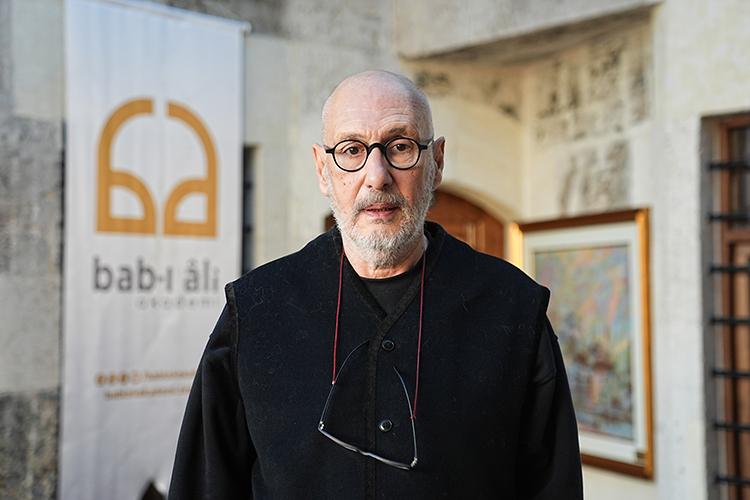
Süleyman Seyfi Öğün
Süleyman Seyfi Öğün (b. 1959) is an academic, writer, and thinker known for his work in political theory, social thought, and critique of modernity in Türkiye. He has examined topics such as labor, capitalism, ideology, alienation, and transformation of modern society from historical and philosophical perspectives. In addition to his academic work, he has explored the cultural, political, and moral dimensions of modernity in his essays and articles. He is regarded as one of the leading represent
EN
Mustafa Cem İnci