

`responsibility` Related Article Results

What you call motivation
What you call motivation is simply convincing yourself anew each day. Motivation is not often about waking up with a powerful desire, as we tend to imagine. Sometimes you do not want to get out of bed when the alarm rings; sometimes you sigh inwardly, “Not again today?”… And yet you still step into the day. On social media, motivation is always portrayed as something grand: early risers, disciplined lives, people who never get tired… But real life rarely works that way. In reality, motivation ca
EN
Zeynepnur Karagülle

The Importance of Language from the Conceptual Difference Between Duty and Responsibility
In the dictionary, the word “görev” is defined as “a duty, obligation, or responsibility” and is explained through three distinct concepts; it is a modern term shaped by the linguistic revolution. Etymologically derived from the verb “gör,” which originally carried the meaning of “the thing that must be seen or done,” the word gradually came to be used in institutional and human contexts to denote “assumed responsibility or obligation.” This article aims to examine why the word “görev” does not
EN
Gürkan Pur

Media Ethics
Media Ethics is a field that addresses moral principles such as accuracy, honesty, and responsibility in the use of communication tools. It serves as a guide for journalists, broadcasters, and content creators, aiming to keep public access to information within ethical boundaries. In fields such as communication studies, journalism, and social analysis, media ethics plays a fundamental role in maintaining the credibility and influence of the media. Historical Development Media ethics began to ta
EN
Fatihhan Adana

The Silent Cry of Self-Governing Children
Some children grow up too soon. They learn not to be a burden to anyone. They learn not to cry, not to ask, not to manage… From the outside, they are called “how strong,” “how mature.” Yet sometimes this strength is a silent scream covering an unspoken need. Because a child appearing self-sufficient does not mean they have received adequate support. Sometimes those who need help the most are the ones who never ask for it. Some children take on responsibilities at an early age. They handle their
ENZeynepnur Karagülle
 Fi
FiFive-Factor Personality Scale (Big Five Inventory)
The Big Five Inventory (BFI) is a scientific and psychometric tool developed to assess individuals’ personality traits. This scale, widely used in defining personality, is based on the assumption that personality structure is organized around five fundamental dimensions. This model is also known in personality psychology as the “Big Five” theory. Theoretical Foundations The Big Five Model is grounded in the view that human personality traits can be universally categorized under five core dimensi
EN
Miray GÜR

Aydın, Society and History (Book)
"Intellectual, Society, and History" is an essay and thought collection by Professor Dr. Hüsrev Hatemi (b. 1938), one of the most multifaceted figures in contemporary Turkish intellectual life, published by Dergâh Yayınları as part of its "Turkish Literature" series. The book examines the concept of the intellectual, the intellectual’s social responsibilities, and their relationship with history. It draws particular attention to questioning the definition of the intellectual and the responsibili
EN
Muhammed Samed Acar
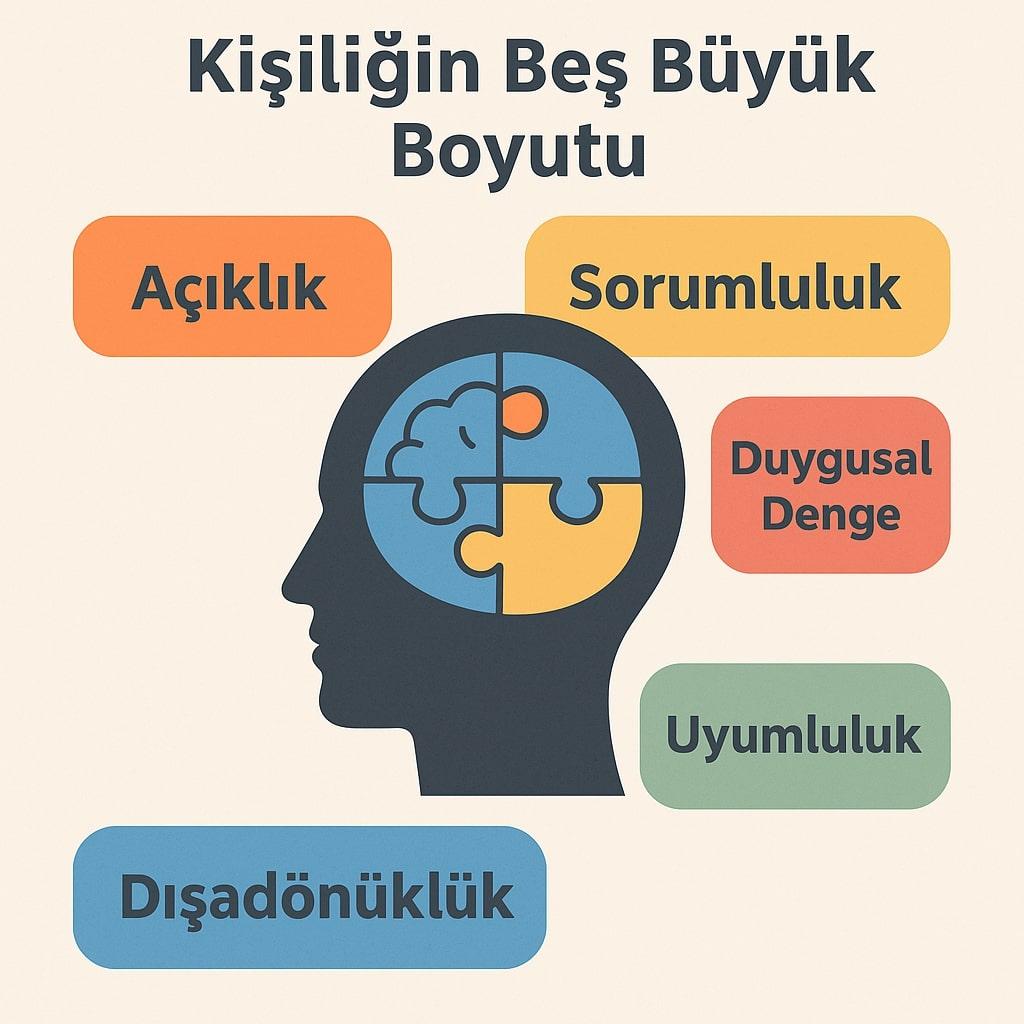
Five-Factor Personality Theory
The Big Five Personality Traits, also known as the Five-Factor Model, is a scientifically established model widely used in psychology to define and measure individual personality characteristics. These five dimensions represent fundamental traits that help understand each person’s personality structure. The Big Five Personality Traits 1. Openness to Experience Definition: Reflects openness to new ideas, artistic and aesthetic experiences, imagination, and diverse perspectives. High scorers: Curi
EN
Nursena Şahin
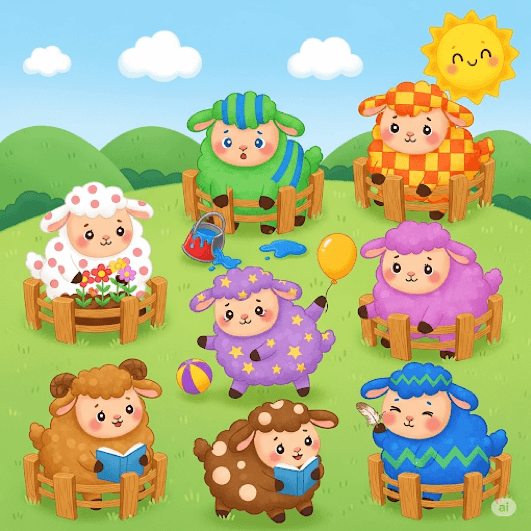
Every sheep is hung by its own leg
Let’s take a close look at the life of a sheep! Although there are many sheep on a farm, each sheep has its own life and unique characteristics—just like the saying "Every sheep hangs by its own leg." You may have been surprised when you first heard this phrase, but it actually carries a profound meaning: it reminds us how special and independent each of us is in our own lives. 🌍 Where Does It Come From? The origin of this proverb lies in historical butchering practices. In the past, butchers w
EN
Nida Üstün
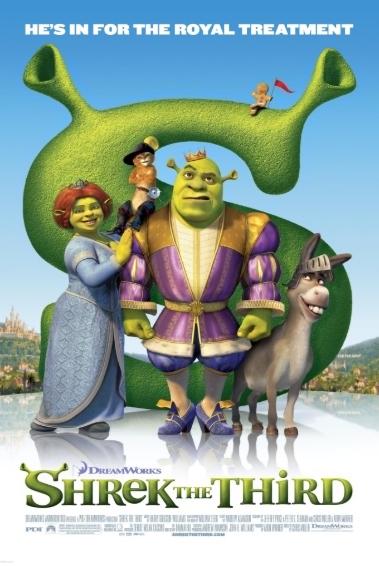
Shrek 3 (Film)
Shrek the Third is an animated film released in 2007 by DreamWorks Animation. It is the third installment in the series based on William Steig’s 1990 children’s book Shrek! and continues the humorous treatment of fairy tale elements. The film follows the adventures of Shrek, Fiona, Donkey and Puss in Boots as it explores themes of responsibility leadership and family. Despite receiving mixed critical reviews for its pop culture references and witty dialogue the film achieved commercial success.
EN
Ayşe Hümeyra Akkanat
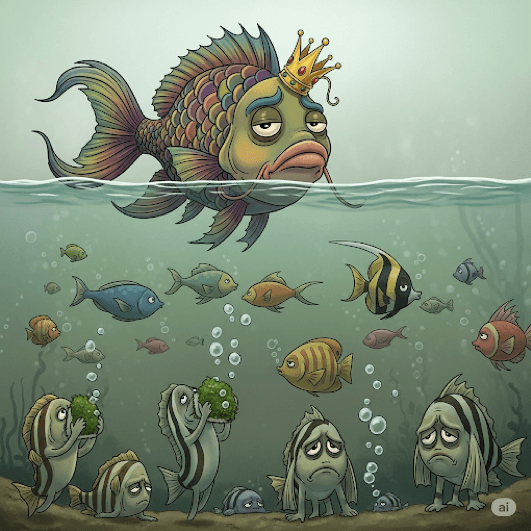
Fish Smells from the Head
This proverb illustrates that problems or issues within a system originate from the person at the top or the leader, just as a fish begins to spoil first from its head. This situation demonstrates how the attitude of a leader in a family or group can influence the entire group. 🤔 Where Does It Come From? This proverb originated from the observations of people living along the coast since ancient times, who noticed how fish spoil. Once caught, fish begin to decay rapidly. Those in charge of the
ENNida Üstün