

`regret` Related Article Results
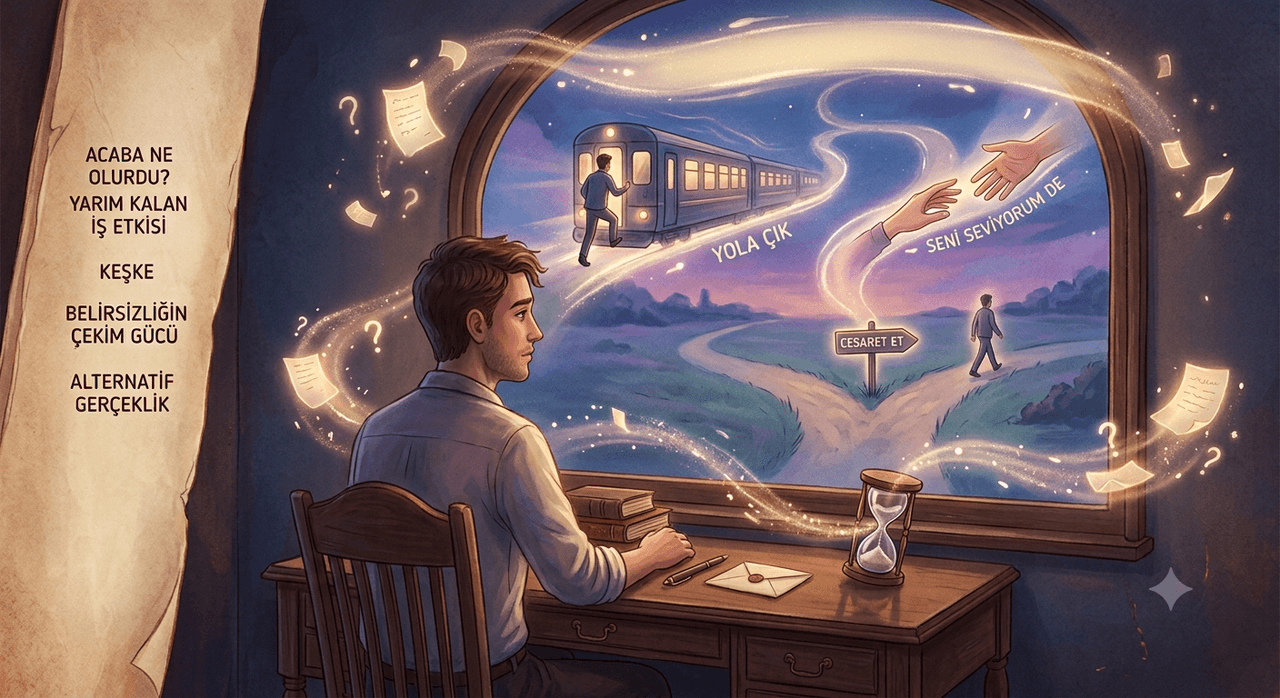
The Psychology of Missed Opportunities
Almost everyone carries in their mind a scene they occasionally revisit—a word left unsaid, a step never taken, a question left unanswered. Even after years have passed, that moment remains alive in some corner of the mind, surfacing unexpectedly at random times. Why Does the Mind Remember What Wasn’t Done Rather Than What Was? People often feel regret not for what they did, but for what they did not do. Whatever the outcome of a decision we made, the mind tends to treat it as a “closed file.” B
EN
Ömer Said Aydın
 Th
ThThe Invisible Law
They Think You’ve Forgotten. On Invisible Grief, Trauma, and Attachment... Years pass. Calendars change, seasons follow one another, and from the outside, life flows onward. As long as people see you standing, speaking, and laughing, they assume that something has “passed.” But in psychology, some losses do not fade with time; they only grow silent. They are invisible from the outside yet continue to exist within. This is often called invisible grief. This is not forgetting. It is not suppressio
EN
Zeynepnur Karagülle

The Feeling of Regret
Regret is a negative emotional response experienced by an individual due to a past behavior, decision, or an action not taken. This feeling, often expressed through thoughts such as "I wish I hadn’t done that" or "I wish I had done that," is directly related to the individual’s values, expectations, and self-perception. The feeling of regret is an important psychological phenomenon that affects not only personal experiences but also decision-making processes, social relationships, and future beh
EN
Nida Üstün