

`radioactive` Related Article Results
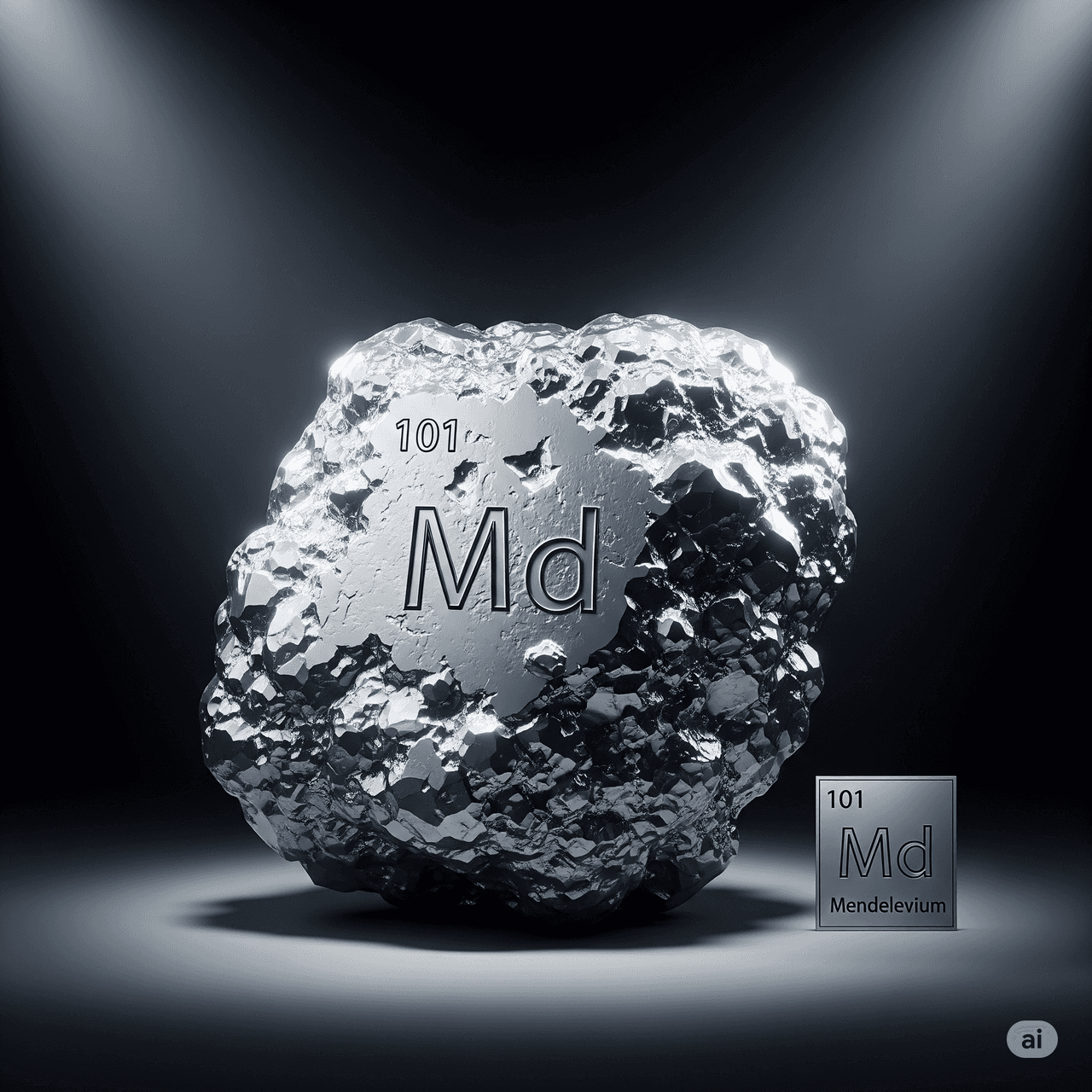
Mendelevium (Md)
Mendelevium is a synthetic and radioactive metallic element with atomic number 101 and chemical symbol Md, located in the actinide series of the periodic table. Due to its production in extremely small quantities and high radioactivity, its properties are largely based on theoretical studies and limited experiments. Classification and Basic Properties Mendelevium is classified as the 13th element in the actinide series and is located in the 7th period of the periodic table. Its electron configur
EN
Caner Sefa Koçyiğit
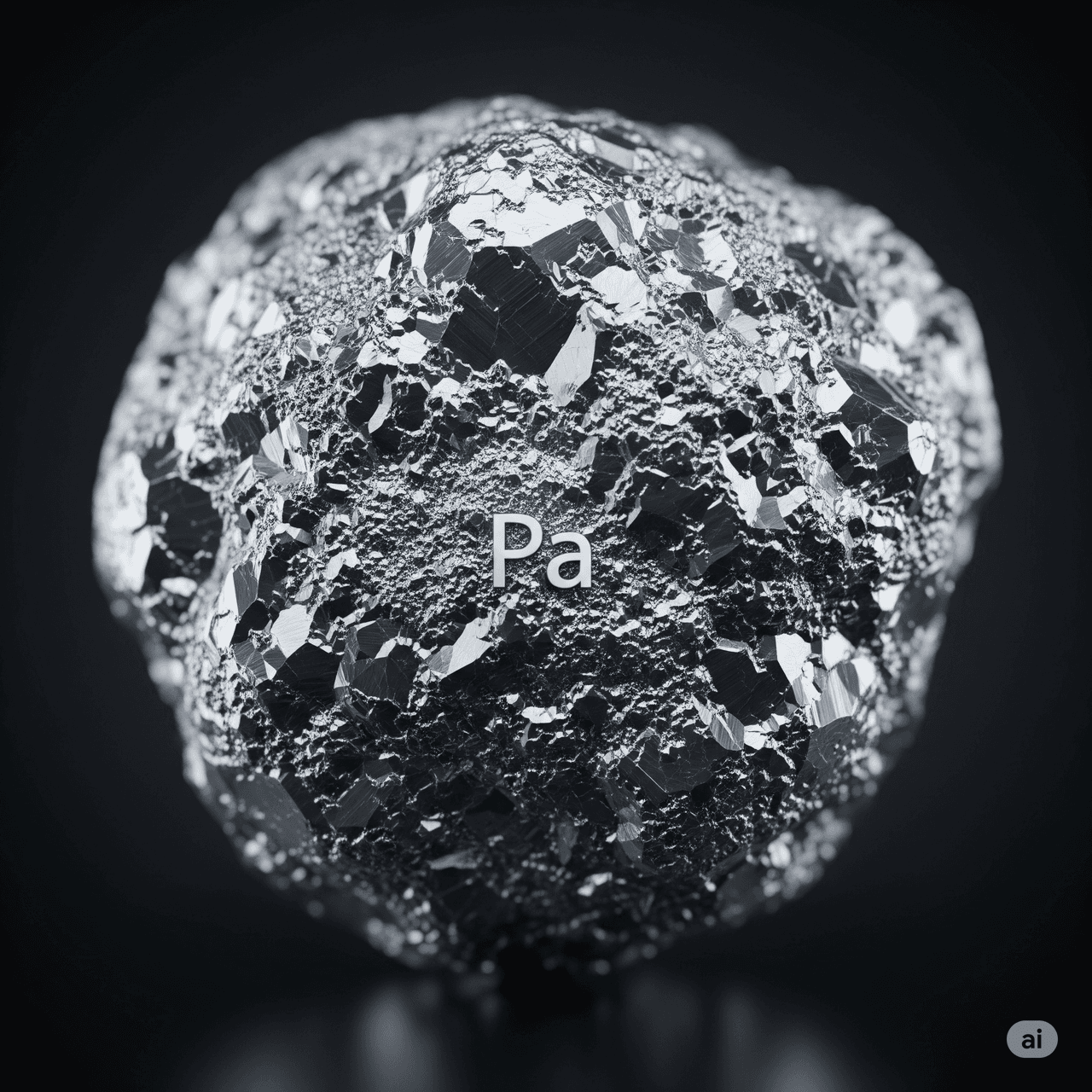
Protactinium (Pa)
Protactinium is a radioactive metal with atomic number 91 belonging to the actinide series. This silvery element was discovered in 1913 and derives its name from the Greek word "protos," meaning "first." Classification and Basic Properties Protactinium (Pa) is an element located in the seventh period of the periodic table within the actinide group. Its electron configuration is [Rn] 5f²6d¹7s². This electronic structure determines its chemical properties and confirms its classification as an f-bl
ENCaner Sefa Koçyiğit
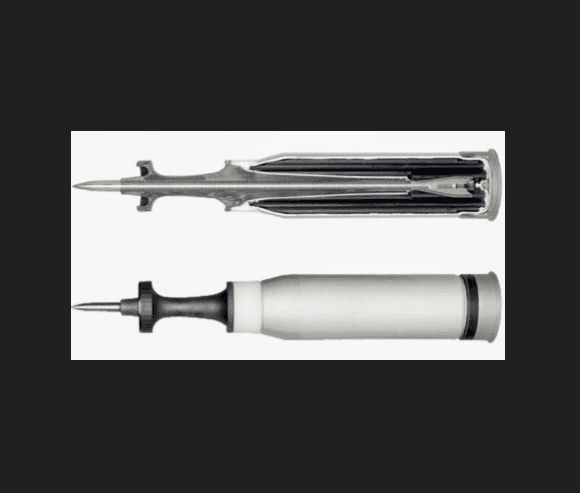
Sabot Projectile
A sabot round is a type of ammunition specifically designed to penetrate armor. Its name derives from the French word sabot, meaning "wooden shoe," referring to the lightweight outer casing—also called a sabot—that surrounds the projectile’s core and is used during firing. 1. Structural and Technical Details Core Components Core (Penetrator) Sabot (Casing) Ballistic Cap 2. Working Principle and Physical Effects Kinetic Energy: According to the formula , a 5 kg core traveling at 1,800 m/s generat
EN
Muhammed Erdem
Astatine Element
Astatine is a rare and radioactive element with the symbol At and atomic number 85. It occurs in nature in extremely small quantities and has short-lived radioactive properties. It is difficult to observe and can only be studied in laboratory conditions. History Astatine was first synthesized in 1940 by American chemists. Its name derives from the Greek word “astatos,” meaning “not stable,” due to its high radioactivity and rapid decay. Physical Properties Astatine has a metallic appearance, but
EN
İbrahim Filiz
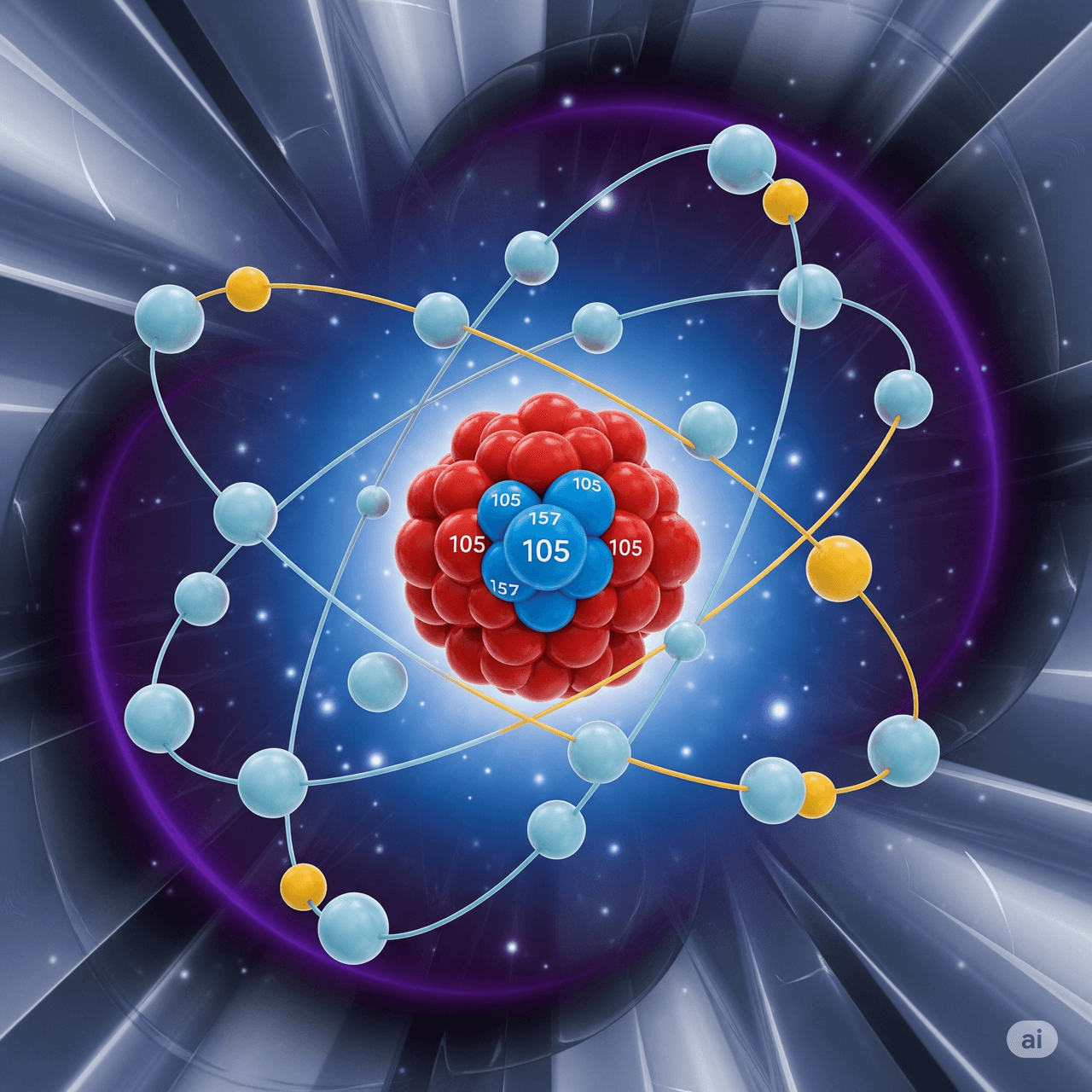
Dubnium Element
Dubnium is a synthetic element with the symbol Db and atomic number 105. It does not occur naturally and is produced only in laboratories. It is radioactive and has a very short half-life, so it is used exclusively in scientific research. History Dubnium was synthesized artificially in the 1960s by Soviet and American scientists. Its name derives from the Joint Institute for Nuclear Research in Dubna, Russia. The discovery of this element marked a significant step in the study of superheavy elem
ENİbrahim Filiz

Tennessine (Ts)
Tennessine is a synthetic and highly radioactive element located at position 117 in the periodic table. It was discovered in 2010 and named after the U.S. state of Tennessee. Most of its properties are based on observations of the extremely small number of atoms produced to date and theoretical calculations. Classification and Fundamental Properties Tennessine (Ts) is an element in period 7 and group 17 (the halogen group) of the periodic table. Its expected electron configuration is [Rn] 5f¹⁴6d
ENCaner Sefa Koçyiğit
Flerovium (Fl)
Flerovium is a synthetic and highly radioactive element located at position 114 in the periodic table. It was discovered in 1999 and named after the Russian nuclear physicist Georgy Flerov. Most of its properties are based on observations of the very small number of atoms produced to date and theoretical calculations. Classification and Fundamental Properties Flerovium (Fl) is located in period 7 and group 14 (carbon group) of the periodic table. Its expected electron configuration is [Rn] 5f¹⁴
ENCaner Sefa Koçyiğit

Hassium (Hs)
Hassium is a synthetic and highly radioactive element located at the 108th position in the periodic table. It was discovered in 1984 at the GSI Helmholtz Centre for Heavy Ion Research in Germany and derives its name from the German state of Hesse where the research center is located. To date, only a few atoms of this element have been produced, and its properties are largely based on theoretical calculations. Classification and Fundamental Properties Hassium (Hs) is a transition metal in the 7th
ENCaner Sefa Koçyiğit

Seaborgium (Sg)
Sg, the 106th element in the periodic table, is a synthetic and highly radioactive element. It was discovered in 1974 at the Lawrence Berkeley National Laboratory in the United States and is named after American chemist Glenn T. Seaborg (1912–1999), recognized for his pioneering work in nuclear chemistry and his role in the discovery of numerous transuranium elements. Classification and Basic Properties Seaborgium (Sg) is a transition metal located in period 7 and group 6 of the periodic table.
ENCaner Sefa Koçyiğit
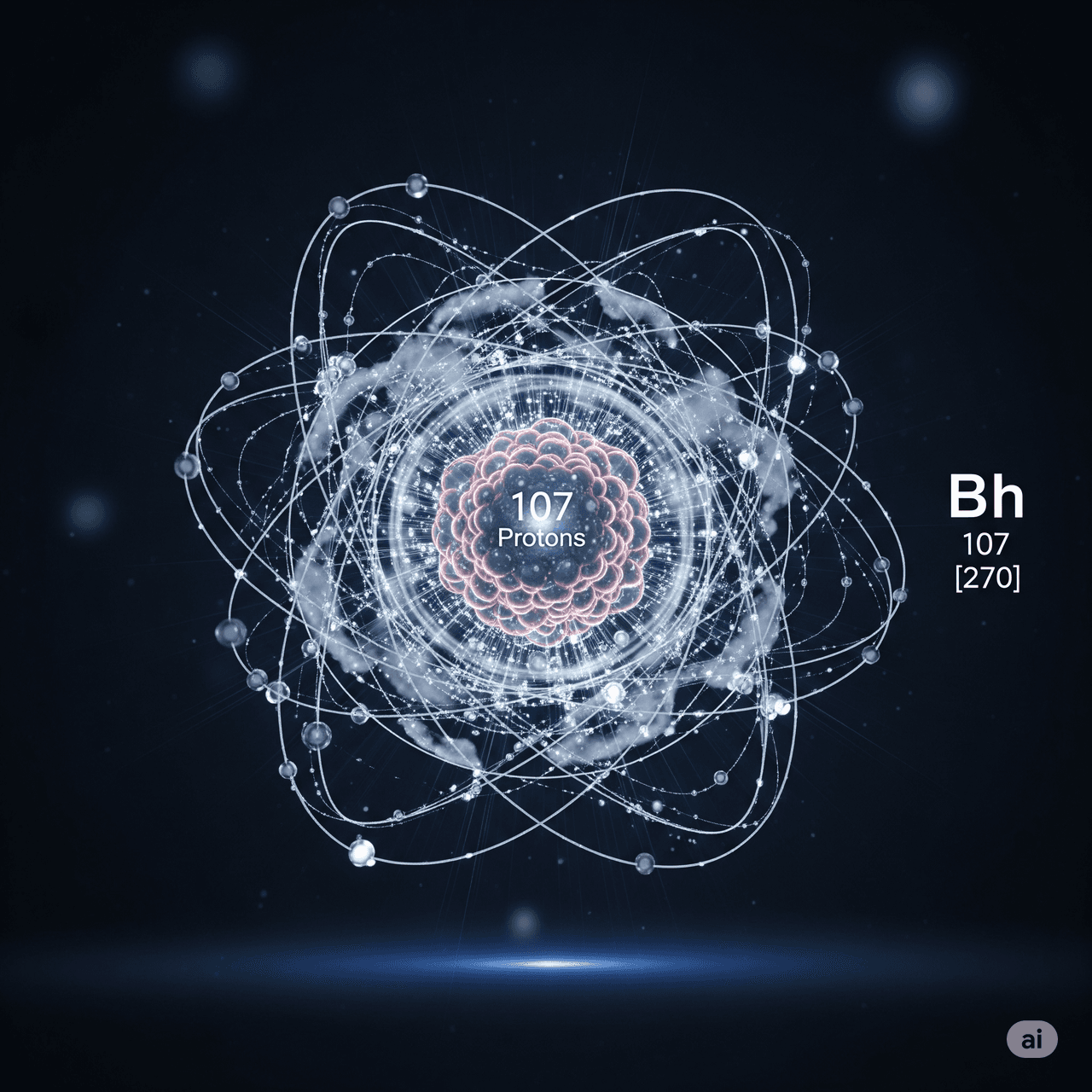
Bohrium Element
Bohrium is a synthetic element with the symbol Bh and atomic number 107. It does not occur in nature and is produced only in laboratories. It is radioactive and has a very short half-life. Scientists study bohrium to understand the properties of superheavy elements. History Bohrium was discovered in 1981 as a result of nuclear reaction experiments conducted in Germany. Its name is derived from the renowned physicist Niels Bohr. The discovery of this element marked a significant advancement in th
ENİbrahim Filiz