

`quality-control` Related Article Results
 La
LaLaw of Large Numbers
Probability theory is a field that enables the mathematical analysis of random events and forms the foundation of statistics and data science such as. One of the most fundamental theorems of Probability theory is the Law of Large Numbers. This law states that the average outcome of an event over a large number of trials will approach its expected value. Law of Large Numbers The Law of Large Numbers (LLN) states that when a random experiment is repeated a sufficiently large number of times, the a
EN
Emre Odabaş

Jidoka
Jidoka is a production principle within the Toyota Production System (TPS) that refers to a mechanism enabling the detection of errors during the production process and the subsequent stopping of the process either automatically or through operator intervention. The term originates from Japanese and is defined as “infusing human intelligence into automation” or “human-controlled automation.” The Jidoka principle centers on quality within the production process and provides a structure that preve
EN
Emre Özen

Checklist
A checklist is a systematic list composed of step-by-step items designed to ensure that a specific task, process, or product is completed thoroughly, sequentially, and without error. Beyond personal use, checklists are widely adopted in industries where there is low tolerance for mistakes, aiming to improve organizational efficiency and reduce risks. Purpose and Scope The primary function of checklists is to prevent human errors such as forgetfulness, negligence, or oversight. Each item on a che
EN
Hüsnü Umut Okur
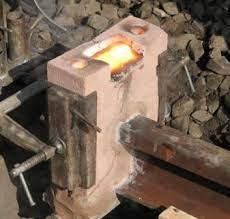
Aluminothermic Rail Welding
The continuous connection of rails is a fundamental requirement for infrastructure safety in high-speed and heavy-haul railway systems. Therefore, rail welding technologies must exhibit excellent performance under both static and dynamic loads. Among the high-temperature joining methods that can be performed in the field without requiring external energy, one of the most important is thermite (aluminothermic) welding. This method, developed by Hans Goldschmidt in the late 1890s, is widely used i
EN
Yusuf İslam Tuğla

Jidoka
Jidoka is a production principle within the Toyota Production System (TPS) that refers to a mechanism enabling the detection of errors during production and the subsequent stopping of the process either automatically or through operator intervention. The term originates from Japanese and is defined as “infusing human intelligence into automation” or “human-controlled automation.” The Jidoka principle centers on quality within the production process and provides a structure that prevents faulty o
ENEmre Özen