

`protocol` Related Article Results
 HT
HTHTTP Protocol
HTTP (Hyper-Text Transfer Protocol) is an application-layer communication protocol for distributing and accessing hypermedia systems via common. HTTP forms the foundation of data communication. It is an application-layer protocol designed to transfer information between Ağa connected devices and operates above other layers of the network protocol stack. An HTTP exchange involves a client machine making a request to a server and subsequently receiving a response message. It was first developed in
EN
Beyza Nur Türkü
Kerberos Communication Protocol
Kerberos is a cryptographic protocol used for authentication in computer networks. It enables users or services to securely verify each other’s identities. Its primary purpose is to prevent passwords or identity credentials from being intercepted by third parties in an untrusted network environment. Kerberos was developed in the 1980s as part of Project Athena at the Massachusetts Institute of Technology (MIT). MIT designed this protocol to provide centralized authentication in multi-user distri
EN
Tuba Şengün Bakıcı
TeTelnet Protocol
Telnet Protocol Telnet is a network protocol used to access a remote computer system through a terminal session. The name is an abbreviation of "Telecommunication Network." Telnet works by establishing an interactive terminal connection between the client and the server, allowing the user to work on the remote system as if they were on a local terminal. Due to this capability, Telnet has been widely used in remote system management, network device configuration, and general access applications.
EN
Samet Şahin

Protocol for Support and Cooperation in Turkish Sports
On 21 August 2025, a protocol signed between the Ministry of Youth and Sports and Turkish Airlines represented a significant step toward strengthening the logistical infrastructure of sports in Türkiye. Entitled “Support and Cooperation for Turkish Sports,” this agreement aims to reduce the financial burden on federations and facilitate athletes’ access to national and international competitions through its transportation-focused structure. The protocol is not based solely on sponsorship but is
EN
Burak Enes
HTHTTP Protocol
HTTP (Hyper-Text Transfer Protocol) is an application-layer communication protocol designed for distributing and sharing hypermedia information systems. HTTP is the foundation of data communication. It is an application layer protocol developed to transfer information between networked devices and operates on top of other layers of the network protocol stack. An HTTP transaction involves a client machine making a request to a server and subsequently receiving a response message. It was first dev
ENBeyza Nur Türkü

Spanning Tree Protocol (STP)
The Spanning Tree Protocol (STP) is a Layer 2 (data link layer) protocol developed to prevent loop formation in Ethernet-based networks. STP, developed by Dr. Radia Perlman in 1985, is defined by the IEEE 802.1D standard. This protocol controls redundant connections within a LAN by ensuring that only one active path is used, thereby preventing issues such as broadcast storms, MAC address table inconsistencies, and continuous frame loops. Working Principle When multiple switches in a network are
EN
Cihat Demirel
CACAN Communication Protocol
Controller Area Network (CAN) is a communication protocol originally developed by BOSCH in the mid-1980s for the automotive industry. Initially designed to enable data transmission between electronic control units in automobiles, CAN has since been adopted across numerous other sectors including industrial automation, medical devices and shipbuilding like as a reliable communication solution common. CAN offers a range of features that provide a low-cost, efficient, flexible and reliable communic
EN
Ömer Said Aydın
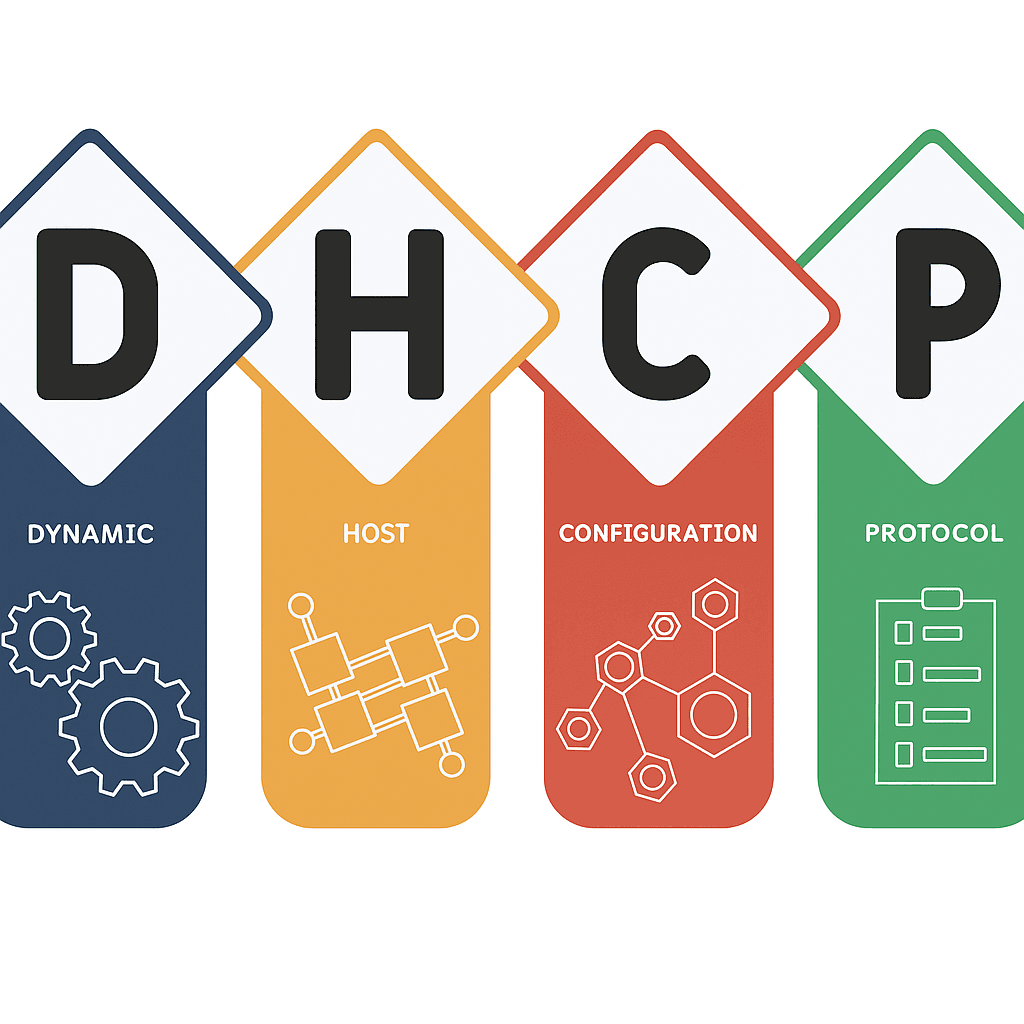
DHCP (Dynamic Host Configuration Protocol)
DHCP (Dynamic Host Configuration Protocol) is a communication protocol that enables clients on an IP network to automatically obtain essential network configuration information. This protocol operates using a client-server model. Each client on the network requests an IP address and additional configuration parameters from a DHCP server. These configuration parameters include the IP address, gateway, subnet mask, and DNS server. Purpose and Functional Benefits The primary purpose of DHCP is to d
ENSamet Şahin