

`project-management` Related Article Results
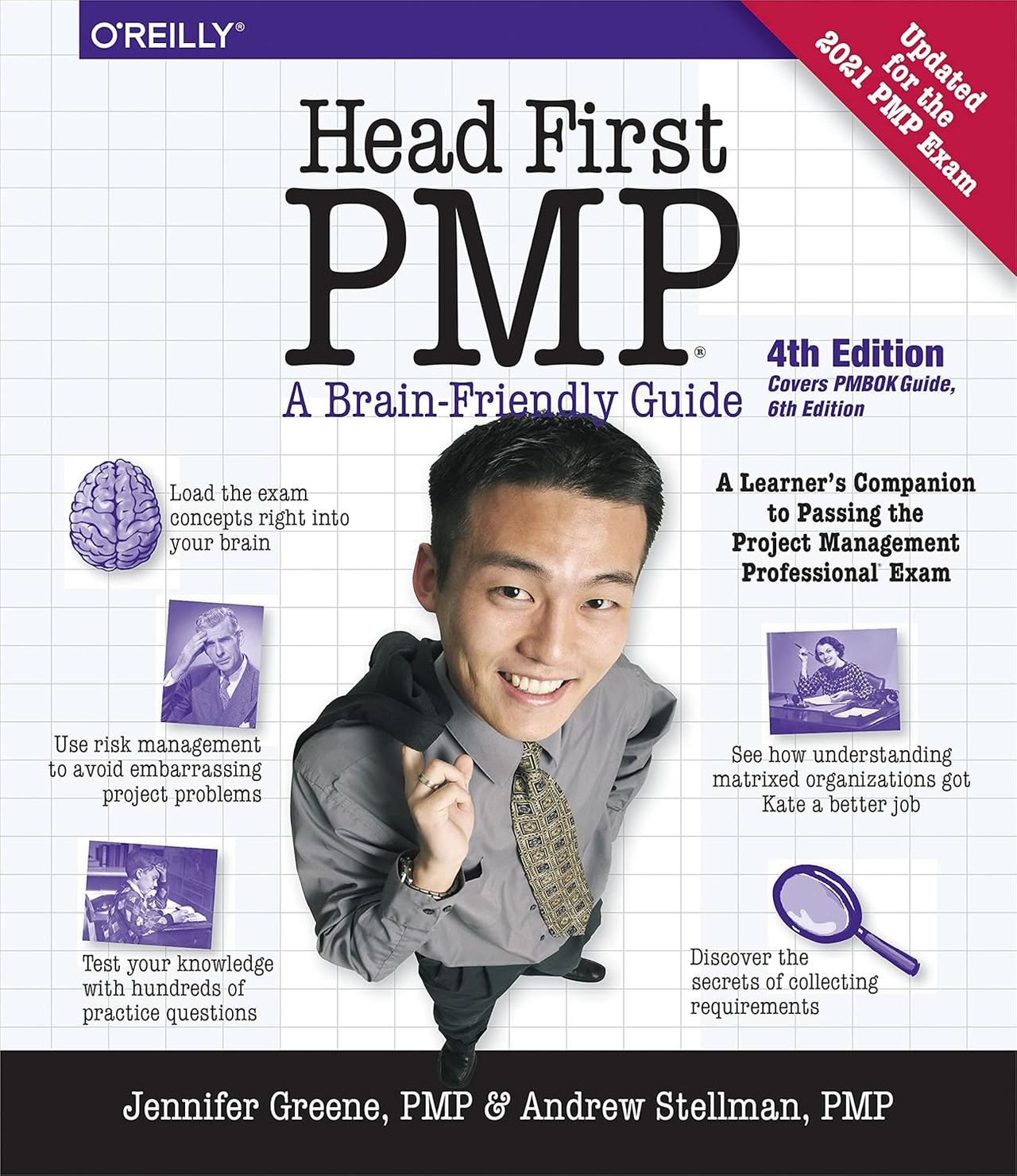
Head First PMP, 4th Edition (Book)
Head First PMP is a PMP exam preparation book published in its fourth edition in 2018 by O’Reilly Media. The authors are Jennifer Greene and Andrew Stellman. In this edition, the authors emphasize their aim to present the updated principles from the 6th edition of The PMBOK® Guide in a visual and learning science-based format. The book’s page layout follows the characteristic style of the Head First series; illustrations, diagrams, graphs and colorful visuals accompany the textual explanations.
EN
Sabiha Meyra Şahinler
Approach Types in Project Management
There are three distinct approaches to project management: Predictive, Adaptive, and Hybrid. These approaches are applied and subdivided based on the nature and requirements of the project. Project Management Approach Types (Generated by artificial intelligence.) " image-alternate="" image-element-format="right"> Predictive Approach (Predictive) – Waterfall Model – Traditional Channel Predictive project management is an approach based on detailed and comprehensive planning. Microsoft Project
ENSabiha Meyra Şahinler
Project Management Institute (PMI)
The Project Management Institute (PMI) is a nonprofit organization established in 1969 in the United States that has developed globally recognized professional standards in project program and portfolio management. PMI serves as a reference point for project professionals by providing standards training publications certifications and events to ensure that interdisciplinary project management practices are conducted within a professional framework. Project Management Institute (PMI) The founders
EN
Sabiha Meyra Şahinler

Project Engineering
Project engineering is an interdisciplinary practice that integrates project management with engineering disciplines to develop, implement, and align engineering solutions throughout the project lifecycle with managerial objectives. The Project Management Institute (PMI) positions project engineering as an interdisciplinary specialty that delivers outputs aligned with project goals while grounded in engineering principles and techniques. Core Responsibilities of a Project Engineer A project engi
ENSabiha Meyra Şahinler

RACI Matrix
RACI Matrix (English: RACI Matrix) is a responsibility assignment matrix used to clarify roles and responsibilities in project management and organizational change processes. It derives its name from the initial letters of four key responsibility types in English: Responsible, Accountable, Consulted, and Informed. The RACI matrix is a powerful and widely used tool for clearly defining roles and responsibilities in project and process management, improving communication, and enhancing accountabil
EN
Yağmur Yıldız Parıltı
Work Breakdown Structure (WBS)
The Work Breakdown Structure (WBS) is a structure in project management that hierarchically divides the entire scope of the project into smaller, more manageable parts. The 7th edition of PMI's Project Management Body of Knowledge (PMBOK Guide) defines WBS as “a hierarchical breakdown of the total work scope that the project team will perform to achieve project objectives and create the required deliverables.” This structure defines the total scope of the project by showing its deliverables and
ENSabiha Meyra Şahinler
Project Management Office (PMO)
The Project Management Office (PMO) is a unit that supports and coordinates project management processes within organizations. Defined in international literature as an organizational structure, the PMO standardizes governance processes for projects and facilitates the sharing of resources, methodologies, tools, and techniques. For example, according to the British Project Management Institute (APM), the PMO is an organizational structure that supports project, program, or portfolio management.
ENSabiha Meyra Şahinler
Notion
Notion is a productivity software platform that combines document management, project planning, knowledge base creation, and collaboration tools for individuals and teams. Developed by Notion Labs, Inc., which was founded in 2013 by Ivan Zhao, Simon Last, and Akshay Kothari in San Francisco, California, Notion integrates a wide array of tools—such as writing, databases, calendars, email, and AI-powered content creation—into a single interface. Since its inception, it has gained popularity among
EN
Ömer Said Aydın
Project Management Plan (PMP)
Project Management Plan is an official document that consolidates all management approaches related to the project. According to PMI, the project management plan is defined as “the document that defines how the project will be executed, monitored, controlled, and closed.” This plan forms the foundation of the project and determines how scope, schedule, cost, quality, resource utilization, communication, risk management, and other aspects will be addressed to achieve project objectives. The proje
ENSabiha Meyra Şahinler
Critical Path Method (CPM)
Critical Path Method (CPM) is defined as a technique used in project management to calculate the minimum duration required to complete a project and to assess flexibility within the project schedule. According to the PMBOK Guide, CPM is “a method used to estimate the shortest possible project duration and to determine the amount of scheduling flexibility on the logical paths within the schedule model.” In other words, CPM identifies the longest sequence of dependent activities—the critical activ
ENSabiha Meyra Şahinler