

`positron` Related Article Results
Positronium
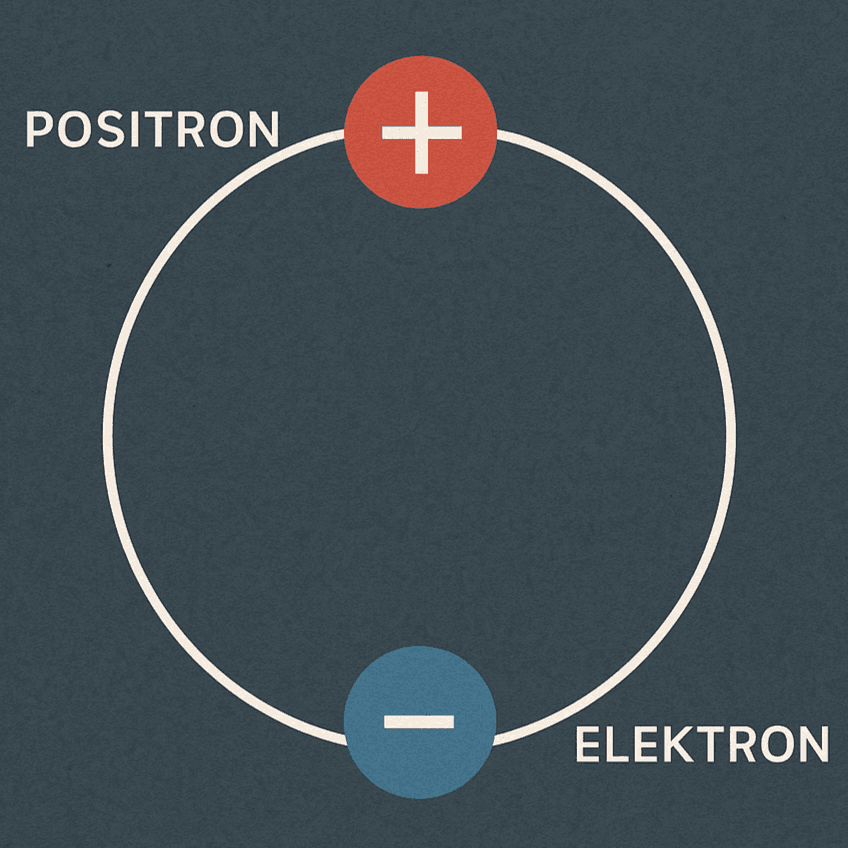
Positronium (Ps) is an exotic atom consisting of an electron (e⁻) bound to its antiparticle, the the positron's (e⁺), by the Coulomb force. It has a structure similar to the hydrogen atom but contains a positron instead of a proton. This composition makes Ps a unique model for studying particle-antiparticle systems. The existence of positronium was first predicted theoretically by Mohorovičić in 1934. Its spectroscopic structure was calculated by Ruark in 1945, and its binding energy and lifetim
EN
Muhammed Mehdi İleri
 Po
PoPositron (Antielectron)
Positron is a fundamental particle and the antiparticle of the electron. It has the same mass as the electron but carries a positive electric charge. Because of this property it is also called a "positive electron". The existence of the positron marked a pivotal moment in our understanding of the building blocks of matter and the fundamental symmetries of the universe. The positron was first discovered in 1932 by American physicist Carl David Anderson during experiments with cosmic rays. Anderso
EN
Muhammed Mehdi İleri
Positronium
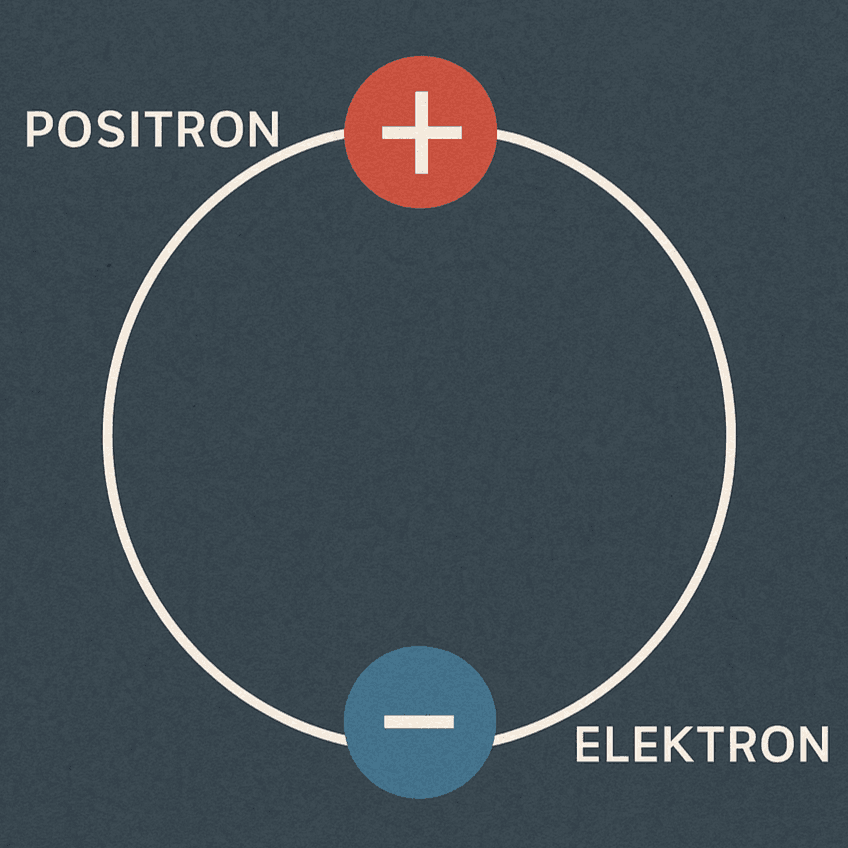
Positronium (Ps) is an exotic atom consisting of an electron (e⁻) bound by the Coulomb force to its antiparticle, the positron (e⁺). It has a structure similar to the hydrogen atom but replaces the proton with a positron. This composition makes Ps a unique model for studying particle-antiparticle systems. The existence of positronium was first predicted theoretically by Mohorovičić in 1934. Its spectroscopic structure was calculated by Ruark in 1945, and its binding energy and lifetime were dete
ENMuhammed Mehdi İleri