

`ottoman-palace-cuisine` Related Article Results
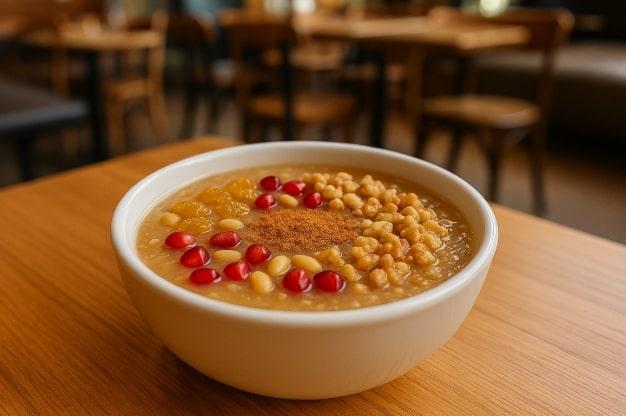
Aşure
Aşure is recognized as a traditional dessert across the Türkiye region, including Middle East and Balkans, with important cultural roots. This sweet, carrying both religious and social significance, is prepared during a specific period of the year, particularly on the tenth day of the Islamic lunar month of Muharram, and distributed for communal sharing. Aşure has been preserved for centuries as a multi-layered cultural symbol shaped by literature and belief systems. History and Origins The sacr
EN
Meryem Betül Kaya
 De
DeDeva-i Misk Helvası
Deva-i Misk Helvası is a traditional sweet originating from Edirne, with roots in the Ottoman Imperial Kitchen, distinguished by its rich blend of spices and the distinctive aroma of musk. Its history dates back to the periods when Edirne served as the capital of the Ottoman Empire. Due to its perceived health benefits and unique fragrance, it held a special place in Ottoman court cuisine and continues to be preserved today as an important product within Edirne’s culinary culture. Description an
EN
Şule Bozkurt
KiKilis Şıhılmahşe
Kilis Şıhılmahşe is a traditional dish unique to Kilis Province, based on stuffed fuzzy Armenian cucumbers (Acur). The name derives from the Arabic words “şıhıl” (meaning "shah" or "chief") and “mahşe” (meaning "stuffed"), and the dish is popularly referred to as the "king of all dolmas." Its roots trace back to the Ottoman palace cuisine, and today it remains a key representative of Kilis' culinary heritage. Geographical Indication Registration Kilis Şıhılmahşe was registered as a Geographical
EN
Sinem Bostan