Electric current, is the amount of electric charge passing through the cross-section of a conductor per unit time. The unit of current in the International System of Units (SI) is the ampere (A), and one ampere is equal to the amount of one coulomb (C) of charge passing through the cross-section of a conductor in one second.Mathematically, electric current is expressed as follows:Here:I: Electric current (A)Q: Electric charge (C)t: Time (s)are defined as follows.Types of Electric CurrentDirect C
EN
Ömer Said Aydın

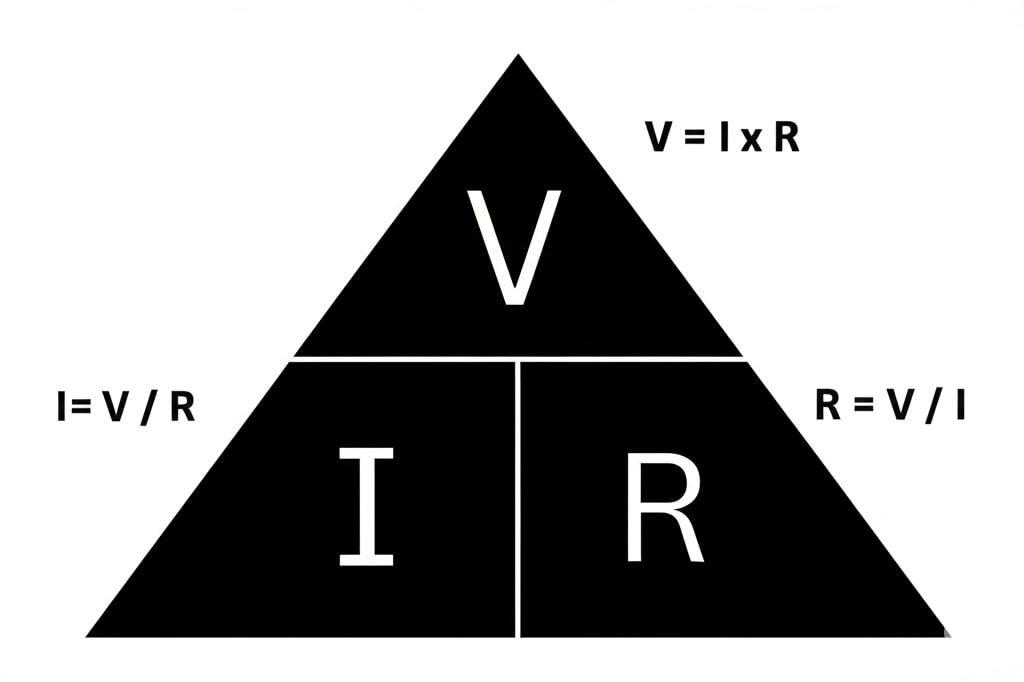
Ohm’s Law is a fundamental physical law that expresses the basic linear relationship between voltage, current, and resistance in electrical circuits. Under specific conditions—particularly constant temperature and fixed material properties—it states that the potential difference applied across a conductor is directly proportional to the electric current flowing through it. In other words, the relationship between voltage and current in a circuit is directly proportional, and the constant of prop
EN
Ömer Yıldız