

`number-theory` Related Article Results
 Co
CoCollatz Conjecture: The Simplest Problem Still Unsolved
The Collatz conjecture is one of the unsolved important problems in mathematics. First proposed in 1937 by the German mathematician Lothar Collatz, this conjecture makes a general observation about a sequence defined by a simple rule. It asserts that any positive complete integer, when the specified operations are repeatedly applied, will eventually reach 1. Collatz Conjecture Rule The Collatz conjecture examines a sequence based on the following rules: Given a positive integer n: If n is even,
EN
İsmail Tepedağ
RiRiemann Hypothesis
Definition and Mathematical Foundation The Riemann Hypothesis is a conjecture at the heart of complex analysis and number theory, defining a fundamental problem concerning the distribution of prime numbers. According to the hypothesis, all nontrivial zeros of the Riemann zeta function lie on the line Re(s) = 1/2 in the complex plane. This line is called the critical line and constitutes the fundamental geometric structure governing the behavior of the zeta function in the complex plane. The Riem
EN
Kübra Elçi
Carl Friedrich Gauss
Johann Friedrich Carl Gauss, regarded as one of the greatest mathematicians of all time, was born on 30 April 1777 in Brunswick. A German mathematician; he worked in number theory, algebra, statistics, geodesy, planetology, function theory, and potential theory. Childhood and Youth Gauss was the only child of poor parents. He was born on 30 April 1777 in Brunswick, now part of Germany, to a laborer’s family. He impressed his elementary school teacher in a short time. The teacher convinced Gauss’
ENHakkı Esad Benli
Euclidean Algorithm
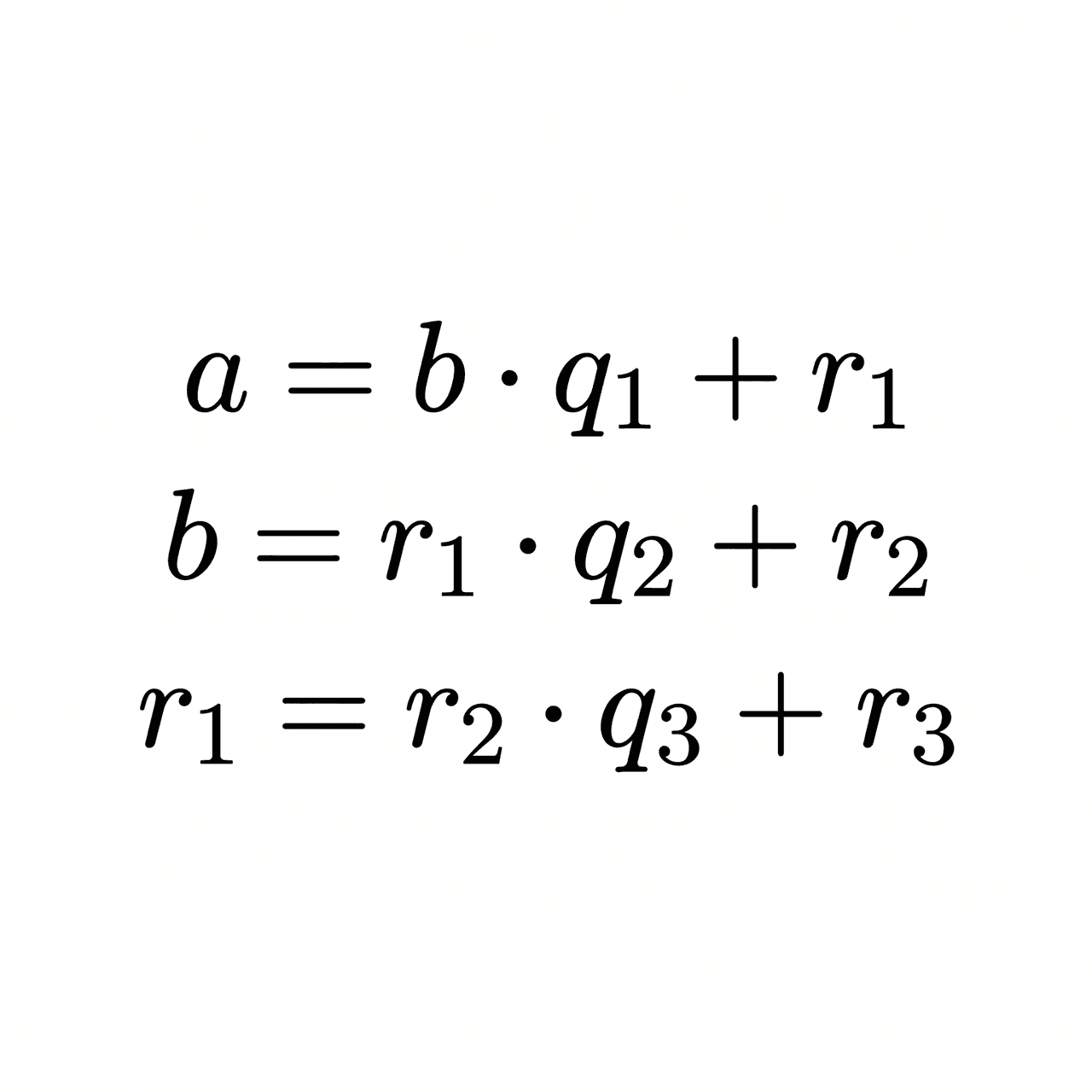
Euclidean algorithm is one of the oldest and most fundamental algorithms in the history of arithmetic, used to compute the greatest common divisor (GCD) of two positive integers. The algorithm derives its name from the Alexandrian mathematician Euclid, and its core principles are based on Propositions 1 and 2 in Book VII of his work Elements. Historical and Theoretical Foundations In Euclid’s Elements the algorithm is described as a process for finding a common measure of two magnitudes. In anci
ENTalha Emre Çiper

John Horton Conway
John Horton Conway was a British mathematician who made fundamental contributions to group theory, number theory, knot theory, and combinatorial game theory; he discovered the Game of Life and surreal numbers. Throughout his career he held professorships at Cambridge and Princeton universities and conducted pioneering work on the classification of finite simple groups and sphere packings. Early Life and Academic Education John Horton Conway was born on 26 December 1937 in Liverpool, England, to
ENGülbahar Yetiş