

`nation` Related Article Results
 Th
ThThe Past Extending into the Future
Humanity distinguishes itself from other living beings through reason, the capacity for thought, and the ability to generate values. Its most fundamental quality that renders it free and active is its capacity to open itself to the world and establish relationships with entities. This ability grants humans the opportunity to alter, transform, and shape their environment and future. It is precisely this accumulation that forms the foundation of what we call culture. Development The transmission o
EN
Muhammed Emin Ortakuş

Juche
Juche (Korean: 주체) is the official state ideology of Korea and is regarded as a component of the Kimilsungism-Kimjongilism system, which is based on the ideas of Kim Il Sung and Kim Jong Il. North Korean sources identify Kim Il Sung as the founder of this ideology. Although initially perceived as an extension of Marxism-Leninism, Kim Jong Il began defining Juche in the 1970s as a distinct and original ideology. His interpretations during the 1980s and 1990s further distanced it from Marxism-Leni
EN
Berk Büyükarslan
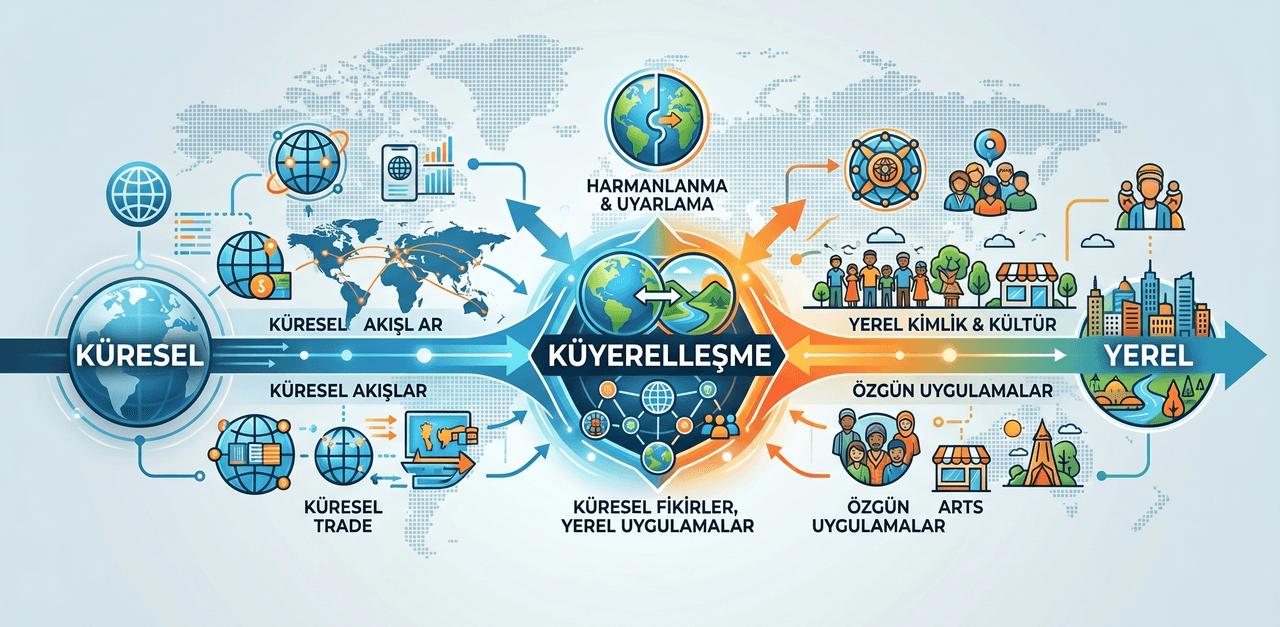
Urbanization
Glocalization is a sociological and economic concept that refers to the adaptation and reproduction of global products, services, ideas, and structures according to local conditions, needs, and cultural values. The term is derived from the combination of the English words "globalization" and "localization" and is fundamentally formulated as "think globally, act locally." The glocalization process assumes that global and local dynamics do not exclude or eliminate each other but rather interlock t
EN
AYŞE TUBA KESKİL
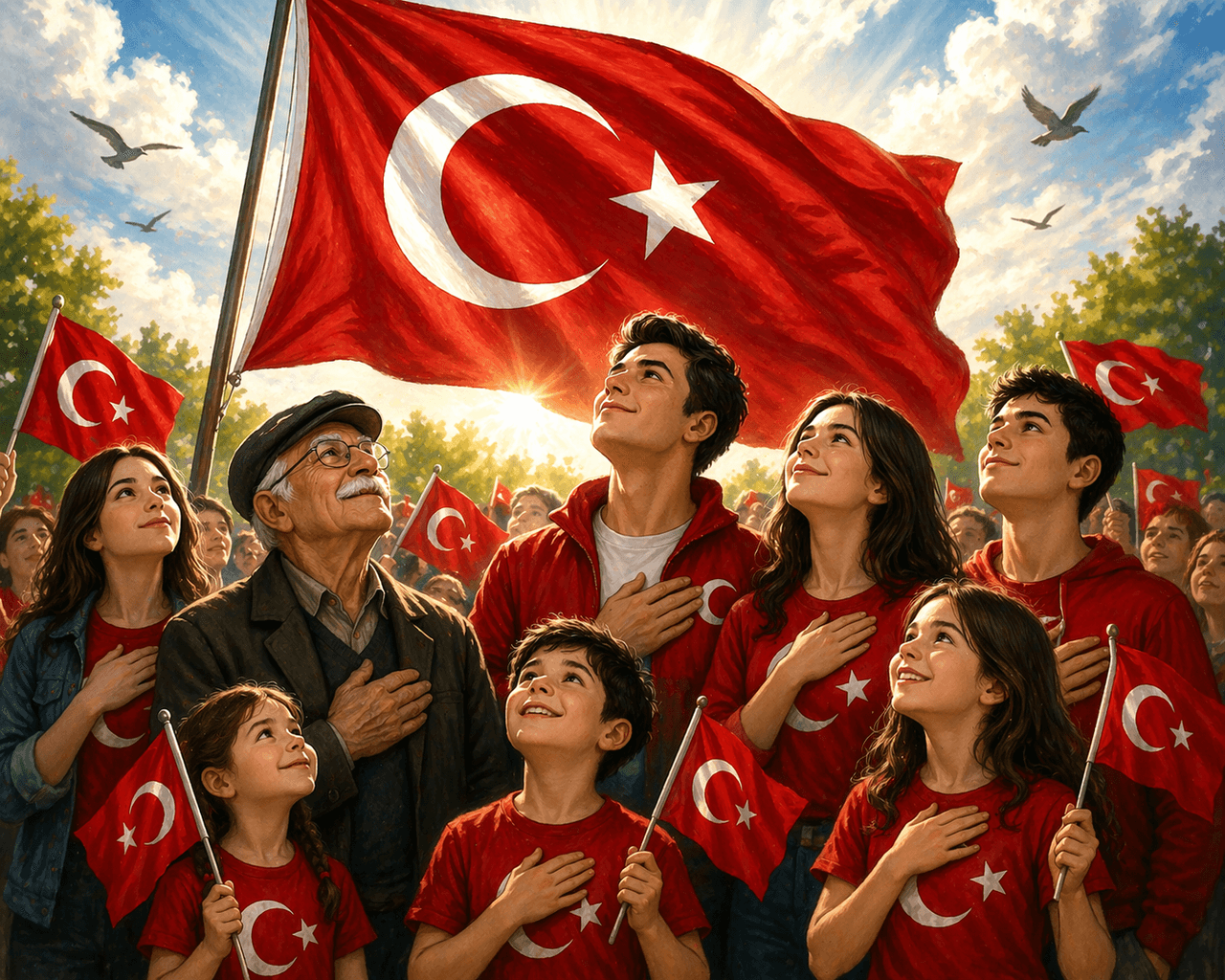
Love of the Flag
Patriotism is the feeling of respect, loyalty, and value that a nation holds for its flag. The flag is not merely a piece of fabric; it represents a nation, its independence, and its shared values. Patriotism fosters a sense of attachment to the land one lives on and the nation one belongs to. For this reason, the flag holds a special place in people’s hearts. Why Is the Flag Important? The flag is the symbol of a nation’s independence and existence. For the Turkish nation, the flag represents:
ENEylül BOLAT

Civilization and Nation Through the Eyes of Yahya Kemal
There are certain names that become mirrors of a civilization not only through their poetry but also through their words, their silences, and even the way they walk. Yahya Kemal Beyatlı is one such name. To look at Istanbul through his eyes, to gaze upon the Bosphorus through his verses, is not merely an aesthetic pleasure but also to don a civilizational awareness. Throughout his life, Yahya Kemal sought to recover a lost time and to rebuild a necessary “idea of the nation.” Amid the painful tr
EN
Hatice Mehlika Biten
PePeople (Book)
Ahmet Ümit's novel Kavim tells the story of Chief Commissioner Nevzat and his team as they uncover the secrets behind a mysterious murder in Istanbul. Novel is a police procedural with a rich narrative that incorporates social, religious and historical elements. The investigation, which begins with the murder of Samuel Avidor, a former Lebanon immigrant, leads the team investigating the crime into the complexities of modern-day modern Türkiye, including the Syriac community, the history of relig
ENBeyza Nur Türkü

Turkish-Greek Population Exchange
Turkish-Greek Population Exchange is an international practice that mandated the compulsory exchange of populations based on religion, as stipulated by the treaty signed on 30 January 1923. It required the relocation of the Greek Orthodox population residing in Türkiye and the Muslim population living in Greece. Decided during the Lausanne Peace Conference, this exchange led approximately two million people to leave the lands where they were born and raised, with the exception of the Greek Ortho
EN
Duygu Şahinler
Ankara University of Social Sciences (ASBÜ)
Ankara University of Social Sciences is a public university in Türkiye focused on the social sciences. Its campus is located in the Ulus neighborhood of Ankara, the capital city, within the Altındağ district. ASBÜ was established in 2013 as Türkiye’s first and only specialized public university in the field of social sciences.【1】 The university conducts its educational and research activities based on an approach that is research-oriented, graduate-focused, multilingual, multicultural and interd
EN
Nida Üstün

The place where you are best is your front.
Whenever we lift our heads and gaze upon that infinite void, we are not merely observing the sky and its stars—we are contemplating a sense of belonging. What is this belonging? It is our glorious flag. When we listen to that naive yet unshakable voice that says, “Let my handkerchief remain with you, wipe away your tears,” we realize that patriotism is not merely an emotion, but a sweet yet heavy burden placed upon our shoulders. We understand it when, despite the presence of those who await us,
EN
Gözde Cabadak