

`mitochondrion` Related Article Results
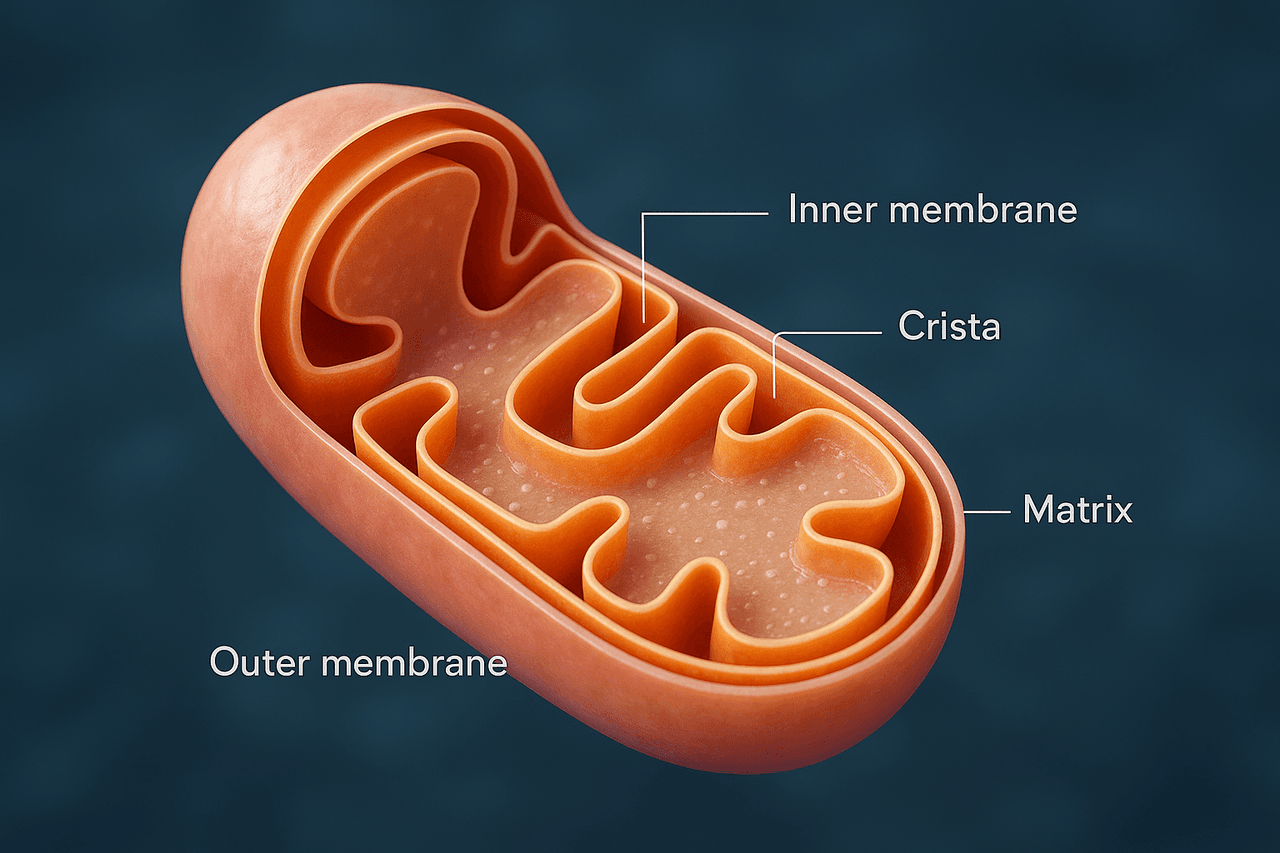
Mitochondrion Organelle
Mitochondria are organelles found in eukaryotic cells that are primarily involved in cellular energy production. These structures, which are surrounded by a double membrane, carry out cellular respiration processes necessary for the synthesis of adenosine triphosphate (ATP). Additionally, mitochondria play essential roles in regulating metabolic functions within the cell, the cell cycle, inheritance, and processes such as apoptosis. Structure Mitochondria are organelles enclosed by a double memb
EN
Zehra Yayla

Mitochondrion
Mitochondria are tiny energy centers that operate inside our cells. Just as a factory generates electricity, mitochondria produce the energy required by the cell. Thanks to this energy, the cells in our body move, grow, repair themselves, and carry out their functions. What Is the Function of Mitochondria? The most important function of mitochondria is to convert energy from food into a form that the cell can use. This energy is called ATP (Adenosine Triphosphate). ATP acts like the “fuel” that
EN
Elif Laçin