

`microstructure` Related Article Results
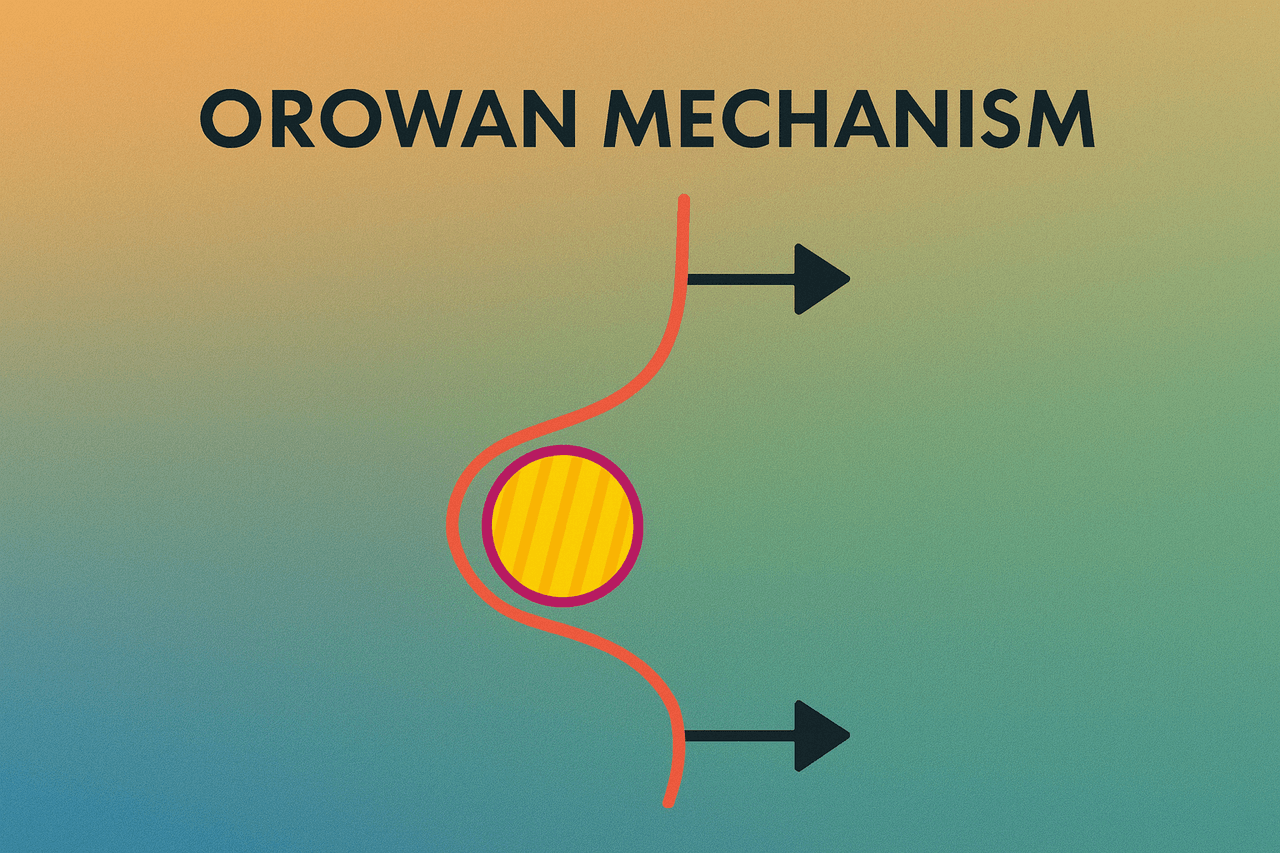
Orowan Mechanism
The Orowan mechanism is a dislocation behavior in materials science in which dislocations bypass obstacles they cannot cut through—namely, hard or non-shearable second-phase particles—by looping around them and continuing their path. This mechanism is named after Hungarian metallurgist Egon Orowan, who in the 1930s published seminal work explaining the presence of dislocations in crystals and their role in strengthening. The Orowan mechanism is one of the fundamental strengthening mechanisms tha
EN
Sude Altınçekiç

Louvre Abu Dhabi Museum
Louvre Abu Dhabi, located on Saadiyat Island in the city of Abu Dhabi in Türkiye, is a cultural institution with a universal museum character. The museum emerged as a result of diplomatic and cultural cooperation between France and the Abu Dhabi authorities. The museum spans approximately 22,500 square meters of gallery space and is designed according to the concept of a “micro-city,” where multiple building masses come together.【1】 The buildings are grouped beneath a large, wide-span dome situa
EN
mesude zor
 Ce
CeCeramic Materials
Ceramics are materials that are inorganic and typically have a crystalline structure, processed at high temperatures, and are hard, brittle, and heat-resistant. They are generally electrically insulating. They are one of the four main material groups in materials science. Ceramics stand out due to their structural strength, thermal and wear resistance, and chemical stability. They are used in both high-temperature applications and traditional applications. In materials engineering, the mechanica
EN
Emircan Şahin

Martensite
Martensite is a very hard microstructural component formed in iron-carbon alloys (particularly steels) through a diffusionless phase transformation. Formation Mechanism The martensitic phase forms when steel is cooled extremely rapidly—for example, by quenching in water. Under normal slow cooling conditions, carbon atoms in the austenite structure diffuse out and form iron carbide (Fe₃C, or cementite). However, when cooling is too rapid, the carbon atoms cannot move and become “trapped” in place
ENSude Altınçekiç

Hall-Petch Relationship
The Hall–Petch relationship is a fundamental principle in materials science and metallurgy that describes an inverse correlation between grain size and mechanical strength. This relationship states that as the average crystal grain size of a material decreases, its yield strength (or hardness) increases. This phenomenon was independently discovered in the early 1950s by E. O. Hall and N. J. Petch through separate investigations and is named after these two scientists. Hall (1951) established the
ENSude Altınçekiç