

`medical-imaging` Related Article Results
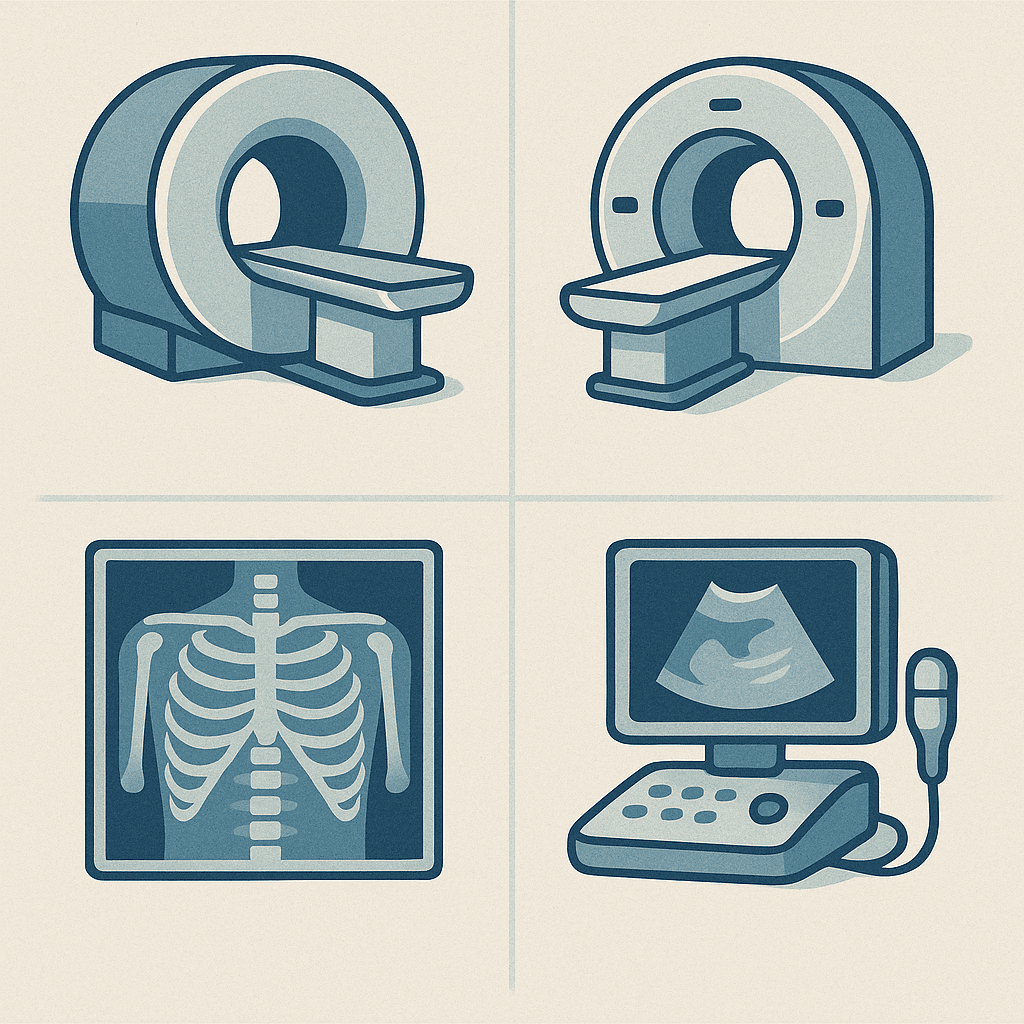
Medical Imaging Systems
Medical imaging systems are a collection of methods that visualize the internal structures of the human body using various technologies for the purposes of diagnosing, monitoring, or treating diseases. These technologies provide different types of information regarding possible illnesses, injuries, or the effectiveness of applied treatments. The impact of medical imaging in healthcare is increasingly growing, enabling earlier detection of diseases and more effective treatments. These systems are
EN
Ömer Said Aydın
Digital Health and Artificial Intelligence Applications
Digital health refers to the use of information and communication technologies to enhance the efficiency, accessibility, and quality of healthcare services. One of its most critical components, artificial intelligence (AI), encompasses a set of algorithms and systems designed to analyze complex medical data, mimic human cognitive functions, and assist healthcare professionals in decision-making processes. AI is transforming nearly every aspect of the healthcare sector, from disease diagnosis and
ENÖmer Said Aydın

Super Resolution Image Processing
In today's digital world, image quality is critical, with various application areas demanding high-resolution data. The method known as "super-resolution image processing" includes a range of techniques aimed at enhancing the resolution of existing images to achieve more detailed and clearer results. Super-resolution holds significant importance, particularly in fields such as satellite imagery, medical imaging, security systems, autonomous vehicles, and video analysis. What is Super-Resolution?
EN
Beyza Nur Türkü
 Do
DoDoppler Effect
The Doppler effect is the phenomenon in which the frequency or wavelength of a wave, as measured by an observer, changes due to the relative motion between the wave source and the observer. When the source approaches the observer, the perceived frequency increases (wavelength shortens), and when the source recedes, the frequency decreases (wavelength lengthens). This physical phenomenon was first described by Austrian physicist Christian Doppler and has broad applications ranging from acoustics
ENYunus Emre Yüce

Gallium
Gallium is a metal with the atomic number 31 in the periodic table and the chemical symbol "Ga." It was discovered in 1875 by the French chemist Paul-Émile Lecoq de Boisbaudran. Gallium is notable for its melting point near room temperature (about 29.8 °C), which allows it to melt in the human hand. It has a high boiling point (approximately 2204 °C) and a wide liquid phase range, making it valuable for various technological applications. Gallium does not occur freely in nature; it is typically
ENEmre Özen
ArArtificial Intelligence-Assisted Imaging and Diagnosis
Artificial Intelligence is increasingly being used in medical imaging and diagnostic processes. Algorithms developed using deep learning and machine learning like techniques can analyze abnormalities in medical images with high accuracy, enabling early diagnosis. These systems contribute significantly to more effective disease detection in fields such as radiology pathology and dermatology. General Definition and Application Areas Artificial Intelligence based imaging systems function within cli
ENSıla Temel