

`meaning` Related Article Results

Chinese Room Thought Experiment
The Chinese Room Thought Experiment (Chinese Room Argument) is a thought experiment developed in 1980 by American philosopher John Searle to examine artificial intelligence consciousness and meaning. The experiment questions whether artificial intelligence truly possesses the capacity to “think” or “understand.” Searle argued that even if computers correctly manipulate symbols this does not generate genuine consciousness or understanding. The experiment has made significant contributions to the
EN
Sıla Temel
 To
ToTo love
To love is a beautiful thing To love a bird, a tree, a leaf falling from a branch To love is a beautiful thing To love without return and with feeling When a person is in love, a smile appears on their face that we cannot fully understand The sun seems brighter and the sky more meaningful For example, one never grows bored gazing at the sea One can sit for hours on a bench by the shore To love is a beautiful thing True love is a deeply meaningful thing Sometimes it arises from a feeling, a gestu
ENİrem Kırmıt

Logotherapy (Meaning Analysis)
Logotherapy, is a philosophically grounded school of psychotherapy based on the principle of healing through meaning. It derives from the Greek words logos, meaning meaning, and therapeúein, meaning to heal. This approach was initially developed in the 1920s by the Viennese neurologist and psychiatrist Viktor Emil Frankl and later entered the literature as the Third Viennese School of Psychotherapy, following psychoanalysis and individual psychology.【1】 In 1933, Frankl expanded the conceptual fr
EN
Nida Üstün

Shelf Life of Words
Life is sometimes like a library; thousands of sentences line the shelves, but we can only take down and read those that resonate with our current age, pain, or joy. The rest remain as dusty books waiting their turn. Not Love at First Sight, but Alienation at First Hearing Some sentences we hear only once, without truly listening. They enter one ear and exit the other. Perhaps we fail to understand them because of the childish joy of that moment, or perhaps we dismiss them due to the youthful ar
EN
Sena Nur Dündar
CuCultural Semiotics
Cultural Semiotics is a discipline that examines the production of signs and symbols within cultural contexts. By applying semiotic approaches to the field of culture, it analyzes how meaning is constructed through social structures and practices. It investigates individual and collective processes of meaning-making across a wide spectrum, from linguistic signs to visual symbols. Origins and Development of Cultural Semiotics Cultural semiotics emerged in the 20th century as an extension of semio
EN
Fatihhan Adana
UnUnderstanding Relational Systems in Software
In the software systems we build, understanding the user’s expectations from the system and the interdependencies among integrated systems can be difficult. In this article, we will attempt to understand the set of systems in communication. Connected Systems: The Anatomy of a Conversation Rather than starting directly with software, let us first try to understand the concept by relating it to a real-life situation. Imagine two people in a conversation: one speaks, the other listens. The listener
EN
Berkant Yüksektepe

Second New
The Second New is a modernist poetic movement that emerged in Turkish poetry from the 1950s onward as a reaction against traditional poetic understanding and especially against the Garip Movement. This movement draws attention through abstract and associative modes of expression, focusing more on form imagery and linguistic innovation than on meaning. Poets liberated language from classical rules and prioritized individuality and originality in poetry. The Second New is regarded as a pivotal tur
EN
Yahya B. Keskin

The Thorn Endures for the Sake of the Rose
Those Who Love the Rose Endure Its Thorns 🌹 This proverb conveys that someone who truly desires something must be willing to endure the difficulties that come with attaining it. In life, valuable and beautiful things sometimes involve minor hardships. You can think of it like touching a fragrant rose and getting pricked by a thorn. Where Does It Come From? 📜 This proverb has emerged from human experience over ancient times. The rose is cherished for its beauty and pleasant fragrance, yet its t
ENNida Üstün
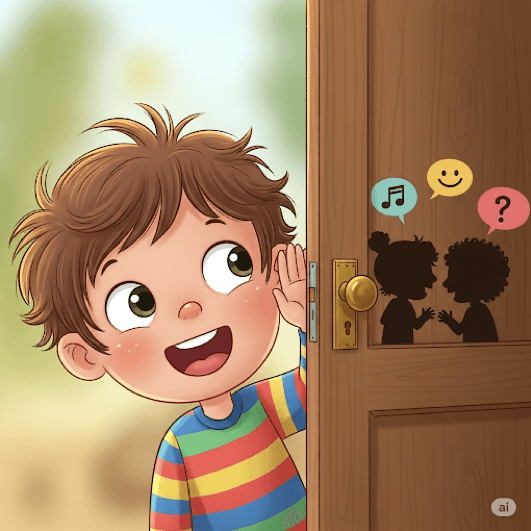
To perk up one's ears
The expression "kulak kabartmak" means to listen secretly and attentively to a conversation or sound. You might use this phrase when you are curious about what your friends are saying or when you try to hear an interesting noise coming from another room. In fact, it refers to the physical act of turning your ears toward the source of a sound to hear it more clearly. Where Does It Come From? Although the exact origin of this expression is unknown, it is believed to be linked to the way animals ra
ENNida Üstün

Friend looks to the head, enemy looks to the foot.
Emotions such as friendship and enmity can sometimes be difficult to understand. It is also not easy to determine who is a true friend and who merely appears to be one while harboring ill intentions. This proverb explains this situation very clearly. What does this proverb mean? Where Does It Come From? This proverb arises from society’s powers of observation and accumulated experience. Over many years, people observed who acted with good intentions and who acted with malice, leading to this con
ENNida Üstün